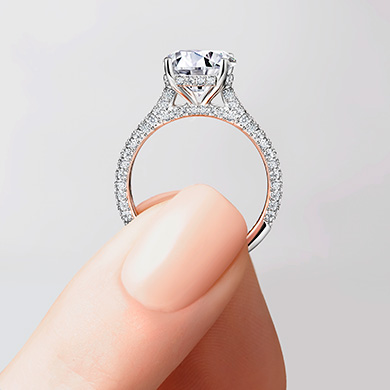
If you’re asking whether white gold is a good choice for an engagement ring, you’re not alone. Many couples gravitate toward white gold because it offers a refined look that feels current, versatile, and easy to wear every day. From classic solitaires to intricate halo and three-stone designs, white gold continues to be one of the most popular metals used for engagement rings today, and for good reason.
White gold is often chosen for its seamless integration into modern life. It balances beauty with practicality, offering a bright, neutral tone that pairs effortlessly with a wide range of ring styles and wedding bands. For many, it feels like a natural starting point when exploring engagement rings, especially if you’re looking for something that feels elegant without being overly precious or high-maintenance.
Of course, choosing the right metal goes beyond appearance alone. Durability, long-term care, cost, and how white gold compares to other popular metals all play an important role in making a confident decision. In the sections ahead, you’ll learn how white gold holds up to everyday wear, what maintenance to expect, and how it compares to alternatives like yellow gold and platinum, so you can decide whether it’s the right fit for your lifestyle and preferences.
To begin exploring styles, you can browse Sylvie Jewelry’s collection of white gold engagement rings and see how this versatile metal comes to life across a range of designs.
Why White Gold Is a Popular Choice for Engagement Rings
When you begin exploring engagement rings, white gold often stands out right away, and that’s largely because it aligns so naturally with how people live, dress, and celebrate. Couples tend to look for a ring that feels versatile, refined, and easy to wear every day, and white gold checks all of those boxes without feeling overly formal or trend-driven.
One of the biggest reasons white gold engagement rings remain so popular is their visual flexibility. The bright, neutral tone works beautifully across a wide range of ring styles, whether you’re drawn to a minimalist solitaire engagement ring, a romantic halo engagement ring, or a more detailed three-stone engagement ring design. White gold allows the design itself to take center stage, making it an appealing option if you want a ring that feels polished and balanced from every angle. It also pairs seamlessly with both simple and classic wedding rings, making it easier to plan a cohesive bridal set from the start.
White gold also fits naturally into everyday style. Many people already wear white-toned jewelry, such as white gold diamond earrings, diamond bracelets, or diamond necklaces, so choosing white gold for an engagement ring often feels intuitive. It blends effortlessly with existing pieces and transitions smoothly from casual days to formal occasions, which is important when you’re selecting a ring meant to be worn for years to come.
Another reason engagement rings are so often white gold is comfort and wearability. White gold is lighter than some alternative metals, making it more comfortable for daily wear without sacrificing strength or longevity. For those who want an engagement ring that feels present but not heavy, white gold offers an appealing balance of substance and ease.
It’s also worth noting how naturally white gold fits into both engagement and wedding ring shopping. Because it’s such a widely chosen metal, you’ll find an expansive variety of styles available across both diamond engagement rings and wedding rings, giving you flexibility as your plans evolve. Whether you envision a perfectly matched set or a more layered look, white gold makes those choices feel cohesive rather than complicated.
If you’re looking for a metal that feels current, adaptable, and thoughtfully suited to everyday life, it’s easy to see why so many couples begin, and often end, their search with white gold engagement rings.
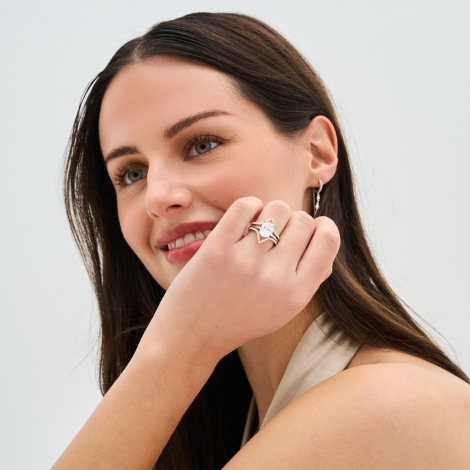
(from left to right) Chevron Diamond Wedding Ring Enhancer – B254, Oval Cut Solitaire Engagement Ring – Dominique, and Marquise Diamond Chain Earrings – ERS1065
What Is White Gold Made Of?
Understanding what white gold is made of can help you feel more confident about how it will perform over time, especially when you’re choosing a metal meant for everyday wear. While white gold has a bright, silvery appearance, it begins its life as yellow gold. To achieve its lighter tone and added strength, yellow gold is combined with carefully selected white metals that enhance durability and wearability.
Pure gold is naturally soft, which is why it’s rarely used on its own for engagement rings. By alloying yellow gold with stronger metals, white gold becomes better suited for everyday use while still retaining the intrinsic value of real gold. If you’ve ever wondered whether yellow gold itself is genuine, this guide on is yellow gold real gold offers helpful background on how gold purity works across different jewelry metals.
Once the gold alloy is formed, white gold engagement rings are finished with a thin rhodium plating. Rhodium is a member of the platinum family and is used to give white gold its bright, even color while also providing an added layer of surface protection. This finish helps create the clean, polished look many people associate with white gold, while also supporting the metal’s performance during everyday wear.
One common question our customers ask is whether white gold will rust, tarnish, or corrode over time. Under normal wear conditions, white gold does not rust or corrode. Unlike metals that react to moisture or air exposure, gold-based alloys are stable and well-suited for long-term jewelry wear. Over time, the rhodium finish may wear down, which is normal and can be refreshed during routine maintenance, while the gold underneath remains intact.
What this means for you is simple: white gold offers both beauty and reliability. It’s crafted to withstand daily use while maintaining its appearance with proper care. Rather than requiring constant attention, white gold is designed to support a lifetime of wear, making it a dependable choice when you’re investing in an engagement ring meant to be worn and enjoyed every day.
How Durable Is White Gold for an Engagement Ring?
When you’re choosing a metal for an engagement ring, durability often sits at the top of your list, and rightly so. An engagement ring is worn daily, through workdays, weekends, and everything in between. Understanding how white gold holds up over time starts with separating two ideas that are often confused: surface wear and structural strength.
White gold is engineered for everyday wear. As a gold alloy, it’s strengthened by additional metals that improve its resilience, making it well-suited for long-term use. Structurally, white gold is strong and reliable, capable of securely supporting intricate ring designs and standing up to the routines of daily life. What you may notice over time isn’t weakness, but rather normal signs of wear that come with any fine jewelry worn regularly.
Scratches, for example, are a natural part of owning an engagement ring. They affect the metal’s surface, not its integrity. These fine marks develop gradually and are expected as your ring moves with you through daily activities. Importantly, surface wear doesn’t mean your ring is compromised; it simply reflects that it’s being worn and enjoyed as intended. With occasional professional polishing and care, white gold can be refreshed and maintained beautifully over the years.
White Gold Durability vs Platinum
One of the most common durability comparisons is between white gold and platinum. While both are excellent choices, they behave a bit differently in everyday wear. White gold is lighter and less dense than platinum, which many people find more comfortable for all-day wear, especially if you’re not used to wearing jewelry regularly.
Platinum, being denser, tends to show wear differently. Instead of losing metal over time, it develops a patina as it’s worn, while white gold may experience more visible surface scratching. Neither option is inherently better, just different. If weight and comfort are important to you, white gold often feels more effortless on the hand, while still offering the strength needed for long-term wear. For a deeper comparison, our guide on white gold vs platinum explores how the two metals compare across durability, maintenance, and wear. You can also view our collection of platinum engagement rings to see how those designs differ visually and structurally.
What matters most is how the ring fits into your lifestyle. White gold’s lighter feel, combined with its durability, makes it a practical option for many people who want a balance of comfort and longevity without feeling weighed down.
White Gold vs Yellow Gold for Engagement Rings
When comparing white gold to yellow gold, it’s helpful to remember that two of the most popular metals for engagement rings are white gold and yellow gold, and for good reason. Both are made from gold alloys and offer similar levels of structural strength. The difference often comes down to appearance and how wear is perceived over time.
White gold tends to show surface scratches a bit more visibly due to its lighter finish, while yellow gold’s warmer tone can make small marks less noticeable. That said, both metals are durable and well-suited for daily wear when properly cared for. The choice between them is often aesthetic rather than practical. Many people prefer white gold for its clean, neutral look, while others are drawn to the warmth of yellow gold.
If you’re still weighing your options, exploring yellow gold engagement rings or reading more about is yellow gold good for engagement rings can help clarify which metal feels most aligned with your style. You may also find it helpful to compare white gold with other alternatives, such as in this overview of white gold vs rose gold or by browsing rose gold engagement rings.
Ultimately, white gold’s durability lies in its balance. It’s strong enough for everyday wear, comfortable on the hand, and designed to age gracefully with proper care, making it a dependable choice if you’re looking for a ring that can truly keep up with your life.
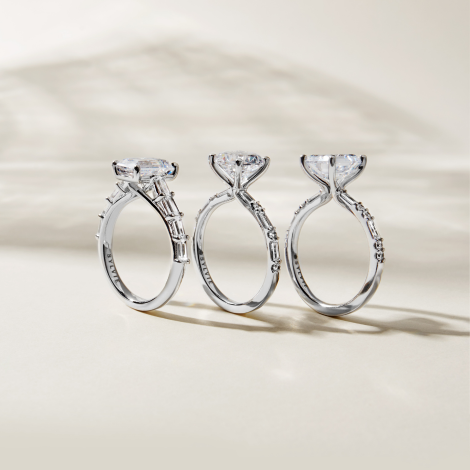
(from left to right) Iconelle Baguette Engagement Ring – Gwen, Round Cut Alternating Diamond and Baguette Engagement Ring – Bonnie, and Emerald Cut Alternating Diamond and Baguette Engagement Ring – Tessa
14K vs 18K White Gold — Which Is Better for Engagement Rings?
Choosing between 14K and 18K white gold is less about prestige and more about how your engagement ring will fit into your daily life. Both options are beautiful, well-suited for engagement rings, and widely used, but they behave slightly differently in terms of comfort, wear habits, and long-term upkeep. Understanding those differences helps you choose a metal that feels right for how you live, not just how it looks.
The numbers refer to gold purity. Fourteen-karat white gold contains a lower percentage of pure gold than 18K white gold, meaning it contains a higher proportion of strengthening metals. Eighteen-karat white gold, on the other hand, has a higher gold content and a subtly richer feel. Neither option is universally “better”, the right choice depends on how often you wear your ring, what your daily routine looks like, and what kind of maintenance you’re comfortable with over time. If you’d like a deeper breakdown of gold purity, this guide on the difference between 14k and 18k offers helpful context.
Pros and Cons of 14K White Gold
Fourteen-karat white gold is often favored by those who plan to wear their engagement ring constantly. Because it contains a higher percentage of alloyed metals, it’s slightly more resistant to everyday surface wear, making it a practical choice for active lifestyles or hands-on routines. Many people appreciate that 14K white gold feels durable and reliable without requiring frequent attention.
Another advantage of 14K white gold is its balance of comfort and longevity. It’s sturdy enough for daily wear while still offering the refined look people expect from a white gold engagement ring. For this reason, 14K white gold is a popular choice for diamond engagement rings, especially for those who want a metal that wears well over time.
The main trade-off is subtle: because it contains less pure gold, the underlying tone can be slightly cooler compared to 18K white gold once the rhodium finish naturally wears over time. With routine maintenance, however, this difference is easy to manage and often goes unnoticed.
If your lifestyle leans toward constant wear and you value ease and durability, 14K white gold often feels like a natural fit. However, comfort and wear habits aren’t the only considerations, gold content and feel can matter too.
Pros and Cons of 18K White Gold
Eighteen-karat white gold appeals to those who prefer a higher gold content and a subtly richer feel. With more pure gold in the alloy, 18K white gold can feel slightly smoother and heavier on the hand, which some people find reassuring and luxurious in everyday wear.
Because it contains more gold, 18K white gold is a bit softer than 14K. This doesn’t make it fragile, but it does mean it may show surface wear sooner for those with very active routines. For individuals whose daily lives are low-impact, or who remove their ring during hands-on activities, this is rarely an issue.
Ultimately, 18K white gold suits those who value a higher gold presence and don’t mind a bit more attentiveness over time. If your engagement ring is worn thoughtfully rather than constantly, 18K white gold can be an incredibly comfortable and rewarding choice.
In the end, deciding between 14K and 18K white gold comes down to how you live with your ring. By considering your habits, comfort preferences, and long-term expectations, you can confidently choose the option that supports both your lifestyle and your sense of style.
White Gold and Diamonds — Why They Work So Well Together
White gold and diamonds are often paired for one simple reason: they create a sense of visual harmony that feels balanced, refined, and easy to wear. Rather than competing with the stone, white gold acts as a quiet counterpart, allowing the diamond you choose to remain the focal point while the setting supports its overall appearance. For many people, this combination feels natural and intentional, especially when selecting an engagement ring meant to be worn every day.
The bright, neutral tone of white gold helps reflect light evenly around a diamond, creating a clean visual frame that emphasizes shape and proportion. Because white gold doesn’t introduce warmth or color into the design, it allows the diamond’s natural characteristics to stand on their own. This is one reason white gold engagement rings are often favored by those who appreciate a crisp, modern look that feels adaptable across different styles, from minimal solitaires to more detailed halo or three-stone settings.
White gold settings are also commonly chosen for natural diamonds because the two elements work together so seamlessly over time. As trends shift and personal style evolves, white gold remains versatile, pairing easily with a wide range of wedding rings and fine jewelry. This adaptability makes it easier to build a cohesive look around your engagement ring without feeling locked into a specific aesthetic direction.
Rather than focusing on diamond education alone, it’s helpful to think about how white gold influences the overall impression of a ring. Subtle details, such as how the metal frames the stone or how it transitions into the band, can shape how the diamond is perceived when worn. If you’re curious about why diamonds have become the traditional choice for engagement rings, this article on why are diamonds used for engagement rings offers helpful background, while an overview of the 4cs of diamonds can help you better understand how cut, color, clarity, and carat weight influence your selection.
It’s also worth noting that white gold provides a versatile foundation if you’re comparing different center stone options. While many couples gravitate toward diamonds, others explore alternatives depending on personal style and meaning. Seeing how white gold interacts with different choices can be useful, especially when weighing options like those discussed in gemstone vs diamond engagement rings.
Ultimately, white gold and diamonds work well together because the relationship feels thoughtful rather than overpowering. The metal enhances the overall design without drawing attention away from what matters most, creating an engagement ring that feels cohesive, intentional, and suited to long-term wear.
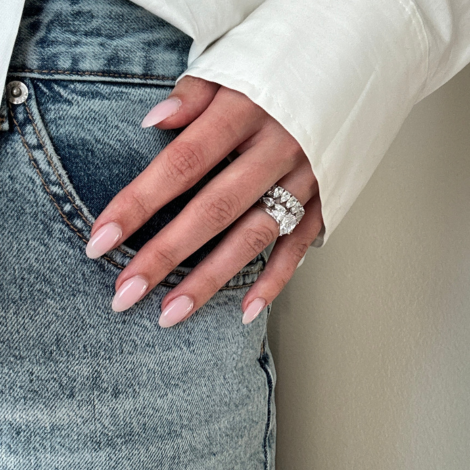
(from top to bottom) Pear Shaped Diamond Eternity Band – B102, Pear Shaped Diamond Eternity Band Set East to West – B103, and Iconelle Solitaire Three Stone Engagement Ring with Pear Side Stones – Priscilla
White Gold Engagement Rings and Maintenance Expectations
Choosing white gold for your engagement ring also means understanding how to care for it over time, but that’s best viewed as part of ownership, not a drawback. Like any fine jewelry designed for everyday wear, white gold benefits from routine attention that helps it look and feel its best as the years go on.
White gold engagement rings are finished with a rhodium layer that gives the metal its bright, even appearance. Over time, this finish can naturally wear down, especially on areas that see the most contact. This doesn’t affect the strength of the ring itself, but it may subtly soften the color. Re-plating is a straightforward process and is often handled during regular professional cleanings, making it easy to maintain your ring’s appearance without disruption.
At home, simple care habits go a long way. Gentle cleaning helps remove everyday buildup and keeps the ring looking polished between professional visits. If you’d like guidance on best practices, this resource on how to clean an engagement ring walks through safe, effective ways to care for your ring at home. These small routines become second nature over time and help preserve the look you fell in love with.
Does White Gold Require More Maintenance Than Other Metals?
Compared to some alternatives, white gold does involve slightly different upkeep, but not excessive care. Yellow gold doesn’t require rhodium plating, while platinum develops a natural patina rather than a plated finish. White gold simply follows its own maintenance rhythm. Many people appreciate that its care needs are predictable and manageable, especially when supported by a trusted jeweler.
Visiting a Sylvie Authorized Retailer ensures your engagement ring is assessed, cleaned, and maintained properly over time. If you’re planning ahead, knowing where to buy engagement rings can help you establish a long-term relationship with a jeweler who understands both your ring and your lifestyle.
Cost Considerations — Is White Gold More Affordable?
When evaluating white gold, cost is often part of the conversation, but it’s most helpful to think about value over time rather than upfront price alone. White gold generally offers a balance between accessibility and longevity, making it an appealing option for those who want a refined look without stepping into significantly higher material costs.
Compared to platinum, white gold engagement rings are typically more accessible at the outset, while still delivering strength and everyday wearability. This allows many couples to focus their budget on the overall design and craftsmanship of the ring rather than allocating a larger portion toward metal alone. Over the years, routine maintenance like polishing or re-plating is a normal part of ownership and helps preserve that value long term.
What makes white gold especially appealing is its flexibility. It fits comfortably within a wide range of budgets and ring styles, allowing you to prioritize what matters most, whether that’s design, comfort, or long-term wear. If you’re navigating budget considerations as part of your decision, these guides on understanding the cost of engagement rings and how much should you spend on an engagement ring offer helpful perspectives for planning with confidence.
Ultimately, white gold isn’t about finding the least expensive option, it’s about choosing a metal that offers lasting value, versatility, and a sense of ease as your ring becomes part of everyday life.
White Gold Engagement Rings vs White Gold Wedding Rings
When comparing white gold engagement rings and white gold wedding rings, the difference isn’t really about the metal, it’s about how each ring is worn and how they’re designed to work together over time. Understanding those wear patterns can help you plan a bridal set that feels cohesive, comfortable, and intentional from the very beginning.
An engagement ring is typically worn on its own for a period of time, which means it often experiences more daily contact early on. Wedding rings, by contrast, are usually added later and worn alongside the engagement ring, altering how the two rings interact. When two rings are worn together, friction between them is normal, and thoughtful pairing helps minimize uneven wear while keeping the overall look balanced.
This is where planning matters. Choosing a white gold wedding ring that complements your engagement ring, whether through profile, width, or shape, can make stacking feel natural rather than forced. Some people prefer a wedding band that sits flush against their engagement ring, while others like a bit of space or contrast. If you’re browsing options, exploring white gold wedding rings can give you a sense of how different styles pair together.
Practical considerations also come into play. Understanding how to keep wedding rings together can help preserve both rings as they’re worn daily, while guidance on how to pick a wedding ring can make the selection process feel more confident and less overwhelming. Even small details, like knowing which finger should a wedding ring go on, play a role in long-term comfort and wear.
Ultimately, white gold engagement rings and wedding rings are designed to evolve together. By thinking ahead about how they’ll be worn as a set, you can choose pieces that feel harmonious, comfortable, and suited to everyday life, now and in the years ahead.
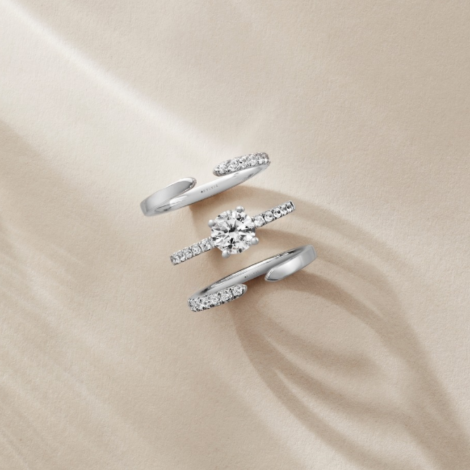
(from top to bottom) Modern Open Wedding Band – B113 and Round Cut Classic Engagement Ring – Celeste
Who Should Choose a White Gold Engagement Ring?
A white gold engagement ring is an excellent choice if you’re looking for a metal that blends seamlessly into your lifestyle while still feeling refined and intentional. It tends to appeal to those who value versatility, people who want a ring that feels equally appropriate at work, at home, or for a special occasion. If your personal style leans clean, modern, or understated, white gold often feels like a natural extension of how you already dress and accessorize.
White gold is also well suited for those who plan to wear their engagement ring every day. Its balance of strength and comfort makes it a practical option if you prefer a ring that feels present on your hand without feeling heavy. Many individuals with active routines appreciate that white gold can keep up with daily wear while maintaining its appearance with routine care. For readers who spend a lot of time on the move, this guide to engagement rings for active women offers additional insight into choosing a ring that fits an active lifestyle.
From a styling perspective, white gold works beautifully if you enjoy mixing and matching jewelry. Its neutral tone pairs easily with other white metals and complements a wide range of wedding ring styles, making it easier to build a cohesive bridal set over time. If you already wear white-toned jewelry, choosing white gold for your engagement ring often feels intuitive rather than like a departure from your everyday look.
Ultimately, white gold is a strong choice if you’re seeking a balance of beauty, comfort, and long-term wearability. It suits those who want an engagement ring that feels current without being trend-driven, one that supports your lifestyle, reflects your personal style, and offers confidence in how it will wear over the years.
Sylvie Jewelry’s White Gold Engagement Ring Recommendations
At Sylvie Jewelry, white gold engagement ring design begins with intention. Each setting is thoughtfully crafted to balance proportion, comfort, and long-term wear, ensuring the ring feels as considered years from now as it does the first time you try it on. White gold is chosen not only for its refined appearance, but for how it supports design details, allows craftsmanship to shine, and adapts seamlessly to everyday life. Every setting is created to pair beautifully with the natural diamond you select with your authorized retailer, offering flexibility without compromising structure or style.
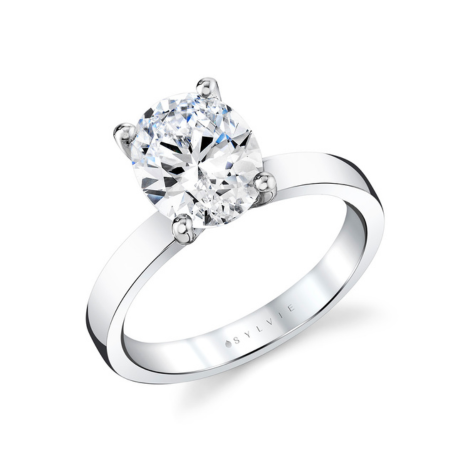
Oval Cut Flat Edge Solitaire Engagement Ring – Ember
The Oval Cut Flat Edge Solitaire Engagement Ring – Ember is defined by clean lines and modern restraint. Its flat-edge band creates a structured, architectural look that feels current without being overly bold. The proportions are intentionally even, allowing the ring’s silhouette to feel balanced on the hand. Designed to stack effortlessly with a wide range of wedding bands, Ember is an ideal choice if you’re drawn to simplicity that still feels considered and elevated for everyday wear.
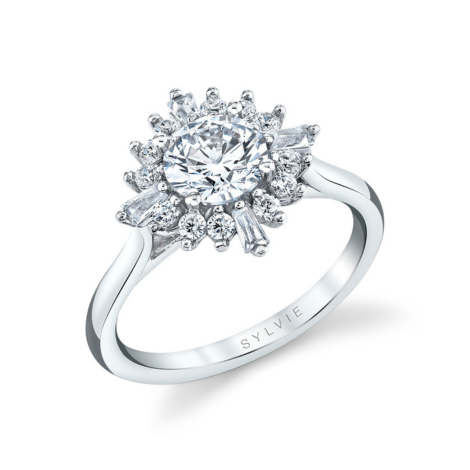
Round Cut Floral Halo Engagement Ring – Ariah
With softer detailing and organic influence, the Round Cut Floral Halo Engagement Ring – Ariah offers a romantic interpretation of white gold design. The floral-inspired halo introduces gentle dimension while maintaining a refined profile that doesn’t overwhelm the overall ring. Ariah feels thoughtfully detailed rather than ornate, making it a beautiful option if you want a design that blends femininity with structure and remains comfortable for daily wear.
Emerald Cut Unique Three Stone Engagement Ring – Teresia
The Emerald Cut Unique Three Stone Engagement Ring – Teresia is designed for those who appreciate symmetry and intention in their ring design. Its three-stone layout creates visual balance while offering a slightly more expressive silhouette than a traditional solitaire. In white gold, the clean lines of the setting feel especially refined, allowing the overall design to feel composed, meaningful, and well suited for long-term wear without feeling heavy on the hand.
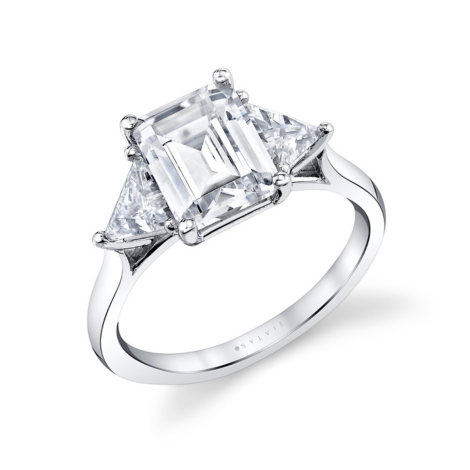
Iconelle Solitaire Shell Taper Engagement Ring – Beatrix
The Iconelle Solitaire Shell Taper Engagement Ring – Beatrix highlights one of Sylvie’s signature design elements, the Shell Iconelle profile. The gently tapered band creates a graceful transition toward the center setting, offering both visual softness and structural support. Beatrix feels personal and distinctive, making it an excellent choice if you’re drawn to subtle design details that carry meaning without dominating the overall look.
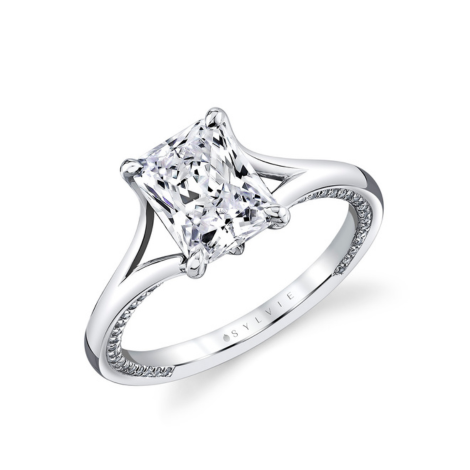
Tulira Diamond Petal and Leaf Engagement Ring – Paloma
Inspired by organic forms, the Tulira Diamond Petal and Leaf Engagement Ring – Paloma brings nature-inspired detailing into a refined white gold setting. Leaf-like accents and delicate line work introduce texture and dimension while maintaining a comfortable, wearable profile. Paloma is ideal if you’re looking for a ring that feels expressive yet balanced, one that stands out through craftsmanship rather than excess.
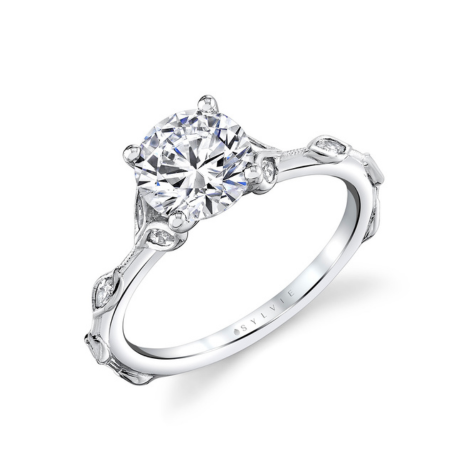
Heritage Round Cut Shared Prong Two Tone Spiral Engagement Ring – Ziva
The Heritage Round Cut Shared Prong Two Tone Spiral Engagement Ring – Ziva offers a dynamic interpretation of white gold design. Its spiral band introduces gentle movement, while the two-tone construction adds depth without overwhelming the form. Designed to feel fluid and intentional, Ziva is a strong option if you’re drawn to a ring that feels distinctive yet thoughtfully composed for everyday life.
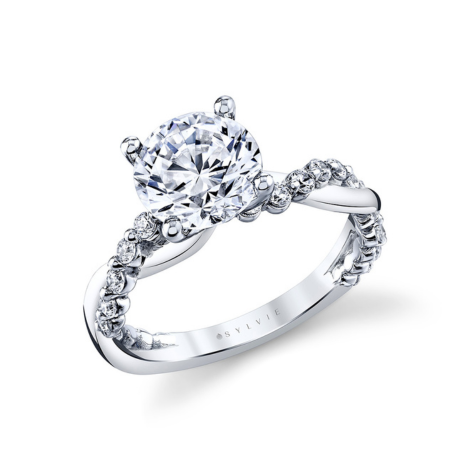
Together, these white gold engagement ring designs reflect Sylvie Jewelry’s commitment to balance, where craftsmanship, comfort, and personal expression come together in settings designed to support your ring for years to come.
Frequently Asked Questions About White Gold Engagement Rings
Choosing a white gold engagement ring often comes with practical questions about wear, care, and long-term suitability. These are common considerations, and understanding the answers can help you feel confident in how white gold fits into your lifestyle and expectations.
Is white gold good for an engagement ring long term?
Yes, white gold is a strong and reliable choice for long-term wear when properly cared for. It’s engineered for daily use, balancing durability with comfort, and is commonly chosen for engagement rings meant to be worn for years. With routine maintenance, white gold retains its structure and appearance beautifully over time.
Is white gold good for engagement rings for active women?
White gold works well for active lifestyles because it offers a balance of strength and lighter weight. Many people find it comfortable for everyday wear without feeling bulky on the hand. Pairing thoughtful design with regular care helps ensure the ring keeps up with an active routine.
Does white gold lose its color over time?
White gold does not lose its color, but the rhodium finish applied to the surface can gradually wear with normal use. This is expected and doesn’t affect the integrity of the ring. Re-plating restores the bright appearance and is a standard part of long-term care.
Is white gold better than platinum?
Neither metal is universally better, they simply wear differently. White gold is lighter and often feels more comfortable for daily wear, while platinum is denser and develops a natural patina over time. The right choice depends on your preferences for weight, feel, and maintenance.
Can white gold engagement rings be resized easily?
Yes, white gold engagement rings can generally be resized without issue. Because it’s a gold alloy, it’s well suited for adjustments when needed. Working with an experienced jeweler helps ensure resizing is done safely and correctly.
Is white gold suitable for sensitive skin?
White gold is suitable for most people with sensitive skin, especially when properly alloyed and finished. The rhodium layer creates a smooth surface that many find comfortable to wear. If you have specific sensitivities, a jeweler can help guide you toward the best option for your needs.
Final Thoughts — Is White Gold Good for an Engagement Ring?
When you step back and look at the full picture, white gold stands out as a thoughtful and reliable choice for an engagement ring. It offers a balance that many people are searching for, refined appearance, everyday wearability, and long-term value, without requiring you to compromise on comfort or style. If you want a metal that feels current, adaptable, and easy to live with, white gold continues to meet those expectations with confidence.
White gold’s versatility is part of what makes it so appealing. It supports a wide range of engagement ring designs, pairs seamlessly with wedding rings, and fits naturally into modern wardrobes. Over time, its care needs are predictable and manageable, making ownership feel straightforward rather than demanding. Rather than asking you to change your life, white gold adapts to your routine and evolves alongside it.
Ultimately, choosing an engagement ring is about selecting something that feels right for you, your lifestyle, your personal style, and how you envision wearing your ring every day. White gold offers that sense of ease and assurance, allowing you to focus on the meaning behind the ring rather than the maintenance or trade-offs.
If you’re still deciding, seeing white gold in person can make all the difference. Visiting a Sylvie Authorized Retailer allows you to compare styles, explore different settings, and receive expert guidance as you choose the natural diamond that completes your ring. With hands-on support and thoughtful design, you can move forward knowing your decision is informed, confident, and truly your own.