Gold jewelry is more than a symbol of elegance, it’s a reflection of personal style, practicality, and purpose. Whether you’re choosing a fine jewelry gift, investing in a piece for yourself, or searching for a once-in-a-lifetime engagement ring or wedding ring, one essential question often arises: what is the difference between 14k and 18k gold? While both options offer beauty and longevity, they differ in purity, durability, color, and value. Here’s everything you need to know to make the most informed and confident choice.
Here is a quick comparison before we get into the detail.
| 14K Gold | 18K Gold | |
|---|---|---|
| Pure Gold Content | 58.3% pure gold | 75% pure gold |
| Color | Slightly lighter and cooler, most visible in yellow gold | Deeper and warmer, most visible in yellow gold |
| Durability | Harder and more resistant to scratches and daily wear | Softer, and benefits from more mindful handling |
| Price | More accessible per piece | Higher, reflecting the greater gold content |
| Most Suitable Uses | Engagement rings, wedding bands, and pieces worn every day | Fine jewelry, pendants, earrings, and pieces where color depth leads |
What is 14k Gold?
14k gold is one of the most widely used golds in jewelry. It’s prized for its ideal combination of strength, value, and appearance, offering enough gold to maintain a warm, luxurious look, while incorporating supporting metals that enhance durability. If you’re looking for a balance between long-term wearability and a classic gold aesthetic, 14k gold is often the ideal starting point.
Understanding 14k Gold: Definition and Composition
14k gold contains 58.3% pure gold combined with 41.7% metals like silver, copper, and zinc. This specific composition is what gives 14k gold its strength and slightly muted color compared to purer forms. For jewelry lovers, it offers an ideal balance between durability and elegance.
Key Characteristics of 14k Gold
14k gold is highly durable, making it a popular choice for pieces meant to be worn every day. It has a classic gold tone that’s slightly softer in hue than higher karat gold, but it resists scratching and bending better. Because of its composition, it’s also more affordable than 18k gold without sacrificing quality or beauty.
Common Jewelry Uses for 14k Gold
You’ll find 14k gold used across engagement rings, stud earrings, diamond necklaces, diamond bracelets, and wedding bands. It’s especially popular in white gold and rose gold variations, where durability is prioritized without compromising appearance.
What is 18k Gold?
18k gold is considered the luxury standard in gold jewelry. With a higher percentage of pure gold, it offers a deeper, more saturated color and a softer glow that elevates fine jewelry designs. This karat is often chosen for its refined look and elevated gold content, making it ideal for heirloom pieces and celebratory moments where richness and warmth are key.
Understanding 18k Gold: Definition and Composition
18k gold is made of 75% pure gold and 25% metals. It contains a higher percentage of natural gold than 14k, giving it a richer color and a slightly softer feel. The increased gold content also elevates its prestige and value.
Key Characteristics of 18k Gold
18k gold has a more vibrant yellow tone than 14k, and that difference is clearest in yellow gold, where the higher gold content shows directly in the color. It contains fewer supporting metals overall, which can matter for anyone who reacts to a specific metal, though what a piece contains depends on its particular composition rather than its karat alone. While slightly softer, 18k is still strong enough for most types of fine jewelry. Many shoppers are drawn to the luxury look of 18k gold and its refined appearance in yellow, white, and rose gold.
Common Jewelry Uses for 18k Gold
18k gold is a preferred choice for high-end fine jewelry, diamond rings, pendants, and heirloom pieces. It’s also commonly chosen for bridal sets, anniversary bands, and meaningful milestone gifts where richness in tone is part of the story.

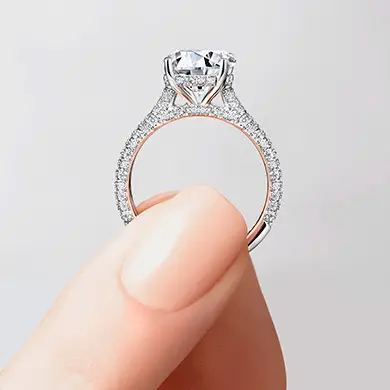
(from top to bottom) Auravie Two Tone Diamond Wedding Ring – B230 and Auravie Bezel Hidden Halo Engagement Ring – Jean
What is the Difference Between 14k and 18k Gold?
When choosing between 14k and 18k gold, it’s not just about appearance, it’s about understanding how each composition impacts performance, style, and value. From the percentage of pure gold to how the metal holds up in everyday wear, each karat level offers distinct advantages. This section outlines the core differences that can help guide your decision.
Gold Purity: Comparing 14k and 18k Gold Content
The most noticeable difference between 14k and 18k gold lies in their gold purity. 14k gold is 58.3% gold, while 18k gold contains 75%. The higher the karat, the more natural gold is present, which affects everything from price to color to softness.
Durability and Strength: Which Gold is More Resistant?
14k gold is more durable due to its stronger gold mixture with supporting metals. This makes it more resistant to scratches and wear, ideal for rings, bracelets, and other jewelry that see frequent contact. While 18k gold is slightly softer, it still offers solid strength for most daily wear items.
Color Differences Between 14k and 18k Gold
The color difference between the two karats is most noticeable in yellow gold. Because 18k contains more pure gold, it appears warmer and more saturated, while 14k reads slightly cooler and more subtle. Set the two side by side and the distinction is easy to see.
White and rose gold are less predictable. In both cases, the final color depends on the full metal composition and the finish applied to the piece, not on karat alone. Rose gold takes its tone from the amount of copper present, and two rose gold pieces at the same karat can differ noticeably in warmth. White gold is finished with rhodium plating, which standardizes the surface color regardless of what sits beneath it. If color is your deciding factor, the most reliable approach is to compare finished pieces in person.
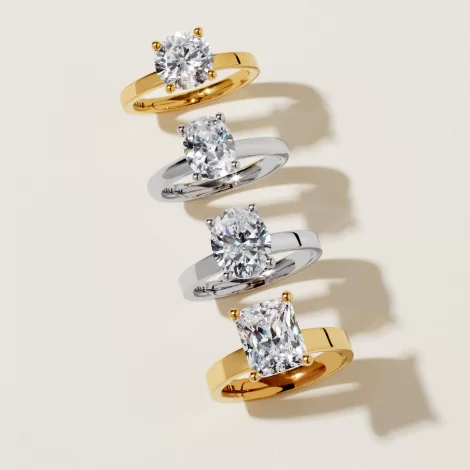
(from top to bottom) Round Cut Flat Edge Solitaire Engagement Ring – Harlow, Oval Cut Wide Band Solitaire Engagement Ring – Demitra, Oval Cut Flat Edge Solitaire Engagement Ring – Ember, and Radiant Cut Flat Edge Solitaire Engagement Ring – Vesta
How to Choose Between 14k and 18k Gold
Choosing between 14k and 18k gold is less about finding the better metal and more about matching the karat to the piece and the person wearing it. The decision usually comes down to three things: how often the piece will be worn, how much you want to spend, and which color you are drawn to. Here is how those factors tend to break down.
When 14k Gold Is the More Practical Choice
14k gold earns its place through resilience. The supporting metals that make up the rest of its composition give it real hardness, so it resists surface scratches and holds its shape in pieces that take daily contact. That makes it a natural fit for engagement rings, wedding bands, everyday bracelets, and stackable necklaces, particularly if you rarely take your jewelry off or your work is hands-on.
Cost is the other consideration. Because 14k contains less pure gold, it is more accessible per piece, which matters if you are building a collection over time or putting more of your budget toward a center stone. Choosing 14k is not a compromise on craftsmanship. It is a different balance of the same materials.
When 18k Gold Is Often Preferred
18k gold is chosen for color and purity. At 75% pure gold, it reads deeper and warmer than 14k, and the difference is most visible in yellow gold. For anyone who wants that saturated tone, no amount of styling makes 14k match it.
Higher purity also means fewer supporting metals overall. That said, skin sensitivity depends on which metals a piece actually contains rather than on karat by itself. Nickel and copper are the most common triggers, and their presence varies by color and by design, so a 14k piece without them may suit sensitive skin better than an 18k piece that includes them. If you have a known sensitivity, tell your jeweler which metal you react to and let that guide the conversation.
The trade-off is softness. 18k is more prone to dents and small marks, and it benefits from more intentional care. That makes it well suited to statement earrings, pendants, luxury gifts, and rings worn for occasions rather than around the clock, where color depth leads and daily friction is less of a factor.
Why Neither Karat Is Universally Better
Both 14k and 18k gold can last decades with proper care, and neither is a downgrade from the other. 14k holds up better in high-contact pieces, while 18k delivers a richness of color that 14k cannot replicate. One prioritizes wearability, the other prioritizes purity, and the right answer depends entirely on which of those two things matters more for the piece you are choosing.
Personal taste carries real weight here. Some people are drawn to the warmth of 18k yellow gold, others to the softer blush of 14k rose gold. Consider your skin tone, what you already wear, and whether your style leans understated or bold. There is no wrong answer, only the one that suits how you live.
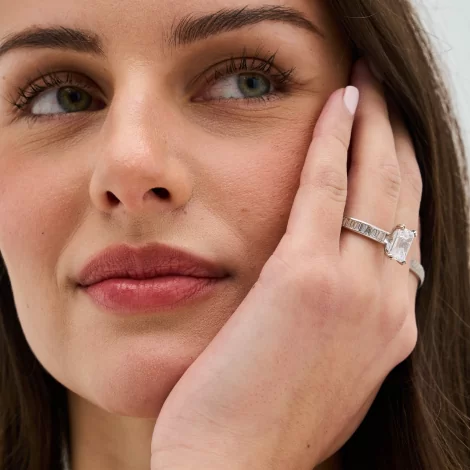
(from left to right) Auravie Channel Set Baguette Engagement Ring – Amren and Heritage Four Row Pavé Diamond Wedding Ring – B245
Can You Wear 14k or 18k Gold in the Shower or Ocean?
Neither 14k nor 18k gold rusts, and occasional exposure to water will not damage either one. Repeated contact is where the difference shows. Chlorine, saltwater, and the residue left behind by soaps and lotions can dull the surface of both karats over time, and chlorine in particular is hard on the rhodium plating that gives white gold its finish. The simple fix is to remove your jewelry before swimming or showering when you can, and to dry it thoroughly when you cannot.
14k Gold vs 18k Gold in Engagement Rings and Wedding Bands
Bridal jewelry asks more of a metal than almost anything else you wear. An engagement ring and the band that joins it are typically worn every day for decades, often together on the same finger. Both 14k and 18k gold are well suited to that kind of wear, and the choice between them comes down to what you want the set to look like and how you plan to care for it.
How Each Karat Performs in Daily Bridal Wear
14k gold generally offers greater resistance to visible wear. It holds a polished surface longer and shows fewer small marks across years of daily contact, which is why it is a frequent choice for engagement rings for active women and for anyone who never takes their rings off. When two rings sit against each other on the same finger, they also make contact with one another constantly, so that added hardness works in favor of the set as a whole.
18k gold offers higher purity and a richer appearance, most noticeably in yellow gold engagement rings, where the deeper tone is difficult to replicate at a lower karat. It is softer, so it may show signs of wear sooner, though this is a matter of maintenance rather than durability. Designs with bezel settings, flush-set accents, or lower prong exposure give the metal less to catch on, which suits 18k particularly well.
Choosing the Right Karat for Your Set
Four things should guide the decision: your lifestyle, the appearance you want, your budget, and how much upkeep you are comfortable with. Someone who works with their hands and wants a set they can wear without thinking will likely be happier in 14k. Someone drawn to a deep, warm yellow who is willing to schedule occasional polishing will get more of what they want from 18k.
Your engagement ring and wedding band do not have to match in karat, though many people prefer that they do for consistency of color. If you are weighing the options, an authorized Sylvie retailer can show you both karats side by side and help you see the difference in person, which is far more telling than any photograph.
Can You Wear 14k and 18k Gold Together?
Yes, and it reads as intentional rather than mismatched. Mixing karats adds dimension to a look, whether that means a 14k white gold band worn with 18k yellow gold earrings or a stack that combines both across different pieces. The tonal difference between the two is subtle enough that they sit together comfortably. Our guides on how to layer necklaces and how to stack bracelets cover this kind of styling in more detail.

(from left to right) Heritage Triple Row Pavé Diamond Wedding Ring – B244, Tulira Marquise Diamond Leaf Wedding Ring – B261, and Cushion Cut Solitaire Hidden Halo Engagement Ring – Elin
Does Karat Affect a Piece’s Value?
Gold content is one part of what a piece is worth. 18k contains more pure gold per gram than 14k, so the raw material value is higher. Beyond that, worth is shaped by design, craftsmanship, condition, and what the piece means to the person wearing it, and gold prices themselves move over time. Fine jewelry is bought to be worn and kept rather than traded, so the more useful question is usually which karat suits the piece and the wearer, not which one holds more value on paper.
How to Care for 14k and 18k Gold Jewelry
Maintaining the beauty of your 14k and 18k gold jewelry doesn’t require complicated routines, just consistent, gentle care. Regular cleaning and proper storage can preserve luster and prevent surface wear. Here’s how to keep your gold looking its best.
How to Clean Gold Jewelry
Clean both 14k and 18k gold with warm water, a soft cloth, and mild soap. Avoid abrasive materials or harsh chemicals, and always pat dry with a clean towel.
How Often to Clean Gold Jewelry
We recommend cleaning frequently worn gold pieces once a month and having them professionally polished by a Sylvie authorized retailer once or twice a year. This keeps both 14k and 18k gold looking brilliant and prolongs their beauty.
Sylvie’s Gold Jewelry Selection – Explore 14k and 18k Gold Designs
Whether you’re shopping for a once-in-a-lifetime ring or building a personal fine jewelry collection, Sylvie offers options that are both meaningful and enduring.
At Sylvie, we design our engagement rings, wedding bands, and fine jewelry in both 14k and 18k gold. From sleek and modern styles to romantic, diamond-accented classics, our collections reflect the balance of form and function. Whether you’re drawn to the versatility of 14k or the luxury of 18k, we offer expertly crafted pieces that celebrate your story and suit your lifestyle.
Visit one of our authorized retailers to explore 14k and 18k gold designs and discover the piece that’s right for you.

(from top to bottom) Heritage Baguette Diamond Wedding Ring – B238, Heritage Three Stone Baguette Wedding Ring – B235, Heritage Bar Set Diamond Wedding Ring – B231, Channel Set Diamond Wedding Ring – B267, and Heritage Double Row Pavé Diamond Wedding Ring – B243
14k and 18k Gold Jewelry Frequently Asked Questions (FAQs)
What is the difference between 14k and 18k gold?
14k gold contains 58.3% pure gold combined with supporting metals for strength, while 18k gold contains 75% pure gold. The higher gold content gives 18k a richer color, particularly in yellow gold, while the additional supporting metals in 14k make it harder and more resistant to visible wear.
What is the difference between 10k, 14k, 18k, and 24k gold?
These numbers indicate the proportion of pure gold. 10k has the least and is the hardest, 14k and 18k balance purity with durability, and 24k is pure gold but too soft for everyday jewelry. Our fine jewelry is made in 14k or 18k gold.
Is 18k gold darker than 14k?
In yellow gold, yes. The higher gold content in 18k produces a richer, more saturated tone than 14k. In white and rose gold the comparison is less direct, since the surrounding metals and the finish influence the result alongside karat.
Should I choose 14k or 18k gold for my engagement ring?
Both work well for daily wear. 14k resists visible wear better over years of constant contact, while 18k offers higher purity and a deeper yellow tone. Consider how often you will wear the ring, the color you want, and how much upkeep you are comfortable with. An authorized Sylvie retailer can show you both in person.
Is 14k or 18k gold better for sensitive skin?
Neither karat is automatically better. Higher purity means fewer supporting metals in 18k, but sensitivity depends on which specific metals a piece contains. Nickel and copper are the usual culprits, and whether they are present depends on the color and composition of the individual piece. If you know what you react to, share that with your jeweler so they can point you toward pieces made without it.
Does gold tarnish?
Gold itself does not tarnish. The supporting metals in a piece can react over time, and everyday buildup from lotions and oils may dull the surface, but both effects are reversible with gentle cleaning. 18k is slightly less reactive given its higher purity.
Is rose gold pure gold?
No. Rose gold is created by combining pure gold with copper and a small amount of silver, and the copper is what produces the pink tone. The depth of that color varies with the karat and the exact composition.