Radiant cut diamonds merge the crisp elegance of geometry with the lively brilliance of round cuts, creating a shape that’s both sophisticated and full of life. In this guide, we’ll explore its origins, structure, and the details to consider before purchasing.
Understanding the Radiant Cut Diamond
With its unique mix of geometry and fire, the radiant cut appeals to those who want a diamond that’s equal parts modern design and enduring elegance. Its versatility suits a range of engagement ring settings, from solitaire engagement rings to elaborate halo engagement rings.
What Is a Radiant Cut Diamond?
A radiant cut diamond is a square or rectangular-shaped stone that blends the faceting style of brilliant cuts with the clean lines of square or rectangular cuts. The result is a diamond that delivers exceptional light return while maintaining sharp, defined edges.
First gaining popularity for its ability to maximize both sparkle and durability, the radiant cut engagement ring is a favorite among those who appreciate symmetry with a touch of vibrancy. It’s also adaptable, working beautifully in settings ranging from classic solitaires to intricate, diamond-accented designs.
History of the Radiant Cut – Henry Grossbard’s 1977 Invention
The radiant cut is a relatively recent addition to the world of diamond shapes. It was developed in 1977 by master diamond cutter Henry Grossbard, who wanted to create a shape that combined the brilliance of a round brilliant with the elegant shape of an emerald cut.
His goal was to craft a diamond that offered both exceptional light performance and a versatile silhouette, suitable for a wide variety of settings. The cut quickly gained attention for its ability to conceal inclusions and enhance color, while still maintaining crisp edges, a combination that set it apart from other fancy shapes.
Facet Structure: Combining Brilliant & Step-Cut Features
A hallmark of the radiant cut is its hybrid facet arrangement. It typically features 70 facets, more than most diamond shapes, which are strategically positioned to maximize brilliance. The crown and pavilion facets borrow from the round brilliant cut, while the straight edges and trimmed corners take cues from emerald and asscher cuts.
This unique structure allows radiant cut diamonds to balance intense sparkle with defined geometry, making them an excellent choice for both center stones and matched side stones in multi-diamond designs. Our guide on what diamond cut sparkles the most explains more in detail about the radiant diamond’s facet structure compared to other shapes.
Square vs. Rectangular Radiant Cut Diamonds
Radiant cuts can be fashioned into either a nearly square or elongated rectangular shape. Square radiant cut diamonds offer a balanced, symmetrical appearance that complements three-stone engagement ring or halo settings. Rectangular radiant cuts create an elongating effect on the finger and are often chosen for their refined, elegant profile.
The ideal length-to-width ratio depends on personal preference, square shapes generally fall between 1.00–1.05, while rectangular cuts often range from 1.20–1.30. Both variations maintain the signature sparkle and durability that define the radiant cut.
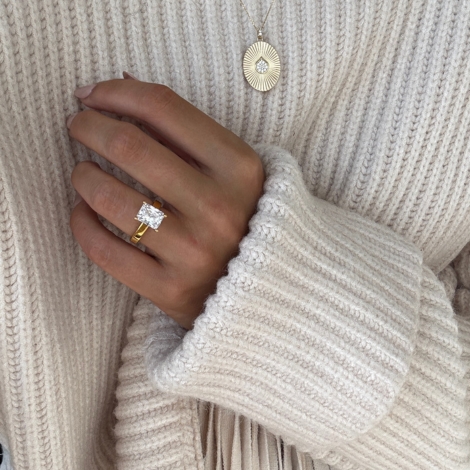
(from top to bottom) Linéaire Fine Line Diamond Shell Oval Medallion Pendant – PS1025 and Radiant Cut Flat Edge Solitaire Engagement Ring – Vesta
Radiant Cut vs. Other Diamond Shapes
Choosing a diamond shape often comes down to subtle differences in light performance, proportion, and durability. The radiant cut offers a distinctive balance of traits that set it apart from other popular styles, holding its own among the most classic shapes for engagement rings while adding a modern, angular twist.
Radiant Cut vs. Round: Sparkle and Face-Up Size
Round brilliant engagement rings are celebrated for their symmetrical fire and consistent light return, making them the benchmark for sparkle. Radiant cuts rival this brilliance while offering a different visual impact, more angular, with cropped corners and a bold outline.
Due to their faceting style, radiant cuts can appear slightly smaller than rounds of the same carat weight when viewed face-up, as more of their weight can be carried in the depth. However, their elongated or squared silhouette can create a strong presence on the hand, particularly in certain settings.
Radiant Cut vs. Princess: Corners, Shape & Durability
While both the radiant and princess cut engagement rings feature crisp edges and a contemporary profile, their corners tell different stories. When considering what is a princess cut diamond, you’ll find that princess cuts have sharp, pointed corners, which can be more vulnerable to chipping if left exposed. Radiant cuts are designed with beveled, cropped corners that provide an added measure of protection, making them well-suited to engagement rings for active women or settings where the diamond sits higher. In shape, princess cuts are typically square, whereas radiants can range from perfectly square to elongated, giving more flexibility in proportion preferences.
Radiant Cut vs. Cushion: Fire vs. Brilliance
Cushion cut engagement rings are known for their softened square or rectangular outline with rounded edges, often delivering more “fire”, the flashes of colored light, due to their deeper pavilion and broader facets. Radiant cuts, with their intricate facet arrangement, lean toward brilliance, producing a livelier sparkle with more white light return.
Cushions offer a romantic, vintage-inspired look, while radiants deliver a crisp, modern profile without sacrificing light performance. The choice between them often comes down to whether the wearer prefers a soft, pillow-like shape or a more defined geometric form.
Radiant Cut vs. Emerald: Facet Pattern & Appearance
Emerald cut engagement rings are prized for their step-cut facets, which create a hall-of-mirrors effect and emphasize clarity over sparkle. Their large, open table highlights the diamond’s interior, making higher clarity grades more desirable.
Radiant cuts share the rectangular or square outline but replace the linear facets with a brilliant-style arrangement that maximizes light return. This gives them a more scintillating appearance than emerald cuts while retaining a similar sophisticated shape. For those who appreciate the elegance of an emerald cut but want more sparkle, the radiant cut offers a compelling alternative.
Radiant Cut Diamond Ratios & Proportions
The visual appeal of a radiant cut diamond depends greatly on how it’s proportioned. From symmetry to table size, every measurement influences how light moves through the stone and how it sits within a ring design.
Ideal Length-to-Width Ratios for Radiant Diamonds
Radiant cut diamonds can be crafted into proportions ranging from nearly square to elongated. The length-to-width ratio determines the overall silhouette and can influence the diamond’s personality.
For a balanced square radiant, the ideal ratio typically falls between 1.00 and 1.05, creating symmetry that works well in solitaires or halo settings. Rectangular radiants are most flattering in the 1.10 to 1.50 range, offering an elegant, finger-lengthening effect.
Ratios outside these ranges can still be beautiful but may alter how the diamond’s shape is perceived, potentially making it appear too narrow or overly boxy for some tastes.
How Ratio Affects Finger Coverage & Ring Style
Proportion directly impacts how much surface area the diamond covers on the finger. A rectangular radiant with a higher length-to-width ratio will generally provide more perceived finger coverage, ideal for those seeking a slenderizing effect.
This makes it a popular choice in east-west settings, three stones, or with tapered baguette side stones. Square radiants offer a more compact footprint and can feel bold and balanced, especially in settings that emphasize symmetry, such as double halo engagement rings or geometric-inspired designs. Ultimately, choosing the right ratio should consider both hand shape and personal style preferences.
Recommended Table & Depth Percentages
Beyond ratio, the table and depth percentages influence brilliance, fire, and overall light performance. For radiant cuts, a table percentage between 61% and 69% is often preferred, allowing light to enter and return effectively without sacrificing pattern or contrast.
Depth percentages typically range from 61% to 67%, balancing light return with face-up size. Stones cut too deep can appear smaller for their weight, while overly shallow stones may lose visual depth and create unwanted light leakage. These parameters work together to produce a balanced diamond that performs well under different lighting conditions.
The Bow-Tie Effect in Radiant Cut Diamonds: What It Is and Why It Matters
The bow-tie effect appears as a shadowy, bow-shaped pattern across the center of some fancy-shaped diamonds, including radiants. While a subtle bow-tie can add dimension, a prominent one can reduce brilliance and create uneven light distribution. Its visibility depends on the cut quality, specifically how facets are aligned and proportioned.
When evaluating a radiant cut, it’s important to view the stone in various lighting and from multiple angles to ensure the bow-tie effect enhances rather than distracts. Partnering with one of our authorized retailers provides access to expert guidance in selecting a radiant diamond with balanced sparkle and pattern, ensuring no single element dominates the view.
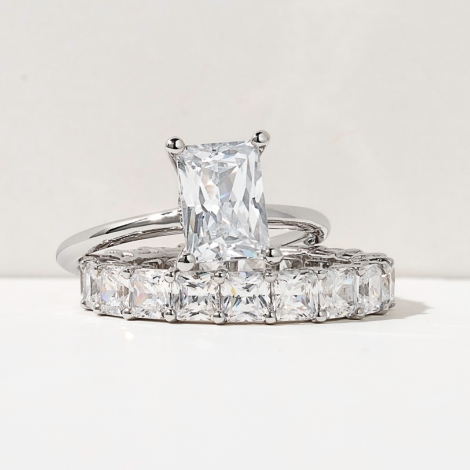
(from top to bottom) Radiant Cut Solitaire Engagement Ring – Dominique and Asscher Cut Diamond Eternity Ring – B108
Color, Clarity & Cut Quality in Radiant Diamonds
The way a radiant cut diamond is graded for the 4Cs of diamonds: carat, color, clarity, and cut can significantly affect its appearance. Understanding how each factor interacts helps you choose a stone that balances beauty, performance, and value.
How Radiant Cuts Display Color – Recommended Grades (G–H or Better)
Radiant cuts tend to concentrate color more than round brilliants due to their facet structure and depth. This means that slight tints can appear more visible, especially in elongated shapes.
For most settings, particularly those in white gold or platinum, a G–H color grade or better offers a crisp, bright appearance without paying the premium for D–F. In yellow or rose gold settings, slightly warmer tones can still appear luminous, making I–J grades a viable choice for those prioritizing size or budget.
Why Radiants Hide Inclusions Well – Clarity Tips
One advantage of the radiant cut is its ability to conceal inclusions more effectively than step-cut shapes. The brilliant-style faceting scatters light in a way that masks small imperfections, allowing for an eye-clean diamond at a lower clarity grade. VS2 or even well-selected SI1 stones can appear flawless to the naked eye, offering more flexibility when allocating budget toward carat weight or color.
No GIA Cut Grade: How to Assess Radiant Cut Quality
Unlike round brilliants, radiant cuts do not receive an official cut grade from the Gemological Institute of America (GIA). Evaluating cut quality requires examining multiple proportions, including table and depth percentages, crown height, and overall symmetry. Resources like the GIA’s guide on how to select a radiant cut diamond can provide insight into the measurements and visual cues that define a well-cut stone. Viewing the diamond in various lighting conditions is essential to ensure even light return and minimal dark areas. Expert guidance from a skilled jeweler can help identify stones with optimal brilliance and balance.
Balancing Cut, Color, Clarity & Budget
When selecting a radiant diamond, prioritize cut quality first, it has the greatest impact on sparkle and light performance. From there, choose the highest color and clarity grades your budget allows without sacrificing the overall balance of the stone.
Working with a knowledgeable authorized retailer ensures each decision, whether on color warmth, clarity grade, or facet arrangement, supports your vision for a radiant diamond that feels as exceptional as it looks.
Pros and Cons of Radiant Cut Diamonds
The radiant cut offers a distinctive blend of qualities that appeals to a wide range of buyers. Weighing its advantages and limitations can help you decide whether it’s the right choice for your engagement ring vision.
Benefits – Brilliance, Versatility, Durability & Value
Radiant cut diamonds are celebrated for their ability to bridge design styles, pairing well with both contemporary and vintage-inspired settings. Their unique facet arrangement creates a dynamic interplay of light, giving them presence in both natural daylight and softer indoor lighting.
This light performance can make smaller carat weights appear more visually impactful. The shape’s adaptability allows it to complement a wide variety of center stone accents, from tapered baguettes to colored gemstones, while often offering more carat for the budget compared to shapes at the top of the pricing scale.
Drawbacks – No Cut Grade, Bow-Tie Risk, Color Visibility
Without a standardized cut grade from major laboratories, assessing a radiant diamond’s quality requires a careful, hands-on review of its proportions and light performance. The faceting style can occasionally produce a shadowy bow-tie pattern if not precisely executed. Additionally, the design may reveal more warmth in the body color than some shapes, which is especially important to consider in lighter metal settings where contrast is more visible.
Price and Availability Compared to Other Diamond Shapes
Radiant cuts are generally priced below round brilliants of the same quality, offering an opportunity to maximize carat size within budget. However, they are not as widely stocked as round, princess, or cushion cuts, meaning you may need to work closely with a trusted jeweler to source the right stone. Limited inventory can also make it more challenging to compare multiple radiant diamonds side by side, so a well-connected retailer can be invaluable in presenting options that meet your specifications.
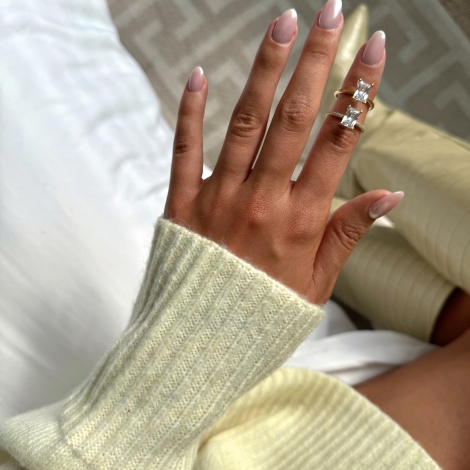
(from top to bottom) Radiant Cut Solitaire Engagement Ring – Amelia and Radiant Cut Classic Engagement Ring – Maryam
How to Choose the Right Radiant Cut for Your Ring
Selecting a radiant cut diamond involves balancing proportion, style, and craftsmanship. Understanding how each choice affects the look and performance of your ring ensures the result is as beautiful as it is personal.
Choosing the Best Ratio for Your Finger Shape
Elongated radiants can create a slimming effect on the finger, while square proportions offer a balanced, symmetrical presence. Ratios should complement your hand shape and align with your preferred aesthetic.
Popular Ring Settings for Radiant Cuts
Radiant cuts shine in settings from sleek solitaires to intricate halos, elegant three-stone arrangements, and vintage-inspired designs. The shape adapts seamlessly to both minimalist and ornate styles. Here are some of our favorites to choose from.
Radiant Cut Flat Edge Solitaire Engagement Ring – Vesta
The Vesta engagement ring highlights your radiant cut center framed by a wide, clean flat-edge band for a contemporary look. Its open silhouette draws focus to the diamond’s faceting and crisp outline.

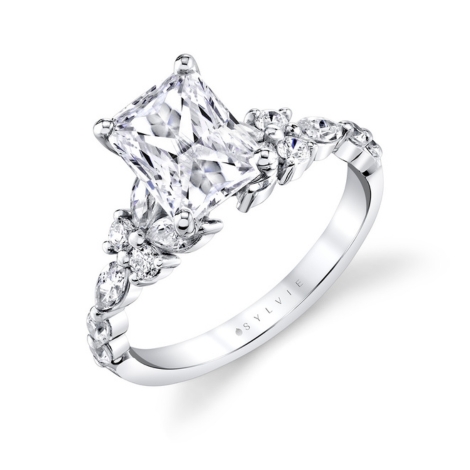
Tulira Diamond Butterfly Engagement Ring – Lilac
The Lilac design from our Tulira Collection features your radiant cut center accented by an array of round and marquise diamonds, totaling 0.8 carats, that form the shape of a butterfly that add soft dimension. The sculpted shoulders create a graceful transition from band to center stone, giving the ring a refined presence.
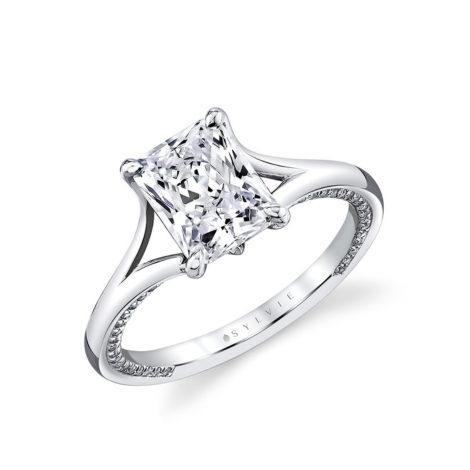
Iconelle Solitaire Shell Taper Engagement Ring – Beatrix
The Beatrix solitaire from our Shell Iconelle Collection, showcases our signature Shell taper, where the band gently narrows and opens to embrace your radiant cut center. This subtle diamond encrusted profile detailing, totaling 0.24 carats, adds depth while keeping the look minimal and architectural.
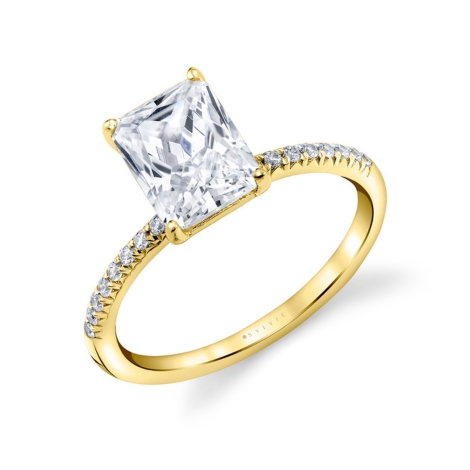
Radiant Cut Classic Engagement Ring – Roux
Roux pairs your radiant cut center with a streamlined pavé band, totaling 0.12 carats, creating a balanced and elegant silhouette. This design highlights the diamond’s shape while offering versatility for any wedding band pairing.
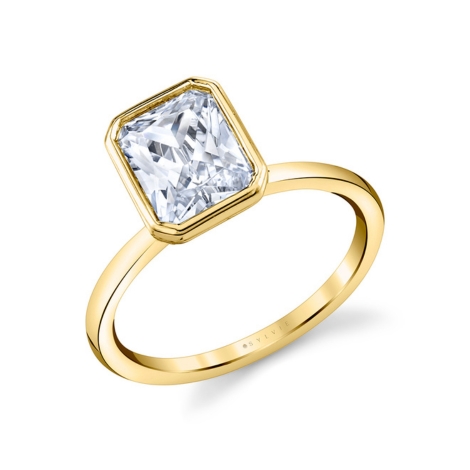
Radiant Cut Bezel Set Engagement Ring – Cliodhna
The Cliodhna ring features your chosen radiant cut diamond secured in a smooth, modern bezel that enhances durability and emphasizes the stone’s geometry. Its gentle curves and clean edges create a refined take on a classic setting.
Customizing a Radiant Cut Diamond Ring with Sylvie Jewelry
Our authorized retailers work closely with you to source the perfect radiant diamond and customize every detail, from metal choice to accent stones, to create a one-of-a-kind engagement ring.
Radiant Diamond Care – Cleaning & Maintenance Tips
Learning how to clean an engagement ring and how often you should clean an engagement ring affects the longevity of your setting. Regular gentle cleaning with a soft brush and mild solution keeps brilliance at its peak. Annual inspections with your retailer ensure settings remain secure and the diamond’s condition is preserved.
Radiant Cut Diamond FAQs (Frequently Asked Questions)
What does “radiant cut” mean?
A radiant cut is a square or rectangular diamond with brilliant-style facets and cropped corners, combining sparkle with a defined outline.
Are radiant diamonds more expensive than other shapes?
Radiant cut diamonds typically cost less per carat than round diamonds because they retain more of the rough during cutting. Pricing still varies based on color, clarity, and overall quality, so two stones of the same size can differ significantly.
Do radiant cuts look bigger than their carat weight?
Elongated radiant cut diamonds often appear larger because their length creates more finger coverage. This makes them a strong option for those seeking presence without increasing carat weight.
What is the best ratio for a radiant cut diamond?
Square radiant diamonds look best in the 1.00–1.05 range, offering a balanced silhouette. Rectangular radiants typically fall between 1.10–1.50, with longer ratios offering an elegant, stretched look. The “best” choice depends on personal style and how you want the diamond to sit on the hand.
What color and clarity should I choose for a radiant?
G–H color is a great starting point because radiant cuts can show warmth more easily than some shapes. VS2 clarity or better typically provides a clean appearance, though many SI1 stones also look clear thanks to the shape’s brilliant facet pattern. The goal is to balance beauty and budget while keeping the diamond visually crisp.
How does a radiant compare to emerald, princess, and cushion cuts?
Radiant cut diamonds offer more brilliance than emerald cuts due to their faceting. They provide better corner protection than princess cuts and a more geometric outline than cushion shapes. This makes radiants a versatile middle ground between soft curves and strong lines.
Do radiant cut diamonds sparkle like round diamonds?
Radiant cuts have a different light pattern, but their brilliant-style facets deliver a similar level of brightness. While rounds remain the benchmark for brilliance, radiants offer a lively appearance with more structure. Many shoppers prefer the modern feel of the radiant’s faceting.
What are crushed-ice radiant diamonds?
Crushed-ice radiants feature smaller, more varied facets that create a soft, blended light return. This look resembles the shimmer of fine ice and appears more diffused than a traditional radiant. It’s a matter of aesthetic preference rather than quality.
Are radiant cuts durable enough for daily wear?
Yes. Radiant cut diamonds have trimmed corners, which reduces the risk of chipping and makes them more durable than shapes with sharp points. Their structure works especially well for active lifestyles and everyday engagement ring wear.
How do I evaluate a GIA report for a radiant cut with no cut grade?
Because radiant diamonds do not receive an official cut grade, review key numbers like table percentage, depth, length-to-width ratio, polish, and symmetry. These details help you understand how the diamond will perform visually. A Sylvie authorized retailer can guide you through the report to ensure the stone meets high standards.