Designing a custom engagement ring is one of the most meaningful ways to celebrate your love story. When you design your own engagement ring, you’re not simply choosing a setting or a stone, you’re creating a piece that reflects intention, individuality, and lasting commitment. From subtle personal details to fully bespoke designs, a customized engagement ring allows you to bring your vision to life in a way no ready-made ring can.
At Sylvie Jewelry, we believe the most beautiful engagement rings begin with thoughtful decisions. Whether you’re building your own engagement ring from the ground up or refining an existing design, the process should feel informed, collaborative, and deeply personal. In this guide, we share six expert tips to help you design a custom engagement ring with confidence, from setting a realistic budget to selecting the right materials and gemstone. Each step is designed to help you create a ring that feels intentional, refined, and uniquely yours.

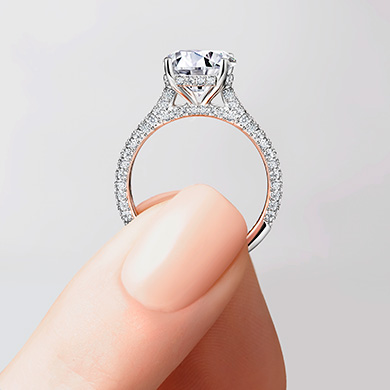
(from top to bottom) Round Cut Flat Edge Solitaire Engagement Ring – Harlow, Oval Cut Wide Band Solitaire Engagement Ring – Demitra, Oval Cut Flat Edge Solitaire Engagement Ring – Ember, and Radiant Cut Flat Edge Solitaire Engagement Ring – Vesta
Tip 1 – Setting a Budget for Your Custom Engagement Ring
Before you begin sketching ideas or selecting design details, establishing a clear budget is an essential first step in creating a custom engagement ring. A well-defined budget helps guide every decision, from metal choice to gemstone size, ensuring the design process remains focused and realistic. Understanding how much you should spend on an engagement ring also allows your jeweler to offer thoughtful recommendations that align with both your vision and priorities.
Whether you plan to design an engagement ring entirely from scratch or customize an existing style, having a budget in place creates clarity. It helps you invest intentionally in the elements that matter most, such as craftsmanship, materials, and center stone quality, while avoiding unnecessary compromises later in the process.
How to Budget When Creating a Custom Engagement Ring
When planning your budget, consider the full scope of what goes into a custom ring. This includes understanding the cost of engagement rings from metals such as yellow, white, or rose gold, or platinum, as well as the center stone and any accent diamonds. Design consultations, detailed digital renderings, craftsmanship, and finishing work should also be factored into your overall investment.
It’s also wise to account for future considerations like resizing, engraving, or routine maintenance. Researching current market prices and discussing transparent estimates with your jeweler will help set realistic expectations. A clear budget empowers you to make confident choices, whether that means prioritizing a higher-quality diamond or opting for a more streamlined band design.
Making Design Choices Within Your Engagement Ring Budget
A defined budget doesn’t limit creativity, it often enhances it. Knowing your financial parameters encourages thoughtful design decisions and opens the door to inventive solutions that maximize both beauty and value.
Start by identifying your non-negotiables. Is the center stone your top priority, or is the setting’s design detail what matters most? From there, explore creative alternatives such as adjusting carat weight, selecting a different metal, or incorporating subtle two-tone elements to add dimension without excess cost.
Open communication with your Sylvie Authorized Retailer is key. Their expertise can help you navigate trade-offs and uncover design possibilities you may not have considered. When every choice is intentional, your custom engagement ring becomes a balanced expression of craftsmanship, sentiment, and personal style—without exceeding your comfort zone.
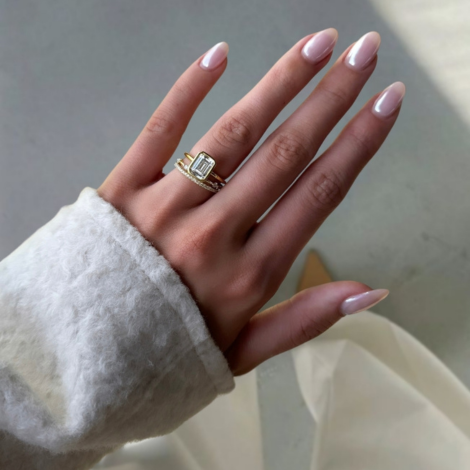
(from top to bottom) Emerald Cut Bezel Set Engagement Ring – Cliodhna, Spaced Diamond Wedding Ring – Eniko, and Classic Wedding Ring – Adorlee
Tip 2 – Designing a Custom Engagement Ring Around Your Partner’s Style
Designing your own engagement ring means creating a piece that perfectly embodies your partner’s personality. A custom engagement ring should reflect the style and taste of the person who will wear it daily. When you design an engagement ring that truly resonates, you capture aesthetic appeal and the essence of who they are. This personalization transforms a piece of jewelry into a lasting symbol of your relationship.
Some couples even explore engagement rings based on zodiac sign, using astrology as a thoughtful lens for design inspiration. Whether your partner leans toward the balance and elegance associated with Libra, the precision and intention of Virgo, or another sign entirely, these traits can influence everything from stone shape to setting style. While astrology isn’t a rulebook, it can be a meaningful starting point for conversations around symbolism and personal expression.
Understanding Your Partner’s Style Before You Design an Engagement Ring
Begin by observing the jewelry your partner already wears. Do they gravitate toward minimal, refined pieces or styles with visible detail and dimension? Notice their preferred metal tones (do they prefer yellow gold jewelry or white gold jewelry), scale, and whether their taste leans towards classic engagement ring styles or modern styles like split shank engagement rings or three stone engagement rings. These cues help shape decisions around band width, setting style, and overall design direction.
Designing an engagement ring that feels natural on their hand often comes down to subtle alignment, choosing proportions, finishes, and details that echo what they already love, while elevating it into something deeply personal.
Adding Personalized Details to a Custom Engagement Ring
Personalization is where a custom engagement ring truly comes to life. Beyond the visible design elements, thoughtful details add emotional depth and lasting significance. Many couples consider what to engrave on an engagement ring, choosing dates, initials, short phrases, or meaningful words that quietly commemorate their relationship. These engravings turn the ring into a private keepsake, carrying meaning that only the two of you share.
Other personal touches might include a hidden diamond, symbolic design motifs, or subtle proportions chosen with intention. When guided by a Sylvie Authorized Retailer, these details are refined through expert collaboration and detailed digital renderings, ensuring every choice feels considered. The result is a custom engagement ring that is not only beautiful, but deeply connected to your story.
Tip 3 – Finding Inspiration to Design Your Own Engagement Ring
When you design your own engagement ring, inspiration becomes the foundation of the entire process. Exploring a range of ideas allows you to define what resonates most, whether that’s a particular silhouette, setting style, or material choice. Rather than starting from a blank slate, drawing inspiration from multiple sources helps you shape a custom engagement ring that feels intentional, personal, and distinct.
Online Inspiration for Custom Engagement Ring Designs
Inspiration for a custom engagement ring today is driven by intention rather than volume. Instead of endless scrolling, couples gravitate toward curated sources, designer collections, real engagement stories, and educational content that explains both the beauty and the structure behind a ring. Long-form videos, saved brand edits, and guided digital experiences now shape how ideas take form.
Many begin by exploring a brand’s design perspective or revisiting rings they’ve seen in real life, whether on friends, creators, or during an in-store visit. Seeing how a ring sits on the hand, how metal tones interact, or how a profile looks from different angles often creates more clarity than images alone.
As you gather inspiration, pay attention to patterns that feel consistent. A preference for clean silhouettes, sculptural details, or subtle contrast can help define your direction and allow your jeweler to translate inspiration into a custom engagement ring that feels personal, thoughtful, and lasting.
Seeing Engagement Ring Designs in Person
While digital inspiration is valuable, experiencing engagement rings in person adds a deeper layer of understanding. Visiting an authorized Sylvie Jewelry retailer allows you to see how designs translate from screen to hand. Observing how light interacts with a prong setting, or how a bezel frames a gemstone, can clarify what you truly love and what you don’t.
Seeing rings up close highlights nuances that photos can’t always capture, from craftsmanship and proportion to comfort and durability. These real-world insights are especially important when designing an engagement ring meant to be worn every day.
Turning Inspiration Into a Cohesive Custom Ring Design
Once you’ve gathered inspiration, the next step is bringing those ideas together with intention. Creating a mood board, whether digital or physical, helps organize your thoughts and visually define your direction. Include images of rings, metal finishes, textures, and color tones that reflect your preferences.
This collection becomes a practical reference when collaborating with your authorized Sylvie jeweler. Whether you’re building your own engagement ring from the ground up or customizing an existing design, blending inspiration thoughtfully ensures the final piece feels cohesive rather than pieced together.
The goal is not to replicate a single ring, but to distill what you love into a design that tells your story. By allowing yourself time to explore, compare, and refine, you move closer to creating a custom engagement ring that balances creativity with craftsmanship, one that feels both meaningful and enduring.
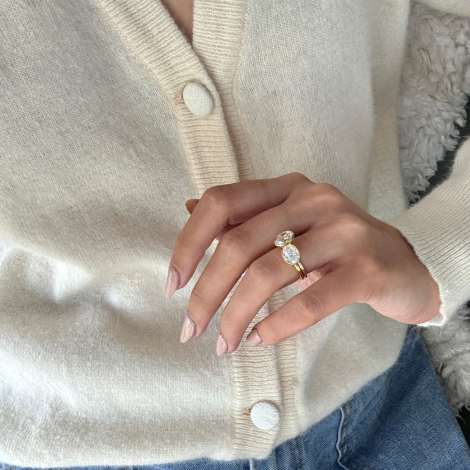
Custom Toi Et Moi Ring created with Oval Cut Bezel Set Engagement Ring – Cliodhna and East to West Oval Cut Bezel Set Engagement Ring – Cliodhna
Tip 4 – Choosing Engagement Ring Styles and Settings
The style and setting of your ring play a key role in its overall character, making every design decision essential. With a wide range of options available, from classic engagement rings to contemporary designs, selecting the right combination will ensure your ring looks stunning and reflects your personal taste and lifestyle.
Popular Engagement Ring Styles to Customize
Rather than choosing from endless options, many couples begin with a core style that aligns with their partner’s personality and lifestyle, then customize from there. Below are some of the most requested engagement ring styles and how they can be personalized.
Solitaire Engagement Rings
Solitaire engagement rings place all focus on a single center diamond, making them ideal for showcasing cut, clarity, and proportion. Customization often comes through the band profile, metal choice, prong style, or subtle details like a hidden halo or engraved gallery.
Halo and Hidden Halo Engagement Rings
Halo engagement ring styles frame the center stone with smaller diamonds to enhance brilliance and finger coverage. Hidden halo engagement rings offer a more understated version, adding sparkle beneath the center stone. Both styles can be customized through halo shape, pavé style, or by pairing with a split shank or cathedral design. For more information, read our guide on hidden halo vs halo engagement rings.
Three Stone Engagement Rings
Symbolizing the past, present, and future, three stone engagement rings allow for creative expression through stone shapes, proportions, and side-stone detailing. Couples often personalize these designs by mixing shapes, adjusting scale, or incorporating meaningful gemstones alongside a diamond center.
Split Shank and Spiral Engagement Rings
Split shank and spiral engagement ring designs introduce movement and dimension by dividing or twisting the band as it approaches the center stone. Customization may include pavé placement, asymmetry, or varying metal finishes to create a more sculptural, modern look.
Vintage-Inspired and Floral Engagement Rings
Modern vintage engagement ring styles draw from historical motifs like milgrain, engraving, and soft curves, while floral designs, like those found in our Tulira collection, reflect organic forms and nature-driven symbolism. These rings are often customized through decorative detailing, heirloom-inspired elements, or mixed metal accents.
Each style serves as a foundation rather than a final answer. Customization allows you to refine proportions, details, and finishes so the ring feels personal rather than prescriptive.
Engagement Ring Settings Explained
Beyond style, an engagement ring is defined by its structure. Understanding the key components of a ring helps you make informed decisions about durability, comfort, and design balance.
- Prongs – Are the metal claws that secure the center stone in place. Their number, shape, and thickness affect both security and appearance. V-shaped prongs are often used to protect pointed diamond tips, while rounded or claw prongs create a softer look.
- Head (or Setting Head) – The head is the upper portion of the ring that holds the center stone and prongs. It can be integrated into the band or designed as a separate element, influencing how high or low the diamond sits on the finger.
- Band (or Shank) – The band wraps around the finger and determines the ring’s overall feel. Width, thickness, and profile all affect comfort and visual weight. Bands can be plain, pavé-set, split, or sculpted for added dimension.
- Gallery – The gallery is the area beneath the center stone, visible from the side. This space often features decorative details, structural support, or hidden accents like diamonds or engraving.
- Profile – The profile refers to how the ring looks from the side view. Low-profile rings sit closer to the finger, while higher profiles elevate the center stone. Profile impacts both aesthetics and how the ring fits into daily wear.
- Shoulders – The shoulders are the upper portions of the band that rise toward the center setting. Their shape and angle influence how the ring transitions visually from band to stone.
When you design your own engagement ring, these elements work together to create balance, security, and comfort. Discussing them with your jeweler ensures your custom ring is not only beautiful but thoughtfully engineered for a lifetime of wear.

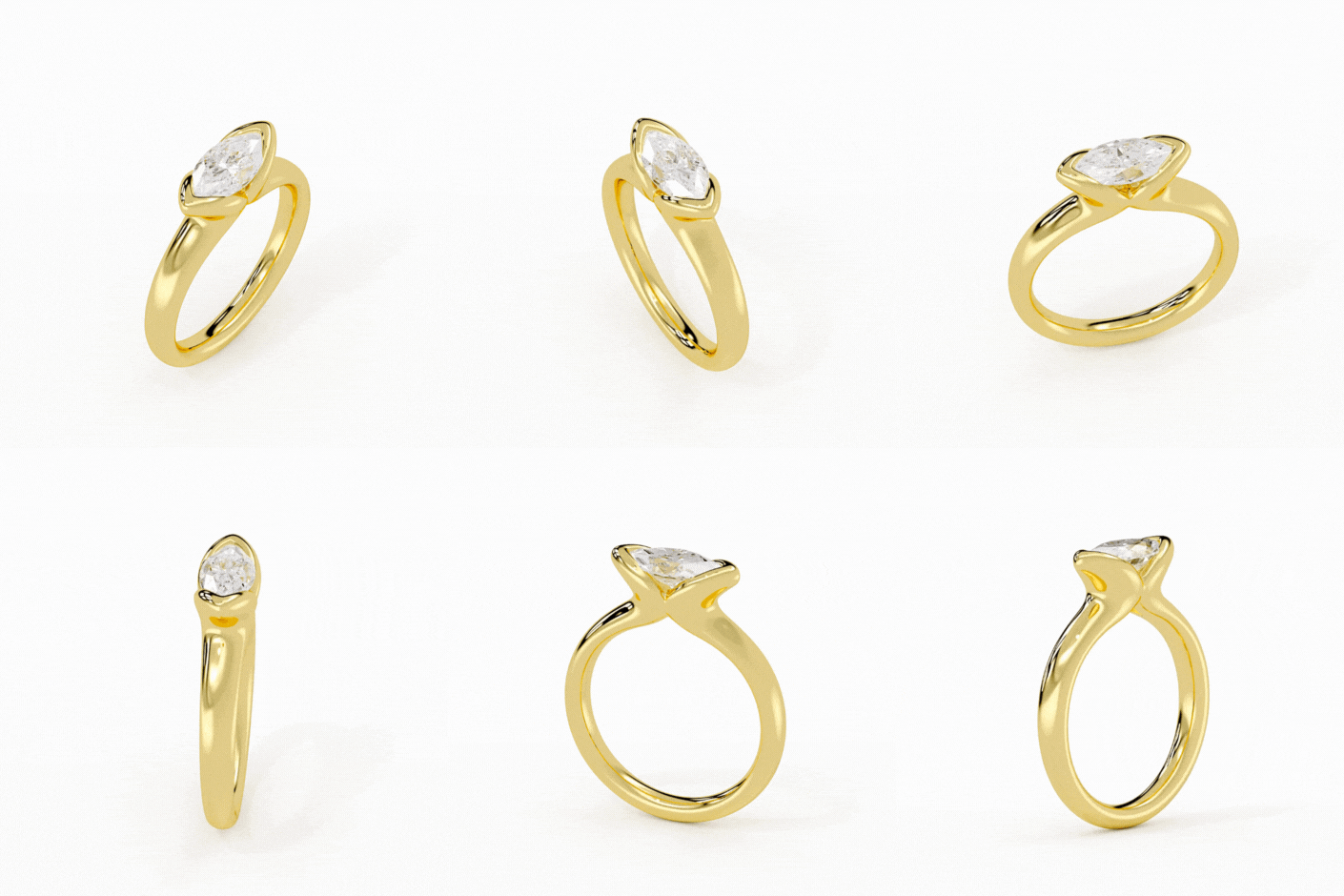
(from top to bottom) Shell Auranova Sirena Half Bezel Solitaire Engagement Ring – Aureline, Shell Auranova Vista Half Bezel Solitaire Engagement Ring – Jaci, and Auravie Flat Edge Bezel Solitaire Engagement Ring – Pippa
Tip #5 – Selecting Metals for a Custom Engagement Ring
Once you’ve finalized your ring’s style and setting, selecting the metal becomes one of the most defining decisions in the design process. The metal influences not only how your ring looks, but how it wears over time, how it complements your center stone, and how it fits into your everyday life. Choosing the best metal for an engagement ring means balancing beauty, durability, lifestyle, and personal meaning.
At Sylvie Jewelry, custom engagement rings are crafted in premium metals including white gold, yellow gold, rose gold, two-tone gold, and platinum. Each option brings its own character, advantages, and visual language, making it important to understand how they differ before making your final selection.
Gold Options for Custom Engagement Rings
Gold remains one of the most popular choices for custom engagement rings due to its versatility, warmth, and timeless appeal. Because pure gold is naturally soft, it is alloyed with other metals to improve strength and durability. Most custom engagement rings are crafted in either 14K or 18K gold, offering a refined balance of purity and wearability.
White Gold Engagement Rings
White gold engagement rings are prized for their bright, contemporary finish that enhances the brilliance of diamonds. Created by alloying yellow gold with metals such as palladium or nickel, white gold is finished with a rhodium coating to achieve its luminous white appearance. This sleek tone pairs beautifully with modern settings, halos, and pavé designs, making it a popular alternative to platinum.
Yellow Gold Engagement Rings
Yellow gold engagement rings offer a rich, classic warmth that has endured for generations. Its naturally golden hue flatters a wide range of skin tones and provides a beautiful contrast to diamonds and colored gemstones alike. Yellow gold is often favored for vintage-inspired designs, solitaire styles, and rings meant to feel timeless yet expressive.
Rose Gold Engagement Rings
Rose gold engagement rings are created by blending gold with copper, resulting in a soft blush tone that feels romantic and distinctive. This metal has grown in popularity for its warmth and its ability to complement both modern and vintage-inspired settings. Rose gold adds subtle character without overpowering the center stone, making it a meaningful choice for personalized designs.
Each gold color offers a different emotional tone, from the crisp refinement of white gold to the warmth of yellow gold and the romantic softness of rose gold. The right choice is the one that feels most aligned with your story and personal style.
Platinum vs Gold for Engagement Rings
For those seeking exceptional durability and purity, platinum engagement rings remain a standout choice. Platinum is naturally white, meaning it never requires rhodium plating and maintains its color over time. Its density gives the ring a substantial feel, and its hypoallergenic properties make it ideal for sensitive skin.
When comparing white gold vs platinum, the difference often comes down to maintenance and weight. White gold offers a lighter feel and a more accessible price point but requires occasional replating to maintain its bright finish. Platinum, while typically more expensive, develops a soft patina over time rather than wearing away, making it a long-term investment in durability.
If you’re interested in the heritage and properties of this rare metal, exploring interesting facts about platinum can provide deeper insight into why it has long been associated with prestige, endurance, and fine craftsmanship.
Choosing the Best Metal for Your Custom Ring
Beyond metal color, karat weight plays a significant role in durability, appearance, and longevity. Understanding the difference between 14K and 18K gold can help you make a more informed decision.
- 14K Gold contains a higher percentage of alloy metals, making it more durable and resistant to everyday wear. It’s an excellent option for those with active lifestyles who want lasting strength without sacrificing beauty.
- 18K Gold offers a higher gold content, resulting in richer color and a more luxurious feel. While slightly softer than 14K, it is often chosen for its depth of tone and refined appearance, especially in yellow and rose gold designs.
When choosing the best metal for your custom engagement ring, consider how often it will be worn, how it complements your chosen diamond or gemstone, and how it fits within your overall budget. With thoughtful guidance and a clear understanding of your options, your metal choice becomes the foundation of a ring designed to last a lifetime.
Tip #6 – Choosing the Perfect Gemstone for Your Custom Ring
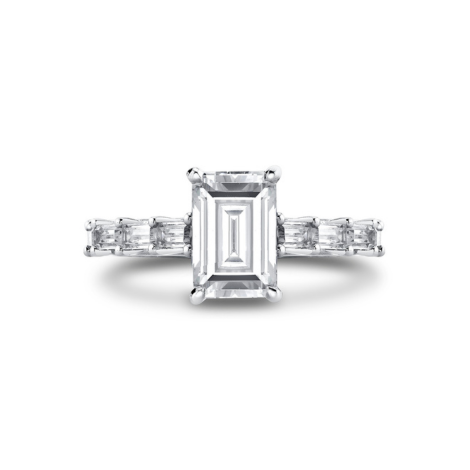
The center gemstone is the heart of every custom engagement ring, serving as the focal point that captures light, emotion, and meaning. When you design your own engagement ring, selecting the center stone goes beyond aesthetics alone; it’s about choosing from the best stones for engagement rings based on lifestyle, symbolism, and how the stone interacts with your chosen metal and setting. The right gemstone brings balance to the design and transforms your ring into a deeply personal expression of your story.
Working closely with a Sylvie Authorized Retailer ensures you have expert guidance at every stage of this decision. From understanding diamond performance to evaluating colored gemstones, their role is to help you navigate options confidently and intentionally.
Diamond Cuts and the 4Cs for Custom Engagement Rings
Diamonds remain the most traditional choice for engagement rings, valued for their durability, brilliance, and enduring symbolism. Among all shapes, the round engagement ring is widely considered the most classic shape for engagement rings, thanks to its unmatched sparkle and universal appeal. In fact, when couples ask what diamond cut sparkles the most, the answer is almost always the round brilliant, as its precise facet arrangement maximizes light return.
Other popular diamond shapes offer different visual effects. Oval engagement rings, pear engagement rings, and marquise engagement rings are often favored by those wondering which diamond cut looks biggest, as their elongated silhouettes create the illusion of greater surface area. Emerald engagement rings and asscher engagement rings appeal to those drawn to refined elegance, emphasizing clarity and structure over sparkle, while radiant engagement rings and cushion engagement rings blend brilliance with soft geometry.
No matter the shape, every diamond is evaluated using the 4Cs of diamonds: cut, color, clarity, and carat weight. Cut determines how well the diamond reflects light, color influences its overall brightness, clarity affects transparency, and carat weight impacts presence and scale. A knowledgeable Sylvie Authorized Retailer can help you balance these elements, showing you how a well-cut diamond can outperform a larger stone with lower proportions, and guiding you toward a center stone that aligns with both your vision and budget.
Using Alternative Gemstones in Custom Engagement Rings
For couples seeking something more expressive, colored gemstones offer a meaningful alternative. Sapphires, emeralds, rubies, and other stones introduce color, symbolism, and individuality into custom designs, making gemstone vs diamond engagement rings a thoughtful comparison rather than a departure from tradition.
Gemstones vary widely in hue, hardness, and meaning. Sapphires are prized for durability and depth of color, emeralds for their rich green tones and heritage appeal, and rubies for their bold symbolism of passion and strength. While diamonds remain the hardest gemstone for everyday wear, many alternative stones are suitable for engagement rings when chosen with proper guidance and protective settings.
This is where a Sylvie Authorized Retailer becomes essential. They help assess durability, recommend appropriate settings, and ensure your chosen gemstone is well-suited for daily wear. Whether you’re drawn to the timeless brilliance of a diamond or the personal significance of a colored stone, expert consultation ensures your center stone enhances both the beauty and longevity of your ring.
Final Thoughts on Designing a Custom Engagement Ring
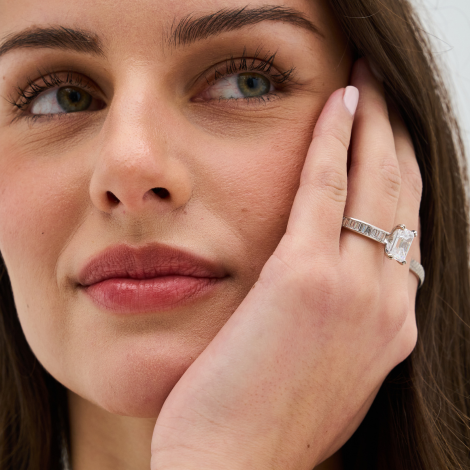
Designing a custom engagement ring is a deeply personal process, one that balances intention, craftsmanship, and meaning. Every decision, from setting a budget and choosing the right metal to selecting a center stone that reflects your values, contributes to a ring that feels considered, authentic, and entirely your own.
A truly successful custom engagement ring isn’t defined by trends alone. It’s shaped by how well the design aligns with the wearer’s lifestyle, personality, and long-term vision. Whether that means refining an existing Sylvie design or building something from the ground up, customization allows you to focus on what matters most and create a piece that feels lasting rather than momentary.
Throughout the journey, working with a Sylvie Authorized Retailer ensures expert guidance at every step. From reviewing a detailed digital rendering to understanding material options and stone selection, their role is to translate ideas into a thoughtfully crafted ring with clarity and confidence.
In the end, a custom engagement ring becomes more than a symbol of a proposal. It’s a reflection of your story, designed with care and meant to be worn for a lifetime.
Custom Engagement Ring FAQs
Designing a custom engagement ring often comes with thoughtful questions about process, timing, cost, and design flexibility. Below are answers to the most common questions couples ask when exploring custom engagement rings.
What is a custom engagement ring?
A custom engagement ring is a ring designed specifically for you, either by modifying an existing style or creating a design from scratch. Every detail, from the setting and metal to the center stone and proportions, is selected intentionally. The result is a ring that reflects personal style rather than a mass-produced design.
How long does it take to design a custom engagement ring?
Most custom engagement rings take approximately 6–8 weeks from initial consultation to completion. This timeline includes design development, a detailed digital rendering review, stone sourcing, and final craftsmanship. Starting early allows time for thoughtful revisions without feeling rushed. Check with your Sylvie Authorized Retailer for specific information on how long does it take to get an engagement ring as this timeline may vary by retailer.
How much does a custom engagement ring cost?
The cost of a custom engagement ring varies based on design complexity, metal choice, and center stone selection. Custom does not automatically mean more expensive. Many couples find they can prioritize what matters most while staying within budget when working closely with a knowledgeable jeweler.
Can I customize an existing engagement ring design?
Yes. Many couples choose to customize an existing Sylvie engagement ring by adjusting details such as metal type, diamond shape, band width, or accent placement. This approach offers the reassurance of a proven design with the flexibility of personalization.
What are the best stones for a custom engagement ring?
Natural diamonds remain the most popular choice for custom engagement rings due to their durability and symbolism. However, sapphires, emeralds, and rubies are also meaningful options. A Sylvie Authorized Retailer can help you evaluate the best stones for engagement rings based on lifestyle, setting, and long-term wear.
Can I design a custom engagement ring if I don’t know exactly what I want?
Absolutely. Many people begin the process with only a few preferences or inspiration images. A Sylvie Authorized Retailer helps translate those ideas into a cohesive design, guiding you through options step by step until the ring feels complete and intentional.
Is designing your own engagement ring better than buying ready-made?
Designing your own engagement ring allows for greater personalization and emotional connection. While ready-made rings offer convenience, a custom ring ensures the design aligns with your story, style, and priorities, making it a more meaningful choice for many couples.
Can I add engraving or hidden details to a custom engagement ring?
Yes. Engraving initials, dates, or meaningful phrases is a popular way to personalize a ring. Some couples also include hidden design details, such as subtle accent diamonds or symbolic elements, known only to them.
What if I want to propose on a specific date?
If you have a proposal date in mind, it’s best to begin the custom engagement ring process as early as possible. Your Sylvie Authorized Retailer can help plan the timeline to ensure your ring is completed well ahead of your proposal.
Where should I go to design a custom engagement ring?
The best place to design a custom engagement ring is with a Sylvie Authorized Retailer. They are trained in Sylvie’s design process, craftsmanship standards, and customization capabilities, ensuring your ring is thoughtfully designed and expertly crafted from start to finish.