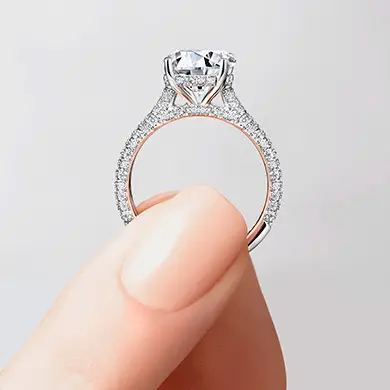
Choosing between a pear and marquise diamond ring is a decision that blends personal style with history, symbolism, and aesthetics. Both shapes are celebrated for their elongated silhouettes and distinctive points, yet each brings a different character to engagement rings. Pear diamonds, often called teardrop diamonds, are graceful and versatile, while marquise diamonds offer bold drama and an impression of size beyond their carat weight.
Understanding how these two cuts compare helps you select the one that feels right for your hand, lifestyle, and story. This guide explores every detail, from symbolism to settings, to help you decide confidently.
Pear vs Marquise Diamond
When considering what is a marquise diamond and what is a pear diamond, it’s important to understand more than their shapes. Both cuts carry centuries of history and symbolic meaning, and both can be interpreted differently depending on style and setting. Together, they represent two of the most expressive choices in fancy-shaped diamonds.
Pear-Shaped Diamond History & Meaning
The pear-shaped diamond dates back to the 1400s when Flemish polisher Lodewyk van Bercken invented the diamond-cutting wheel. This innovation allowed for greater symmetry and brilliance, making the teardrop form possible.
Pear diamonds symbolize tears of joy and emotional depth, often chosen by brides seeking elegance with individuality. Their asymmetry, rounded on one end, pointed on the other, embodies duality: softness balanced with strength. Today, pear engagement rings are seen as versatile and expressive, suiting women who value both classic beauty and distinctive style. For a deeper look, explore our guide on pear shaped engagement ring meanings.
Pear vs Teardrop Diamond: What’s the Difference?
In jewelry terminology, “pear-shaped” and “teardrop” diamonds refer to the same cut. The term “pear” is standard in gemological circles, while “teardrop” is a more colloquial description. Both reference the diamond’s rounded base and tapered point.
Some couples lean toward the term “teardrop” for its emotional symbolism, while others prefer “pear” for its clean, descriptive accuracy. Regardless of the name, the meaning and appearance remain the same: a diamond that merges the curves of a round cut with the precision of a marquise tip, creating an elegant hybrid with unique personality.
Marquise Diamond History & Meaning
The marquise cut traces its origin to 18th-century France, when King Louis XV commissioned a diamond shape resembling the lips of his mistress, the Marquise de Pompadour. The elongated oval with pointed ends was born from that request, and it quickly became associated with grandeur and romance.
Marquise diamonds became popular in royal courts across Europe, symbolizing confidence, drama, and bold expression. Their name itself carries a title of nobility, reinforcing the cut’s association with status and refinement. Brides who choose marquise engagement rings often admire its dramatic presence and its ability to make fingers look longer and more slender.

(from top to bottom) B16 and Pear Shaped Solitaire Engagement Ring – Dominique
Shape, Aesthetics & Sparkle — Pear vs Marquise Diamond Rings
When comparing pear shaped engagement rings and marquise cut engagement rings, couples often focus on how each cut looks on the hand, interacts with light, and expresses personality. Both are elongated fancy shapes, but their profiles, brilliance, and symbolism differ in meaningful ways.
Visual Impact & Finger Coverage in Pear and Marquise Diamonds
When considering which diamond cut looks biggest, one of the reasons both shapes remain popular is their ability to create the illusion of size. A pear diamond, with its rounded base and tapered point, offers versatility in orientation. When worn with the point facing outward, it elongates the finger, while the rounded side softens the look. Brides often appreciate how this duality balances delicacy with presence. Learn more in our guide on how to wear a pear shaped ring.
The marquise, by contrast, is engineered for maximum spread. Its elongated outline and narrow tips emphasize length, making it appear larger per carat than most shapes. This makes the marquise an excellent choice for couples seeking dramatic finger coverage without increasing carat weight. The effect is bold, linear, and refined, often chosen by women who prefer a statement silhouette with graceful tapering.
Light Performance & Bow-Tie Effect in Pear vs Marquise Diamonds
When considering what diamond cut sparkles the most, both pear and marquise diamonds belong to the modified brilliant family, meaning they are cut to maximize light return. Their faceting patterns can deliver striking brilliance, but both are also prone to the “bow-tie effect”, a shadow across the center caused by light leakage.
In pear diamonds, the bow-tie tends to be subtle when well-cut, balanced by flashes of brilliance across the curved and pointed ends. The key is symmetry: a pear that is neither too squat nor too elongated reflects light beautifully while minimizing dark areas.
Marquise diamonds show the bow-tie more prominently if not cut precisely. However, the elongated design also means that a well-executed cut can channel brilliance along the length of the stone, drawing the eye outward. Choosing a diamond with excellent symmetry and polish reduces bow-tie shadows and ensures the cut displays brilliance evenly across its surface.
Symbolism & Personality in Pear and Marquise Diamond Rings
Symbolism plays an important role in how couples connect with a diamond shape. A pear-shaped engagement ring often ties back to tears of joy, representing romance, individuality, and emotional depth. Pear diamonds are ideal for brides who want a distinctive shape with graceful curves, often paired with modern solitaires or vintage-inspired halos. Their asymmetry symbolizes a personal journey, unique, expressive, and full of character.
Marquise diamonds, on the other hand, symbolize grandeur and boldness. Historically tied to royalty, they carry a sense of luxury and drama. The sharp tips and elongated body suggest ambition, strength, and confidence. Brides who select marquise engagement rings often see them as unconventional yet elegant, a choice that commands attention while remaining sophisticated.
Marquise vs Oval vs Pear: Elongated Shape Comparison
When viewed alongside other elongated shapes, the distinctions become clear. Oval diamonds are soft and symmetrical, appealing to brides who want finger coverage without pointed ends. Pear cut diamond engagement rings offer one pointed tip and one rounded end, combining fluid curves with sharp precision. Marquise engagement rings take elongation to the extreme, with two sharp ends that create maximum spread.
The choice between the three depends on personality and lifestyle. Oval engagement rings appeal to those who favor classic elegance with modern versatility. Pear speaks to individuality and a balance of softness with edge. Marquise is for those who want bold drama and a ring that visually maximizes size. All three share the benefit of lengthening the finger, but each delivers a different emotional impression.

(from left to right) Channel Set Diamond Wedding Ring – B267, Marquise Cut Bezel Set Engagement Ring – Cliodhna, Curved Shared Prong Diamond Wedding Ring – B269, and Round Bezel Diamonds Bracelet – BRS1011
Size, Durability & Value — Marquise vs Pear Diamond
Beyond appearance, practical factors like size, durability, and value, play a crucial role. How large each diamond looks on the hand, how secure the tips remain over time, and how pricing compares all influence the decision. This section explores the everyday realities that affect wearability, care, and overall value.
How Big Do Pear and Marquise Diamonds Look?
Both cuts are celebrated for their ability to appear larger than their actual carat weight. Pear diamonds, with their elongated profile, draw the eye lengthwise, creating an impression of size beyond the numbers on a grading report. A well-proportioned pear can appear 10–15% larger than a round diamond of the same weight.
Marquise diamonds take this illusion further. Their narrow points and stretched outline deliver the most surface area per carat of any diamond shape. For couples who prioritize finger coverage, the marquise is unmatched. However, its extreme elongation can sometimes make the stone appear thinner if the length-to-width ratio is too high, so proportions should be chosen carefully.
Durability & Care Tips for Pear vs Marquise Diamond Points
Both shapes share a structural vulnerability: their pointed tips. These delicate ends are more prone to chipping than rounded shapes, which makes setting choice critical. Protective prongs, bezel settings, or v-shaped tips are essential to shield these points from impact.
For pear diamonds, the single tapered end is typically set with a secure v-prong. For marquise diamonds, both points require protection. Daily wearers should also be mindful when engaging in activities where the ring may be struck. Regular inspections at a Sylvie Authorized Retailer ensure the prongs remain secure, preserving the diamond’s integrity for a lifetime.
Price & Value Considerations for Pear and Marquise Diamond Cuts
In understanding the cost of engagement rings, both pear and marquise diamonds generally cost less per carat than the popular round brilliant. Their elongated shapes allow cutters to use rough diamonds efficiently, resulting in fewer losses and more favorable pricing.
Pear diamonds often fall slightly higher in demand than marquise, especially among modern brides, which can influence availability and price trends. Marquise diamonds, while less requested than in their peak 1980s popularity, are experiencing a resurgence with couples drawn to their bold, vintage-meets-modern appeal.
Both shapes offer excellent value for couples seeking maximum size for budget, with marquise offering the strongest illusion of carat weight and pear delivering a versatile style that adapts to many settings. Ultimately, the value lies not only in the price but in how well the shape aligns with lifestyle, symbolism, and personal tastes.
Choosing the Right Cut — Pear vs Marquise Diamond Rings for Hand & Style
Selecting between pear and marquise diamonds often comes down to how each shape complements hand proportions and personal style. Both deliver elegance with elongation, but subtle differences determine which feels most natural to wear.
Finger Shapes for Pear and Marquise Diamonds
Pear diamonds adapt well to a variety of finger shapes because they can be worn point-up or point-down. When oriented downward, they create the illusion of length, flattering shorter or wider fingers. When worn with the point up, the diamond draws attention toward the fingertip, enhancing slender fingers with a delicate finish. Their asymmetry gives them flexibility that other shapes may lack.
Marquise diamonds, with their elongated silhouette and sharp points, are particularly effective at lengthening the appearance of the hand. They create a dramatic, slimming effect on shorter fingers, making them appear more tapered. Brides with naturally long, slender fingers may also choose marquise for its bold, eye-catching geometry, which adds presence without overwhelming.
Lifestyle & Style Preferences — Pear Solitaire Rings vs Marquise Halo Designs
Lifestyle plays an equally important role in the decision. Pear solitaire rings are ideal for those who value elegance with versatility. A solitaire engagement ring setting allows the unique silhouette to stand alone, while also pairing beautifully with wedding rings or stackable rings. Brides who favor understated yet distinctive jewelry often gravitate toward this style.
Marquise diamonds shine in more elaborate designs, particularly halo engagement rings. A marquise halo engagement ring not only enhances the stone’s perceived size but also adds protection to its tips. This setting emphasizes the marquise’s dramatic outline, appealing to brides who love statement-making styles with vintage inspiration or modern edge.
Ultimately, the choice between pear and marquise should reflect both the wearer’s aesthetic and lifestyle. Whether selecting the soft asymmetry of a pear solitaire or the bold symmetry of a marquise halo, each cut becomes a reflection of personality and story.
Best Settings for Pear and Marquise Cuts
The right setting enhances both beauty and durability, especially for elongated shapes like pear and marquise. Because both cuts feature delicate points, thoughtful design ensures they remain secure while reflecting the wearer’s style.
Best Settings for Pear Diamonds (Teardrop or Pear Shape Engagement Rings)
Pear diamonds, often referred to as teardrop diamonds, benefit from settings that balance beauty, protection, and proportion. Because of their tapered point, many pear-shaped engagement rings feature a protective v-prong at the tip to help guard against chipping while preserving the stone’s distinctive silhouette. Whether styled with side stones or left as a singular focal point, pear diamonds adapt beautifully to a range of settings and can be worn with the point facing up or down, depending on personal preference.
Pear Shaped Unique Three Stone Engagement Ring – Alina
Alina highlights the elegance of a pear-shaped center through a thoughtfully balanced three-stone engagement ring design. Marquise and round side diamonds echo the tapered form of the pear, creating visual harmony while adding dimension and gentle contrast. This setting feels intentional and architectural, making it a beautiful choice for brides drawn to symmetry with a distinctive edge.

Pear Shaped Solitaire Hidden Halo Engagement Ring – Carter
Carter offers a refined take on the pear-shaped solitaire, pairing clean lines with subtle detail. A double hidden halo sits just beneath the center, adding depth and soft dimension without altering the ring’s classic top view. This design is ideal for those who appreciate minimalism with a quietly layered finish and added structure around the pear’s delicate point.

Tulira Curved Shared Prong Engagement Ring – Maisy
Maisy, a style from our Tulira collection, features a gently curved shared-prong band that enhances the pear shape’s natural flow. The sweeping profile draws the eye upward toward the center, while the pavé detailing adds refined texture along the band. This setting feels fluid and modern, offering a graceful balance of softness and structure for a pear-shaped engagement ring.

Best Settings for Marquise Diamonds
Marquise diamonds are defined by their elongated shape and pointed ends, which makes thoughtful setting design especially important. Secure prongs at both tips help protect the diamond while preserving its dramatic silhouette. For brides drawn to modern styling, east-west settings offer a contemporary interpretation of this classic cut. Vintage-inspired engagement ring settings with pavé or milgrain details further enhance the marquise diamond’s regal origins, creating a balanced look that feels both expressive and refined.
Marquise Cut Three Stone Spiral Engagement Ring – Evangeline
The Evangeline ring reimagines the marquise cut through a sculptural three-stone design. A marquise center stone is framed by round side diamonds that follow a subtle spiral along the band, creating movement and dimension from every angle. This setting highlights the length of the marquise while adding softness and balance, making it a striking choice for brides who appreciate artistry and fluid design.

Marquise Cut Bezel Set Engagement Ring – Cliodhna
The Cliodhna features a marquise diamond fully embraced by a smooth bezel setting, offering a clean, contemporary profile with added protection for the stone’s pointed tips. The uninterrupted metal edge creates a refined outline that accentuates the marquise shape without distraction. Ideal for an active lifestyle or a minimalist aesthetic, this design feels confident, modern, and enduring.
 Marquise Cut Classic Engagement Ring – Maryam
 Marquise Cut Classic Engagement Ring – Maryam
Maryam is a refined take on the classic engagement ring. Four precisely placed prongs secure your center stone while allowing light to move freely across its elongated facets. With its balanced proportions and understated band, this setting places full focus on the marquise diamond itself, making it a timeless option for those who value elegance through simplicity.

Combining Pear & Marquise in a Toi et Moi Ring
For couples who want a truly symbolic design, combining pear and marquise diamonds in a Toi et Moi ring creates a meaningful statement. This two-stone style represents two individuals coming together as one, with each diamond cut embodying a unique personality. The pear adds softness and emotional symbolism, while the marquise contributes boldness and structure. Together, they form a balanced, dimensional design that feels both modern and timeless.
At Sylvie, we emphasize settings that not only highlight a diamond’s natural beauty but also protect its structure for everyday wear. Whether you’re drawn to the fluid curves of a pear or the striking geometry of a marquise, choosing a secure and thoughtful setting ensures your ring reflects both style and strength.
Expert Tips for Buying Pear & Marquise Diamonds
When purchasing a pear or marquise diamond, attention to proportion, clarity, and symmetry ensures you select a stone that looks beautiful and performs well. Both shapes offer strong value compared to round diamonds, but their elongated designs require careful evaluation. Our Sylvie Authorized Retailers are experts on the 4cs of diamonds and can help you select the ideal pear or marquise diamond.
Ideal Length-to-Width Ratio for Pear and Marquise Diamonds
The length-to-width ratio describes the proportions of a diamond by comparing its length (measured from tip to tip) to its width (measured across the widest point). Both measurements are taken in millimeters using precision grading tools during the diamond-cutting and evaluation process.
By dividing the length by the width, jewelers arrive at a ratio that helps explain how elongated or compact a diamond will appear once set.
For pear-shaped diamonds, ratios between 1.45 and 1.75 are most popular. A lower ratio produces a fuller, rounder look with softer curves, while a higher ratio creates a longer, more tapered silhouette that feels elegant and dramatic. The difference is subtle but noticeable on the hand, making this an important aesthetic choice rather than a quality marker.
Marquise diamonds typically look best with ratios between 1.75 and 2.15. Within this range, the stone maintains its signature elongated shape without appearing overly narrow. A well-balanced marquise should feel symmetrical, with both pointed tips aligning evenly so the diamond looks refined rather than stretched. Choosing the right ratio ensures the cut flatters the finger and allows the marquise’s brilliance and shape to work together harmoniously.
Clarity & Color Considerations for Pear vs Marquise Diamonds
Clarity and color play an important role in how pear and marquise diamonds appear once they’re set, especially because both shapes feature pointed tips and elongated outlines. While these cuts tend to disguise inclusions better than step-cut diamonds like emerald cuts, certain characteristics still deserve close attention. In pear-shaped and marquise diamonds, inclusions near the pointed ends or along the center line can be more noticeable, particularly if they interrupt symmetry or create visual imbalance. For the best appearance, many buyers choose diamonds with inclusions positioned closer to the rounded areas or toward the edges, where they are less likely to catch the eye.
Color is another key consideration when comparing pear vs marquise diamonds. Because both shapes taper toward points, color can sometimes concentrate at the tips, making warmth more visible than it would be in round or cushion cuts. For pear and marquise diamonds set in white gold engagement rings or platinum engagement rings, near-colorless grades such as G–H are often ideal, as they maintain a bright, crisp appearance across the entire stone. If you’re drawn to yellow engagement rings or rose gold engagement rings, slightly warmer diamonds in the I–J range can appear beautifully balanced, as the metal’s warmth complements the diamond’s natural tone.
Ultimately, selecting the right clarity and color combination ensures that pear and marquise diamond rings look refined, symmetrical, and luminous. Prioritizing clean facet patterns, balanced proportions, and thoughtful metal pairing allows these elongated shapes to show their brilliance while minimizing visible imperfections, resulting in a diamond that feels both striking and thoughtfully chosen.
Avoiding the Bow-Tie Effect & Ensuring Symmetry in Pear and Marquise Cuts
The bow-tie effect, a dark shadow that can appear across the center of elongated diamonds, is something to watch for when buying. While some presence is normal, it should never overpower the stone’s brilliance. Viewing diamonds in different lighting is the best way to evaluate performance. Symmetry also matters: a pear should have even curves on both sides of the rounded end, while a marquise should align cleanly from tip to tip. Checking these details ensures a stone that reflects light beautifully, and our Sylvie Authorized Retailers can guide you toward diamonds with strong cut quality.

(from left to right) Pear Shaped Solitaire Hidden Halo Engagement Ring – Carter, Stackable Wedding Band – B1P11, and Classic Pear-Shaped Band – B124
Final Thoughts on Pear vs Marquise Engagement Rings
Choosing between pear and marquise engagement rings is ultimately about how you want your ring to feel on your hand and reflect your personal style. Both shapes offer elegant elongation, distinctive silhouettes, and a sense of individuality that stands apart from more traditional cuts. Whether you’re drawn to the soft taper and symbolism of a pear-shaped diamond or the bold, regal presence of a marquise cut, each option brings its own balance of beauty, proportion, and character.
As you compare pear vs marquise diamonds, details like length-to-width ratio, clarity placement, color tone, and setting style make all the difference. Taking the time to understand how these elements work together ensures your ring not only looks beautiful but feels right for your lifestyle and everyday wear.
Pear vs Marquise Diamond — Frequently Asked Questions (FAQs)
When shopping for pear and marquise engagement rings, couples often ask practical questions about style, value, and care. Below are answers to the most common.
Is a marquise diamond more expensive than a pear?
In most cases, both pear and marquise diamonds are priced lower per carat than round diamonds, making them appealing options for maximizing visual size. Marquise diamonds often appear slightly larger for their weight due to their elongated surface area, while pear diamonds tend to be in higher demand, which can sometimes influence pricing. Ultimately, factors like cut quality, symmetry, and length-to-width ratio play a bigger role in value than shape alone.
What does a pear-shaped engagement ring symbolize?
Pear-shaped diamonds are often associated with tears of joy, romance, and individuality. Their soft curves and tapered point symbolize emotional connection and forward movement, making them a meaningful choice for brides who value symbolism and personal expression. Many also see the pear shape as a blend of classic elegance and modern individuality.
Do marquise diamonds look bigger than pear diamonds?
Yes, marquise diamonds generally offer the greatest surface area per carat of any diamond shape, which means they often look larger than pears or rounds of the same weight. That said, pear diamonds also create a flattering, elongated appearance on the finger, especially when paired with a well-balanced setting. Both shapes are excellent choices if visual impact is a priority.
How should a pear diamond be worn (point up or down)?
A pear-shaped diamond can be worn either direction, depending on personal preference. Wearing the point downward is the most traditional choice and helps elongate the finger, while wearing it point-up creates a softer, more modern look. The setting style and band design often influence which orientation feels most natural. At Sylvie, we recommend wearing your ring with the point facing down.
How do I protect the pointed tips of a marquise or pear diamond?
Because both pear and marquise diamonds have pointed ends, secure prong placement is essential. V-shaped prongs are commonly used to protect the tips from chipping, especially for everyday wear. Regular inspections by a trusted jeweler ensure that prongs remain secure and the diamond stays properly protected over time.
What is the ideal length-to-width ratio for pear vs marquise?
For pear diamonds, length-to-width ratios between 1.45 and 1.75 are the most popular, offering a balance between softness and elongation. Marquise diamonds typically look best between 1.75 and 2.15, creating a graceful, elongated silhouette without appearing too narrow. These ranges help maintain symmetry and visual harmony.
Can I combine marquise and pear diamonds in one ring?
Yes, combining pear and marquise diamonds is a popular choice, especially in Toi et Moi engagement rings. Pairing the two shapes creates contrast while maintaining cohesion, often symbolizing two distinct individuals coming together. When designed thoughtfully, the combination feels intentional and visually striking.
Are marquise diamonds out of style?
No, marquise diamonds are not out of style. In fact, they are seeing renewed interest through vintage-inspired designs, east-west settings, and modern halos. Their bold shape and historical significance continue to appeal to brides looking for something distinctive yet enduring.
What is a pear shaped diamond called?
A pear-shaped diamond is also known as a teardrop diamond. Both terms refer to the same cut, which combines the rounded brilliance of a round diamond with the tapered point of a marquise.
Teardrop vs pear shape diamond, are they the same?
Yes. “Teardrop” is a descriptive, informal term, while “pear” is the gemological name used within the diamond industry. There is no structural difference between the two; they describe the same diamond shape.