Emerald cut diamond pros and cons are often at the center of conversation for couples drawn to its sophisticated silhouette. This cut isn’t known for sparkle in the traditional sense, but for many, that’s exactly the point. It’s a shape that reflects light differently, reveals more of the stone’s character, and delivers a kind of understated elegance that never feels overdone.
Still, when it comes to selecting the right diamond for your engagement ring, beauty is only one part of the story. From pricing differences and clarity considerations to how an emerald cut compares to other shapes, there are meaningful factors to weigh. And because this is a decision that lasts a lifetime, we believe in offering a balanced, honest perspective.
In this guide, we’ll explore what is an emerald cut diamond, the pros and cons of this shape in detail, what makes them appealing, where they shine, and where they require extra consideration. We’ll also walk through comparisons with other diamond cuts, styling options, and expert tips for choosing a well-cut stone.
Whether you’re drawn to its elongated silhouette or curious how it compares to round brilliants and radiant cuts, this blog is here to help you decide if the emerald cut is the right choice for you.
What is an Emerald Cut Diamond?
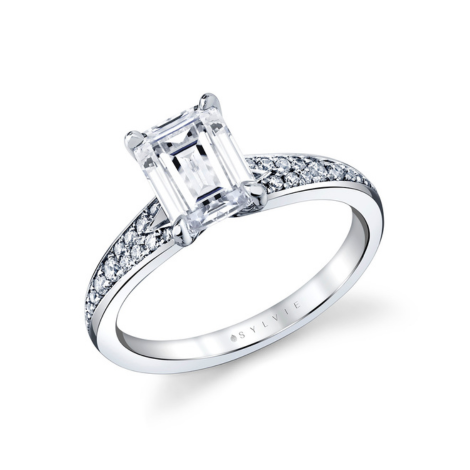
Emerald cut diamond engagement rings are instantly recognizable for their elongated, rectangular shape, clipped corners, and signature step-cut facets. Unlike brilliant cuts that are designed for maximum sparkle, emerald cuts create a more reflective, mirror-like appearance. The result is a diamond that feels composed and architectural, with a soft, flashing glow rather than a scattered shimmer.
Step-Cut Anatomy Explained
Emerald cut diamonds belong to the step-cut family, a group of diamond shapes known for their long, linear facets that resemble stair steps. These include emerald and baguette which focus on symmetry and clarity rather than sparkle.
Unlike brilliant cuts, which are designed for intense light return, step-cut diamonds reflect light in broader, slower-moving flashes. The result is a hall-of-mirrors effect, calm, reflective, and deeply elegant.
Emerald cuts engagement rings feature a large, open table that draws the eye directly into the stone. Because of this openness, the diamond’s quality becomes more apparent. That’s part of the appeal, but it also means inclusions and color are easier to see. For this reason, emerald cuts often benefit from higher clarity and color grades than their brilliant-cut counterparts.
What makes the emerald cut so special is how it pairs this structural clarity with an elongated shape that flatters the hand and adapts beautifully to a range of settings, from classic to bold.
Emerald Cut Shape, Proportions, and Visual Impact
Most emerald cut diamonds are rectangular, though square variations exist. The ideal length-to-width ratio typically falls between 1.3:1 and 1.5:1, depending on personal preference. Longer proportions tend to create a slimming effect on the finger, which many Sylvie brides appreciate for its graceful and elongated look.
With their clipped corners and smooth symmetry, emerald cuts feel more structural than soft. That clean geometry is part of what makes them so versatile, they work beautifully in both minimalist and more dimensional settings, adapting easily to your personal style.
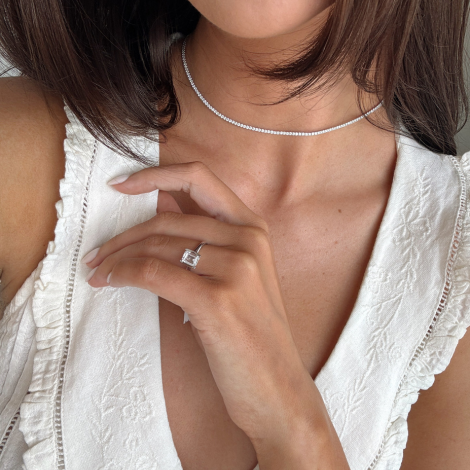
(from top to bottom) Diamond Tennis Choker Necklace – NL903 and Shell Auranova Half Bezel Solitaire Engagement Ring – Delani
Emerald Cut vs Other Diamond Shapes
Emerald cut engagement rings offer a very specific kind of beauty, but how do they compare to other popular shapes in terms of brilliance, visibility, and overall presence? Whether you’re drawn to clean lines, dramatic sparkle, or something in between, understanding the differences between cuts can help narrow your options and focus your preferences.
Emerald Cut vs Round Cut Diamonds
Round brilliant diamonds are the most popular choice for engagement rings, and for good reason. Their 58 carefully arranged facets are designed to maximize light return, resulting in intense sparkle from nearly every angle. If your top priority is brilliance, a well-cut round diamond is hard to beat.
Emerald cuts, by contrast, offer a different kind of radiance. Rather than scattering light in bursts, they reflect it in broad, mirror-like flashes. This makes them less sparkly, but often more elegant. Where rounds feel bright and playful, emerald cuts feel composed and architectural.
Round engagement rings are also more forgiving when it comes to clarity and color. Because of their brilliance, small inclusions or faint yellow tones are harder to detect, whereas an emerald cut will highlight these characteristics more readily.
Emerald Cut vs Radiant Cut Diamonds
When comparing emerald cut vs radiant cut, the distinction comes down to how each diamond handles light. Radiant cut diamonds combine the elongated outline and cropped corners of an emerald cut with brilliant-style faceting, making them a strong option for those who love the emerald shape but want more sparkle.
The difference lies in facet structure. Radiant engagement rings use triangular and kite-shaped facets similar to round diamonds, which scatter light and create high brilliance. Emerald cuts rely on long, step-like facets that run parallel down the stone, producing broader flashes of light with a more restrained glow. In an emerald cut vs radiant cut comparison, radiant cuts feel lively and energetic, while emerald cuts feel structured and composed.
Shoppers deciding between emerald cut vs radiant cut are often weighing minimalism against brilliance. If you prefer clean lines and clarity-driven beauty, the emerald cut stands out. If sparkle and movement are a priority, the radiant cut may feel like the better fit.
Emerald Cut vs Oval Cut Diamonds
If you’re drawn to an elongated diamond but want more sparkle, oval engagement rings are often the first alternative to consider. Both oval and emerald cuts create a lengthening effect on the finger and can appear larger than their carat weight, but their visual personalities differ.
Ovals belong to the brilliant cut family, designed to maximize sparkle through triangular and kite-shaped facets. This gives them a fluid, romantic feel with a lively light return. Emerald cuts, by contrast, feature long, linear facets that reflect light in broader flashes, emphasizing clarity, symmetry, and structure over brilliance.
When understanding the oval diamond ratio, it’s helpful to note that ovals can show a bowtie effect across the center of the stone, depending on proportions. Emerald cuts avoid this but reveal internal characteristics more easily, making clarity an important consideration. In an oval vs emerald comparison, the choice often comes down to sparkle versus structure, both offer a flattering silhouette, but each expresses it in a distinctly different way.
Quick Comparison: Emerald vs Other Diamond Cuts
Here’s how emerald cuts compare across a few key points:
- Sparkle: Round and radiant cuts offer the most brilliance, while emerald cuts reflect light in broader, more restrained flashes.
- Clarity visibility: Emerald cuts make inclusions easier to see because of their open facet structure. Round, oval, and radiant cuts tend to disguise them more effectively.
- Face-up size: Emerald cuts often appear larger than round or oval diamonds of the same carat weight due to their elongated shape and wide table.
- Styling versatility: Emerald cuts pair naturally with clean, structured settings like solitaires, double bands, and halos. Brilliant cuts adapt easily to both minimal and more detailed designs.
Every diamond cut carries its own visual language. If you’re drawn to balance, symmetry, and a more architectural presence, the emerald cut offers a refined alternative to sparkle-driven shapes.
The Pros and Cons of Emerald Cut Diamonds
When evaluating emerald cut diamond pros and cons, it’s important to look beyond appearance alone and consider how the 4Cs of diamonds come into play. This cut offers a refined balance of elegance, value, and structure, but it also calls for greater intention around clarity, color, and expectations for sparkle. Understanding where emerald cuts excel, and where they require a more thoughtful approach, helps you determine whether this distinctive shape aligns with your style, lifestyle, and priorities for an engagement ring.
Pros of Emerald Cut Diamonds
Emerald cut diamonds appeal to those who value intention, structure, and refined design. Rather than emphasizing maximum sparkle, this cut highlights proportion, clarity, and a composed visual presence. For engagement ring shoppers who appreciate clean lines and thoughtful detail, the emerald cut offers several advantages that set it apart from other diamond shapes.
Elegant and Understated Aesthetic
One of the standout benefits of emerald cut diamonds is their ability to make a quiet statement. The geometry of this cut, with its long, step-cut facets and open table, creates a sense of balance and refinement. Rather than relying on dramatic sparkle, the emerald cut emphasizes clarity and proportion, resulting in an aesthetic that feels composed and intentional.
For many modern engagement ring shoppers, that restraint is the appeal. Often described as “confident without trying too hard,” the emerald cut offers an elegant alternative to high-sparkle styles. Brides drawn to tailored silhouettes, architectural jewelry, or details like bezel settings and elongated bands often find this shape aligns naturally with their personal style.
Its versatility only adds to its appeal. Whether set as a classic solitaire or paired with more dimensional design elements, the emerald cut maintains its character. For those seeking a ring that feels current without chasing trends, this shape delivers a refined, enduring look without exaggerated shine.
Larger Face-Up Appearance
If you’re trying on engagement rings and notice that an emerald cut looks larger than others of the same carat weight, you’re not imagining it. Emerald cuts are known for their generous face-up size, a term that refers to how large the diamond appears when viewed from above.
This visual advantage comes from the elongated rectangular shape and wide, open table. Because more of the diamond’s surface is visible, it covers more of the finger and gives the illusion of a larger stone. For someone comparing a 1.5-carat emerald cut to a 1.5-carat round brilliant, the emerald cut will usually appear longer and slightly broader across the finger, even though the carat weight is the same.
That difference can be especially appealing if you’re shopping within a budget or prioritizing a ring that feels bold without being oversized. One shopper recently told one of our authorised retailers that she chose emerald because “it looked like a 2-carat without having to buy a 2-carat.” It’s a small optical shift that makes a big impact, especially for those who want a presence-driven ring without adding unnecessary height or width.
Whether styled in a classic solitaire or paired with side stones for extra dimension, the emerald cut’s ability to maximize surface area is one of its most practical, and beautiful, strengths.
Why Emerald Cut Diamonds Are Often More Affordable
If you’ve been comparing prices across diamond shapes, you may notice that emerald cut diamonds often cost less per carat than round brilliants or other popular cuts. This isn’t a reflection of quality, but rather a result of how emerald cuts are shaped.
Because the emerald cut preserves more of the original rough diamond during the cutting process, less material is lost. Fewer facets and a higher yield make these diamonds more efficient to produce, which often translates to more accessible pricing at the same carat weight. For engagement ring shoppers who want strong visual presence without stretching their budget, this can be a meaningful advantage.
That pricing flexibility may allow for a slightly larger stone or more detailed setting while staying within your original range. When paired with the emerald cut’s elongated shape and clean symmetry, the result is a diamond that offers both visual impact and thoughtful value.
Highlights Clarity and Precision
For those who love the idea of a diamond that reveals its full character, the emerald cut is a natural choice. Unlike brilliant cuts, which use small, angled facets to mask inclusions, emerald cuts are transparent, both literally and stylistically. The open table and linear facet pattern create a window-like view into the diamond, showcasing its clarity in a way that feels both refined and revealing.
This level of visibility is one of the cut’s defining traits, and it’s also why clarity and color matter a bit more here. If you’re choosing an emerald cut engagement ring, a diamond with a VS2 clarity or higher and a color grade of H or better will usually offer the most balanced appearance. That doesn’t mean perfection is required, it just means the details are easier to notice, so precision becomes part of the beauty.
Many Sylvie shoppers describe this as a positive rather than a drawback. The idea of seeing the full story of the diamond, the way it was shaped, where light moves through it, and how clean the structure is, feels intentional and meaningful. One bride shared, “I wanted something that looked elegant but also showed the work behind it. The emerald cut felt honest in the best way.”
If you’re someone who appreciates craftsmanship, geometry, and subtlety, the clarity-focused nature of an emerald cut diamond might feel like a reflection of your own values. It rewards those who look closely.
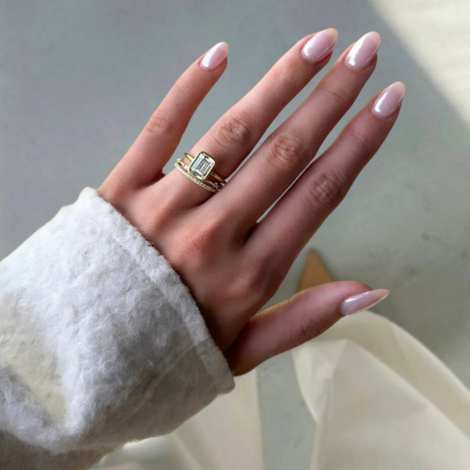
(from top to bottom) Emerald Cut Bezel Set Engagement Ring – Cliodhna, Classic Spaced Diamond Wedding Ring – Eniko
The Cons of Emerald Cut Diamonds
While emerald cut diamonds are admired for their refined structure and clarity-driven beauty, they do come with a few considerations worth understanding. This cut prioritizes transparency and proportion over brilliance, which can influence how inclusions, color, and sparkle are perceived. Taking a closer look at these potential drawbacks helps set clear expectations and ensures the emerald cut is the right fit for your engagement ring vision.
Do Emerald Cut Diamonds Sparkle Less?
Yes, and no. Do emerald cut diamonds sparkle like brilliant cuts? Not exactly. But they’re not meant to. The difference lies in how each diamond cut interacts with light.
Brilliant cut diamonds are designed with triangular and kite-shaped facets that reflect light in many directions, producing the intense sparkle many people expect from an engagement ring. Their faceting style emphasizes fire and brilliance, making them an easy choice for those who want maximum shimmer.
Emerald cuts take a more structured approach. Their long, rectangular step-cut facets create wider, more deliberate flashes of white light, often referred to as a “hall of mirrors” effect. Rather than a dance of sparkle, emerald cuts offer clean, reflective gleams that move across the stone’s surface as it shifts. It’s elegant, but noticeably more subtle.
For some shoppers, this softer light performance is actually a benefit, it feels more tailored, more refined. But if you’re expecting maximum sparkle, it’s worth seeing both styles side by side. Try on a radiant cut next to an emerald cut, for example, and you’ll immediately sense the difference in personality.
This doesn’t mean emerald cuts are dull. When set in a three stone or halo engagement ring, they can carry light beautifully through side stones or accent diamonds. But the sparkle is more restrained, best suited for those who prefer a composed glow over intense brilliance.
Why Inclusions Are More Visible
One of the defining traits of an emerald cut is its ability to showcase the internal characteristics of a diamond. This is both a strength, and something to be aware of.
Because emerald cuts feature broad, linear facets arranged in parallel rows, they don’t conceal inclusions the way more intricate cuts often do. With their large, open table and linear facet structure, even small imperfections may be visible to the naked eye. This is where cut diamond clarity becomes a key part of the decision-making process.
For example, a diamond with a clarity grade of SI1 may appear perfectly clean in a brilliant cut, but that same grade might reveal visible inclusions in an emerald cut. It’s not about flaws, it’s about transparency. Emerald cuts invite the viewer in, making every aspect of the stone more noticeable.
That’s why many shoppers opt for VS2 clarity or higher when choosing an emerald cut engagement ring. It’s not a hard rule, but it’s a helpful guideline, especially if you’re looking for a stone that feels crisp and refined.
An emerald cut with strong internal quality becomes a showcase of precision and polish, especially in structured settings like double shank rings or styles that emphasize symmetry, such as three stone or hidden halo designs.
Color and Cut Quality Matter More
If you’ve spent time comparing diamonds, you’ve likely noticed that some shapes are more forgiving when it comes to color and clarity. Emerald cuts, however, ask for more precision.
That’s because their clean geometry doesn’t just highlight clarity, it also reveals warmth in the stone more easily. While a brilliant cut may mask slight traces of yellow, the broad facets of an emerald cut can make color differences more noticeable, especially in white gold or platinum settings.
When considering what is the best color for a diamond, many experts suggest choosing a grade of H or higher for emerald cuts to ensure the stone looks bright and crisp, especially alongside side stones or pavé accents.
In addition to color, symmetry and polish also play a larger role in emerald cuts. Any slight misalignment in the facets becomes more obvious, especially under natural light. So while excellent cut grading may feel optional with other shapes, it carries more weight here.
This doesn’t mean perfection is mandatory, but it does mean that emerald cut shoppers benefit from a little more selectivity. If you’re investing in a diamond that shows everything, it helps to choose one worth showing off.
Ultimately, it’s not about meeting a set of rigid rules. It’s about knowing what to look for and how each characteristic contributes to the look and feel of your ring. Your Sylvie Authorized Retailer will help guide you in weighing the pros and cons and help you select your ideal emerald cut diamond for your engagement ring.
Styling and Setting Options for Emerald Cut Engagement Rings
One of the standout qualities of emerald cut diamonds is how effortlessly they adapt to a wide range of engagement ring styles. Their clean, elongated silhouette works beautifully across different settings, each highlighting a different aspect of the diamond’s personality. Whether you’re drawn to simplicity or dimension, there’s a design that can enhance the cut’s structural elegance.
Solitaire Emerald Cut Engagement Rings
Choosing a solitaire setting allows the emerald cut to take center stage. With no distractions, the diamond’s shape, clarity, and subtle light reflection become the main focus. Solitaire engagement rings speak to someone who values intention and timeless design. It’s often chosen by those who want a refined look that quietly stands out, especially in yellow or white gold.
Halo Emerald Cut Engagement Rings
For those who want a bit more light play, halo engagement rings are a natural match. The surrounding frame of smaller diamonds enhances the visual size of the center stone while adding a layer of brilliance. In a halo design, the contrast between the step-cut emerald and the sparkle of round pavé diamonds creates a modern yet balanced aesthetic. All you need to know about halo engagement rings can be seen in this striking combination of shape and shimmer.
Three-Stone Emerald Cut Rings
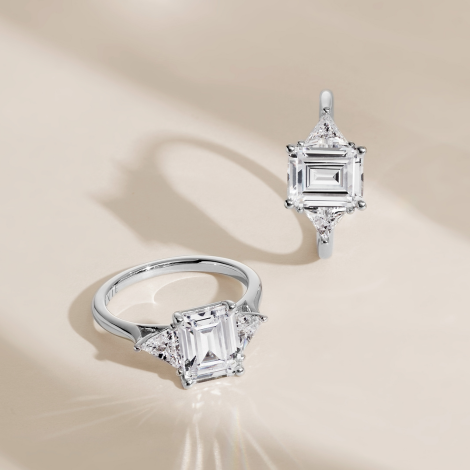
A three-stone engagement ring offers symbolic meaning as well as visual presence. With two side stones, often trapezoid or tapered baguette-shaped diamonds, the central emerald cut feels both anchored and dimensional. This style is ideal for those who appreciate symmetry and want a ring with story and substance.
Modern Vintage Emerald Cut Engagement Rings
In modern vintage engagement rings, emerald cuts take on a distinctive romanticism. Think milgrain accents, and subtle filigree work. These details echo antique artistry while allowing the clean lines of the emerald cut to remain the focal point. It’s a favorite among those who love meaningful detail without excessive ornamentation.
Is an Emerald Cut Diamond Right for You?
Choosing an engagement ring is deeply personal, and the shape of your diamond says more than you might think. Emerald cut diamonds are often chosen by those who see beauty in balance, clarity, and quiet sophistication. If that resonates with your taste or lifestyle, this cut may be exactly what you’re looking for.
Many engagement ring shoppers arrive at emerald cuts after trying round or oval shapes that didn’t quite reflect their style. The emerald cut’s structured silhouette and composed presence appeal to those drawn to clean design and thoughtful detail. It also wears comfortably, sitting lower on the finger than some high-profile cuts, which makes it a practical option for active lifestyles or careers where ease of wear matters.
Recommended Sylvie Emerald Cut Engagement Rings
If you’re considering an emerald cut engagement ring, the setting you choose can bring out a completely different expression of the diamond. Whether you’re drawn to bold minimalism, intricate detail, or something softly romantic, these Sylvie engagement rings highlight the best of emerald cut design, each one crafted to honor your individual style and story. Below are a few of our favorite Sylvie designs, each showcasing the emerald cut in its own striking way.
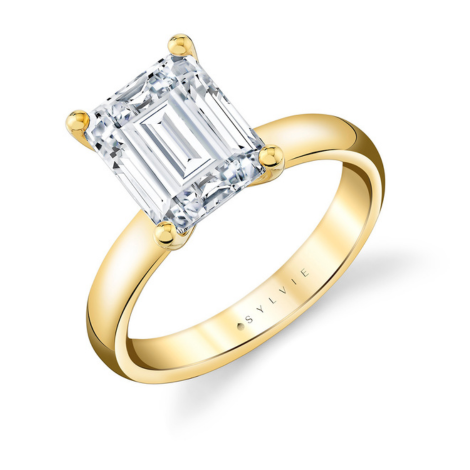
Emerald Cut Wide Band Solitaire Engagement Ring – Mila
Bold yet timeless, the Emerald Cut Wide Band Solitaire Engagement Ring – Mila makes an unforgettable statement. Crafted in Sylvie’s rich yellow gold, this high-polish wide band brings a modern edge to a classic silhouette. The emerald-cut center stone is the star, perfectly framed by the sleek, substantial band. Mila is for the bride who loves clean lines, confident style, and enduring elegance.
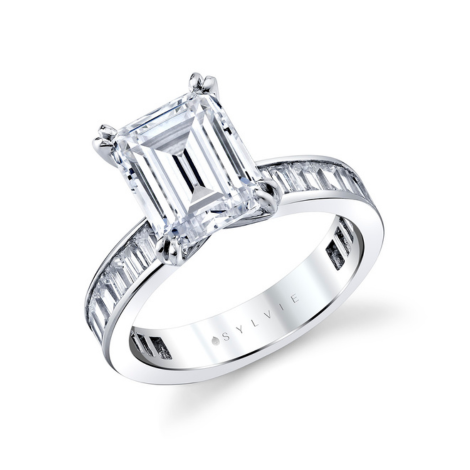
Auravie Channel Set Baguette Engagement Ring – Amren
The Auravie Channel Set Baguette Engagement Ring – Amren offers a modern interpretation of a classic channel-set design. Baguette diamonds are precisely aligned along a high-polish band, showcasing linear symmetry and refined brilliance. The sleek silhouette and architectural detail make Amren a statement of contemporary sophistication.
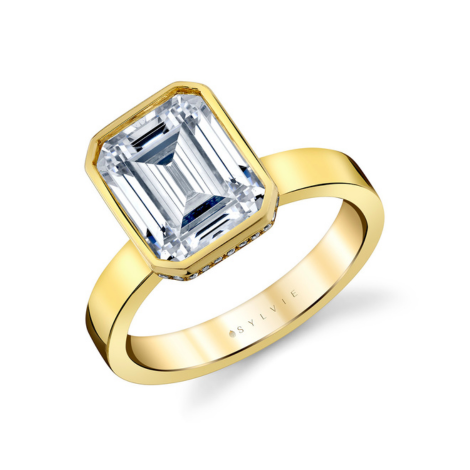
Auravie Bezel Solitaire Hidden Halo Engagement Ring – Jean
The Auravie Bezel Solitaire Hidden Halo Engagement Ring – Jean blends modern simplicity with subtle sparkle. A smooth flat-edge band supports a bezel-style setting wrapped in clean geometry, while a hidden halo of round diamonds beneath the crown adds a discreet touch of radiance. Jean reveals its beauty in quiet moments, offering elegance that feels both minimal and luminous.
Auravie Channel Set Double Row Split Shank Engagement Ring – Skye
The Auravie Channel Set Double Row Split Shank Engagement Ring – Skye captures architectural grace through a refined, split-shank silhouette. Round channel-set diamonds accent the gently parted band, emphasizing balance, symmetry, and light. Skye is a study in modern refinement, crafted for those drawn to structure, sparkle, and elegant simplicity.
Conclusion: Emerald Cut Pros and Cons, A Balanced Perspective
Emerald cut diamond engagement rings offer something distinct: not just beauty, but intention. Their clean symmetry, elongated shape, and mirror-like glow create a presence that’s confident without being overdesigned. While they may not offer the sparkle of brilliant cuts, their strengths lie elsewhere, in clarity, proportion, and understated elegance.
Like any diamond shape, emerald cuts come with trade-offs. They require a discerning eye for color and clarity and may not be the right fit for someone seeking maximum brilliance. But for those who value thoughtful design and quiet impact, the emerald cut delivers a lasting impression.
We always encourage trying on multiple styles, viewing diamonds under natural light, and working with a trusted jeweler who understands what matters to you. Whether you’re drawn to a minimalist solitaire or a three-stone heirloom design, emerald cut engagement rings offer the versatility to feel modern, personal, and enduring.
At the end of the day, choosing your diamond cut is about connection. And if you find yourself returning to the emerald cut, there’s probably a reason, it just fits.
FAQs: Emerald Cut Diamond Engagement Rings
Emerald cut engagement rings often inspire thoughtful questions, especially around sparkle, clarity, and long-term wear. Below, we address the most common questions couples ask when considering an emerald cut diamond, helping you understand how this elegant shape performs in real life and whether it aligns with your priorities.
Do emerald cut diamonds sparkle?
Emerald cut diamonds reflect light differently than brilliant cuts. Instead of intense sparkle, they produce broad, mirror-like flashes that feel more controlled and refined. This softer light performance highlights clarity and structure rather than shimmer.
Are emerald cut diamonds more affordable?
Often, yes. Emerald cuts typically cost less per carat than brilliant cuts because the cutting process preserves more of the original rough diamond. This can make it easier to prioritize size or setting details while staying within budget.
Do emerald cuts show imperfections more?
They do. The open table and step-cut facets make inclusions easier to see compared to brilliant cuts. For this reason, many shoppers choose VS2 clarity or higher for a clean, balanced appearance.
Is an emerald cut good for everyday wear?
Yes. Emerald cuts tend to sit lower on the finger and have clipped corners, which can make them feel more secure and comfortable for daily wear. Choosing a well-constructed setting also plays an important role in long-term durability.
Do emerald cuts look bigger?
When considering which diamond cut looks biggest, emerald cuts often appear larger than round or oval diamonds of the same carat weight. The elongated shape and wide table create more visible surface area, giving the diamond a longer, more prominent look on the finger.
What’s the best clarity for an emerald cut?
VS2 or higher is commonly recommended to ensure inclusions aren’t visible to the eye. Because emerald cuts emphasize transparency and structure, higher clarity allows the diamond’s geometry and light reflection to stand out clearly.