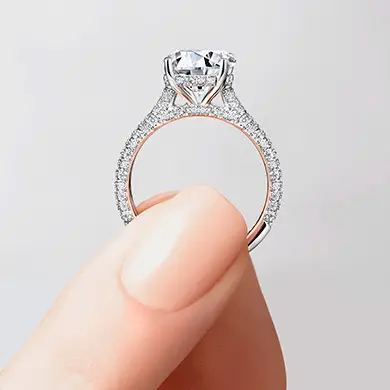
There is a specific kind of heartbreak that comes from saving a ring to a folder titled the one, opening that folder just a few short months later, and feeling absolutely nothing.
I have done this five times. For the past two years I have followed engagement ring trends the way other people follow a season of television: closely, with opinions I was prepared to defend and styles I was fully ready to commit my life to (when the time comes, of course). Every few months a new silhouette would surface on my feed, and I would fall completely. Typically on the hand of some impossibly polished celebrity: women I admire, women who are aspirational, pillars in the lifestyle and fashion space. But alas, outside of being saved to my Pinterest boards, they are women I have nothing in common with.
Like clockwork, every few months the buzzy feeling would go quiet. Not exactly the feeling you want when you are choosing something you will wear for the rest of your life.
For a while I assumed this meant I was indecisive, or too online, or both. What I eventually worked out was more interesting than that, and it changed the way I think about buying jewelry entirely.
So consider this a formal accounting. To all the rings I’ve loved before: it was real while it lasted. You just belonged to someone else.
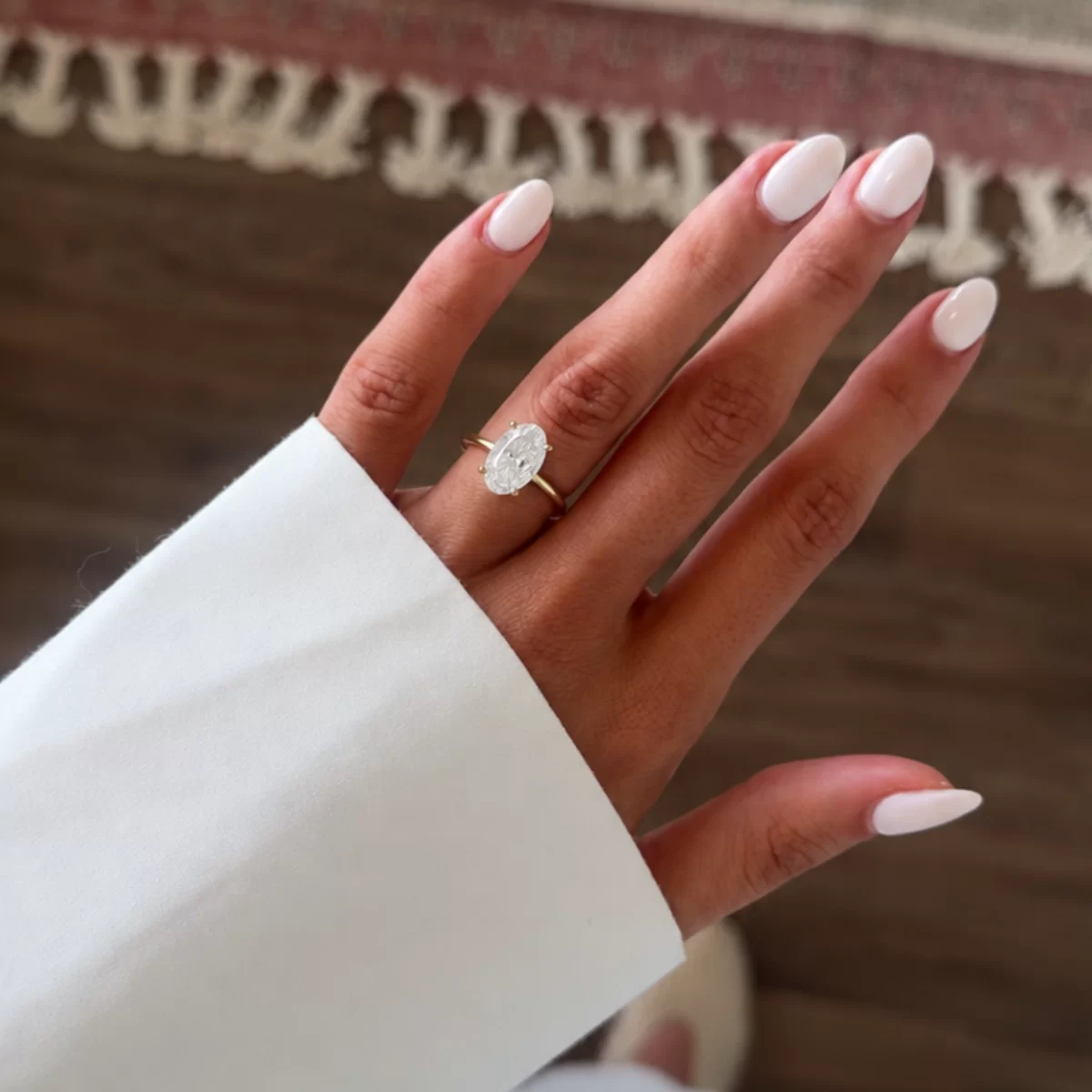
The Engagement Ring Trends I Fell For, in Order
What follows is a look back at the engagement ring styles that have captured my attention over the past two years. The silhouettes, proportions, and details I was convinced would be the one at the time. Some still have my heart; others feel like a chapter I’ve happily closed.
The Oval Solitaire on the Thinnest Band Imaginable
This was the ring of the era (many would argue it’s still the ring of the era), and I do not think that is up for debate. An elongated oval, four slim prongs, a band so fine it nearly disappeared. It was the oval cut solitaire engagement ring in its purest form, and the ring that made everyone realize how much of a design’s effect comes down to proportion.
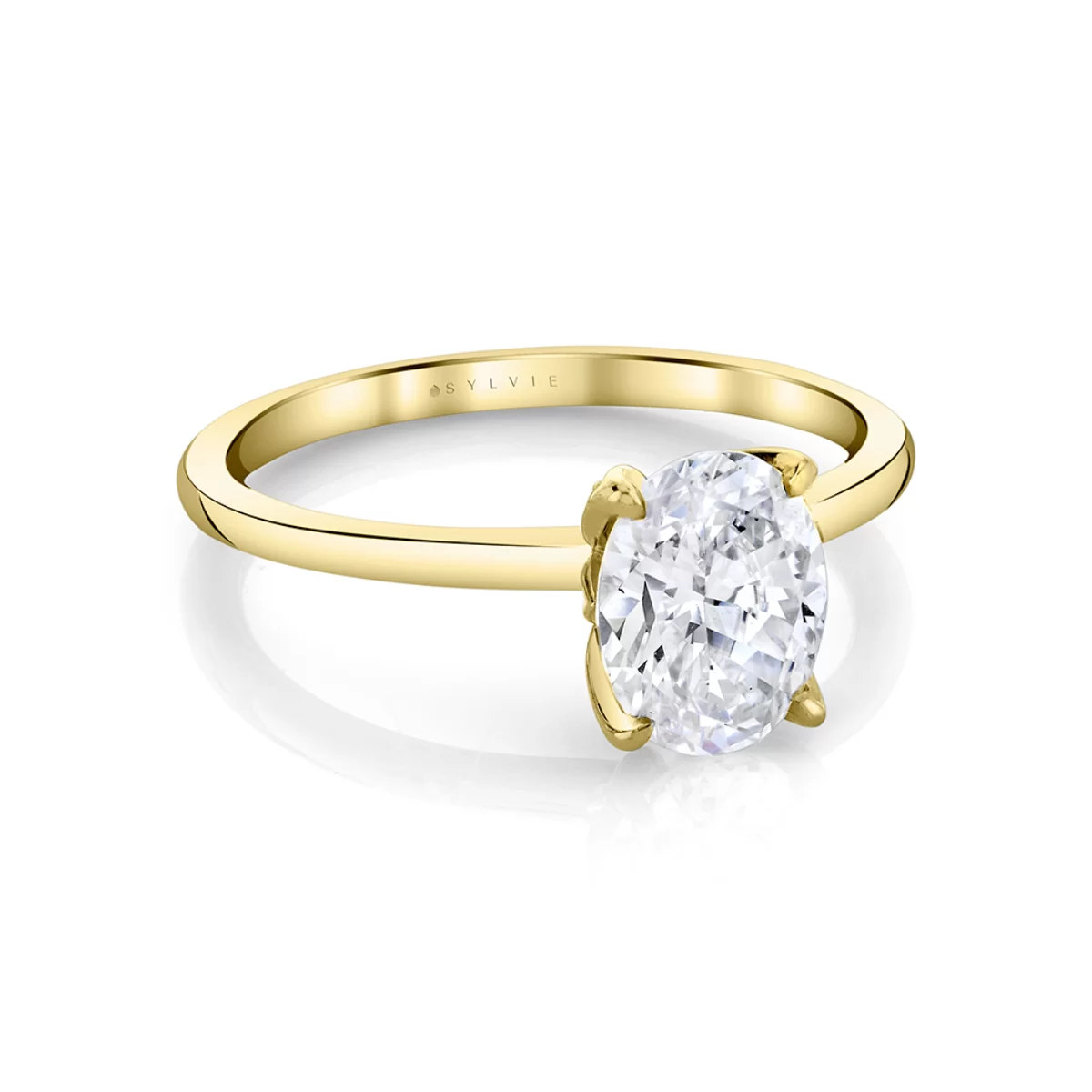
I loved it because it was clean, and because it arrived at the end of a long era of early 2010s clusters and halo engagement rings. After all that, it felt revolutionary when it first stepped on the scene. There was nothing to argue with. It photographed beautifully from every angle, it flattered every hand I saw it on, and it made a strong case for less is more, which at the time seemed to be the only style guide anyone was working from.
I moved on because once the groundbreaking thing is on everyone else, what is it still breaking? When a silhouette becomes the default, wearing it no longer says anything about you, and I wanted my ring to say something. This is not the oval solitaire’s fault. It is still, objectively, one of the most flattering shapes a hand can wear. It simply became a room everyone was already standing in, and the pared-back solitaire engagement ring is not going anywhere. Sylvie’s Round Cut Solitaire Engagement Ring – Amelia leaves the band almost entirely alone and it remains the most requested design in the collection by a wide margin. So to the oval solitaire: maybe you were the one, at one point. Or maybe I just wanted the life of the woman I first saw you on. Either way, I will be admiring you from afar.
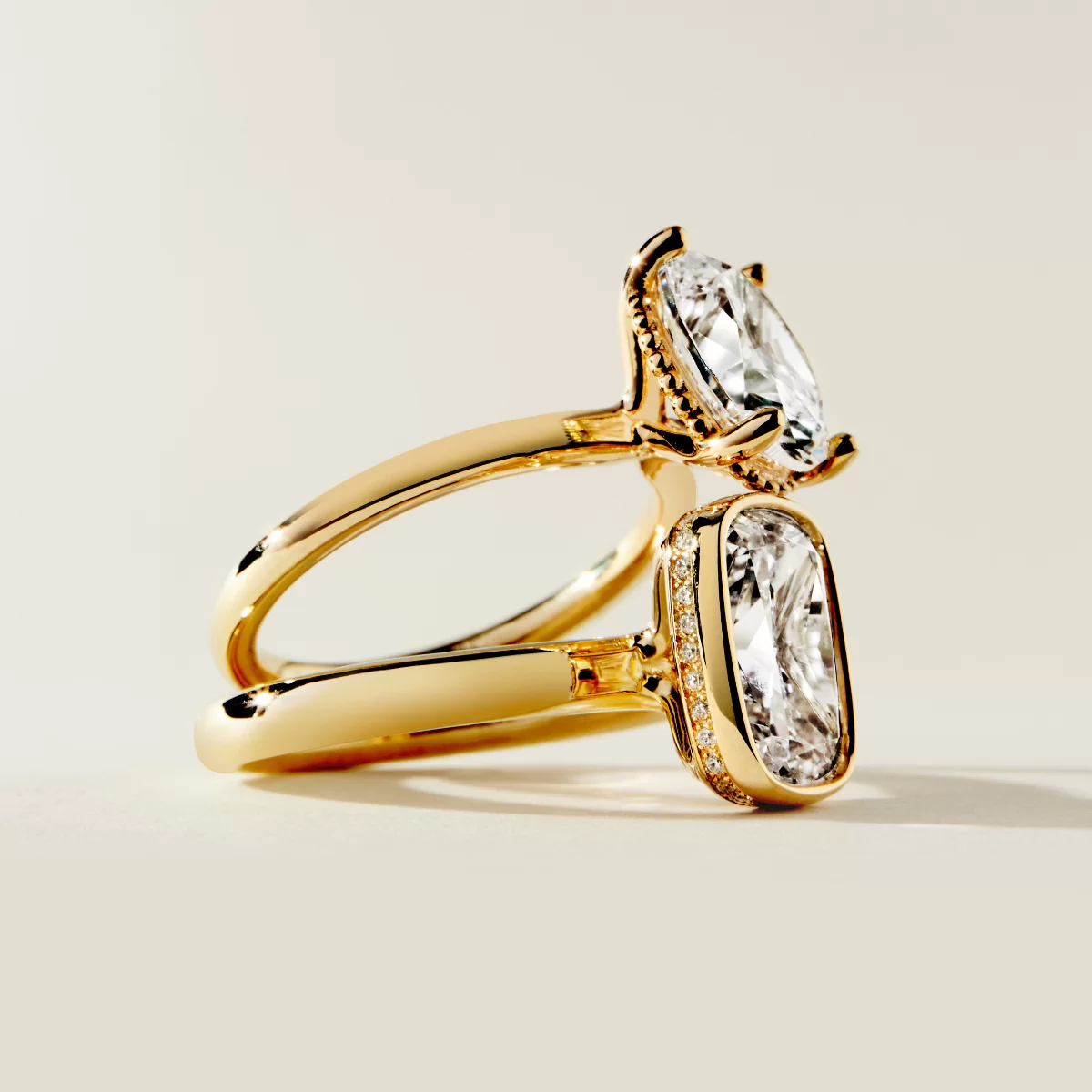
(from top to bottom) Oval Cut Bead Hidden Halo Solitaire Engagement Ring – Marlowe and Cushion Cut Bezel Solitaire Engagement Ring with Hidden Halo – Elaine
The Hidden Halo
Then, a new point of view came into play. Suddenly the interesting part of a ring was the part you could not see head-on: a ring of small diamonds tucked underneath the center stone, visible only from the side, only if you were paying attention.
I loved this immediately, and I loved it for reasons I now recognize as slightly suspicious. It felt like a secret. It rewarded the person who looked twice. I liked the idea of a detail that existed mostly for me.
I moved on when I realized I was in love with the concept of a private detail rather than that particular private detail. Once I noticed the difference, I could not un-notice it. What I wanted was the privacy itself, the idea that a ring could hold something only its wearer knows to look for. The hidden halo is one answer to that question. It is not the only one, and once I started asking the question properly, it stopped being the most interesting one.
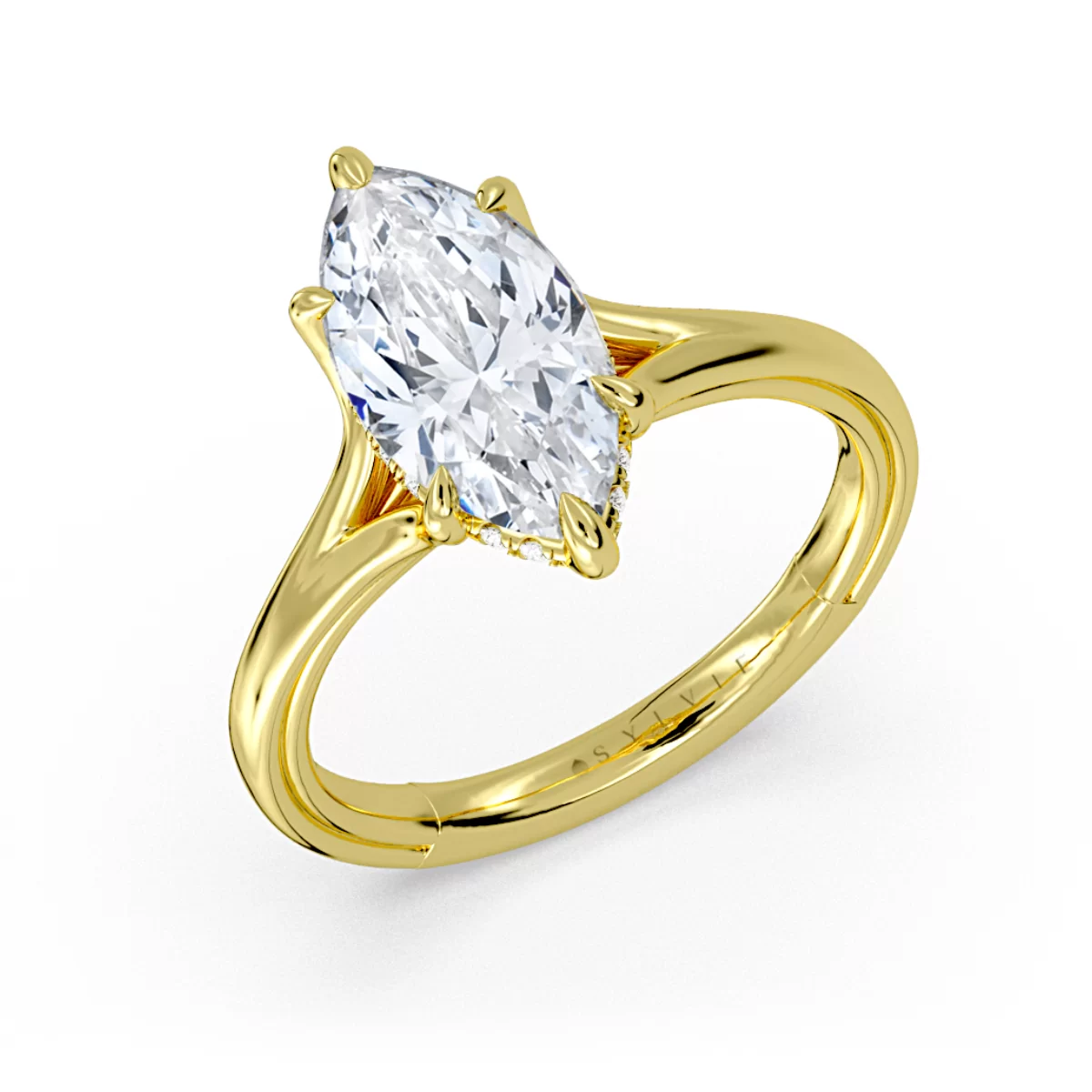
There is far more room under a center stone than most people realize. Engraving no one will ever read but you. A birthstone set somewhere only you would know to check. Peekaboo diamonds placed to catch you off guard when you turn your hand a certain way. Those feel genuinely rare, which is the entire point of keeping a secret in the first place.
And if I am honest, I was never fully at peace with the premise. Diamonds are not really meant to be hidden. The hidden halo engagement ring is a beautiful piece of design, and Sylvie’s Auravie Bezel Solitaire Hidden Halo Engagement Ring – Jean makes an excellent argument for it, a bezel with a flush set halo hidden underneath. It simply was not my secret.
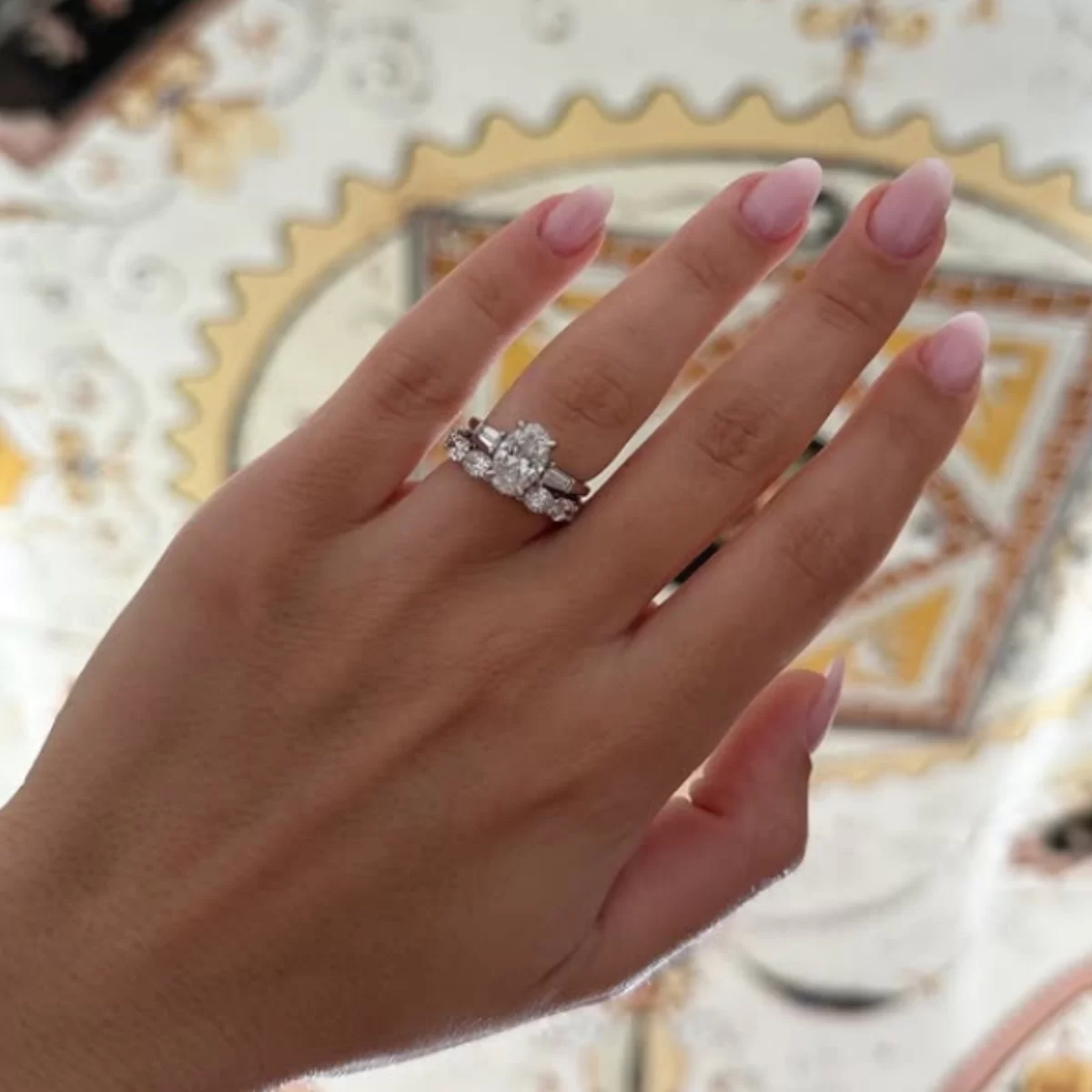
(from top to bottom) Oval Cut Three Stone Engagement Ring with Baguettes – Nicolette and East to West Oval Cut Eternity Ring – B101
The Three-Stone Revival
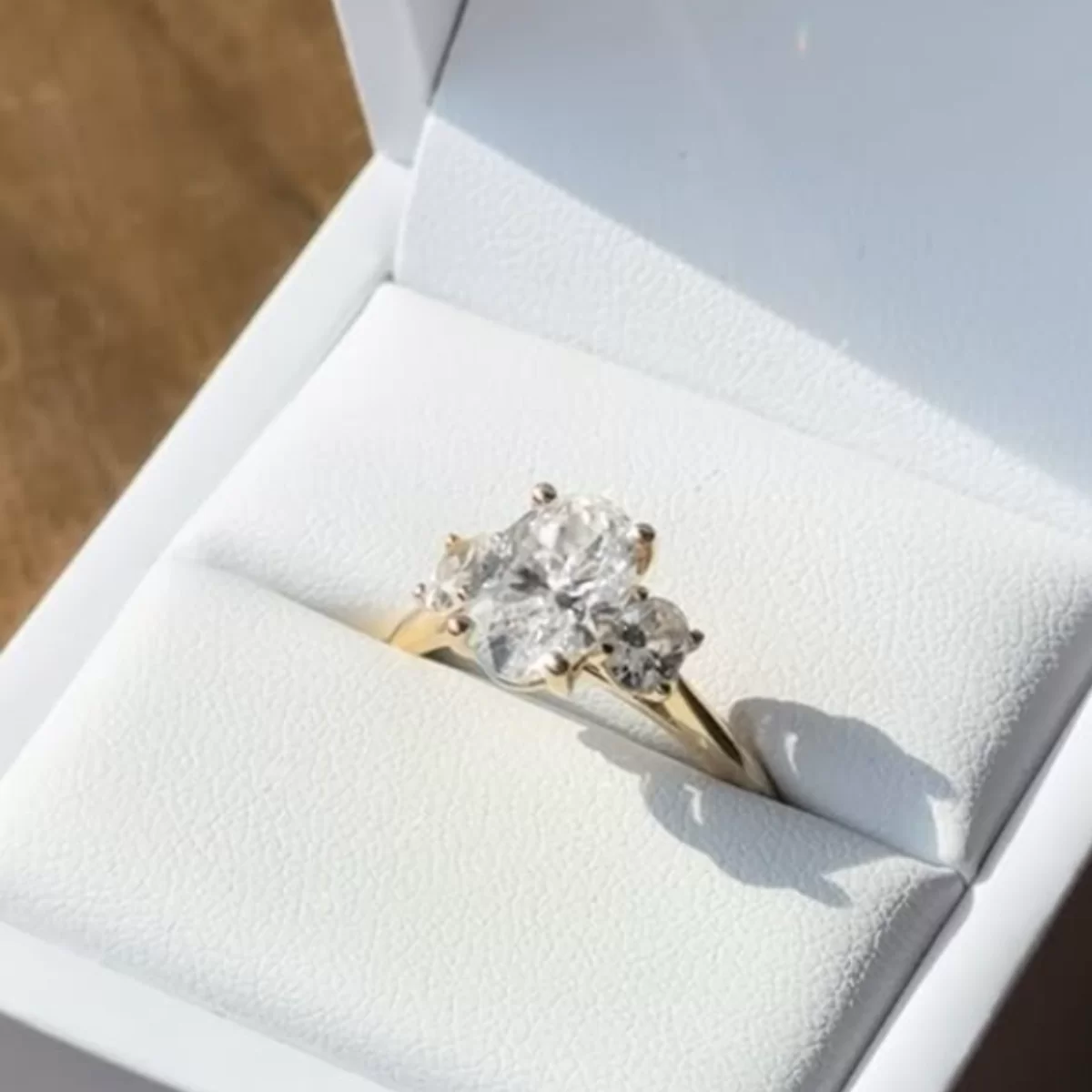
Past, present, future. Pear-shaped side stones, or baguettes set flush and low, or trapezoids doing something quietly architectural on either side of an emerald cut. Three stone engagement rings came back with better proportions than they had the first time, and for about four months I was completely gone for it.
What I loved was the width. A three-stone ring occupies the finger differently. It reads as considered rather than delicate, and I liked the confidence of that.
What I actually responded to was that it was the opposite of everything the solitaire craze had trained me to want. After a few years of less is more, here was a design arguing that you did not have to pick just one cut at all. The ring became a set of decisions rather than a single one, and you can tell a lot about a person from the stones they choose and where they choose to put them.
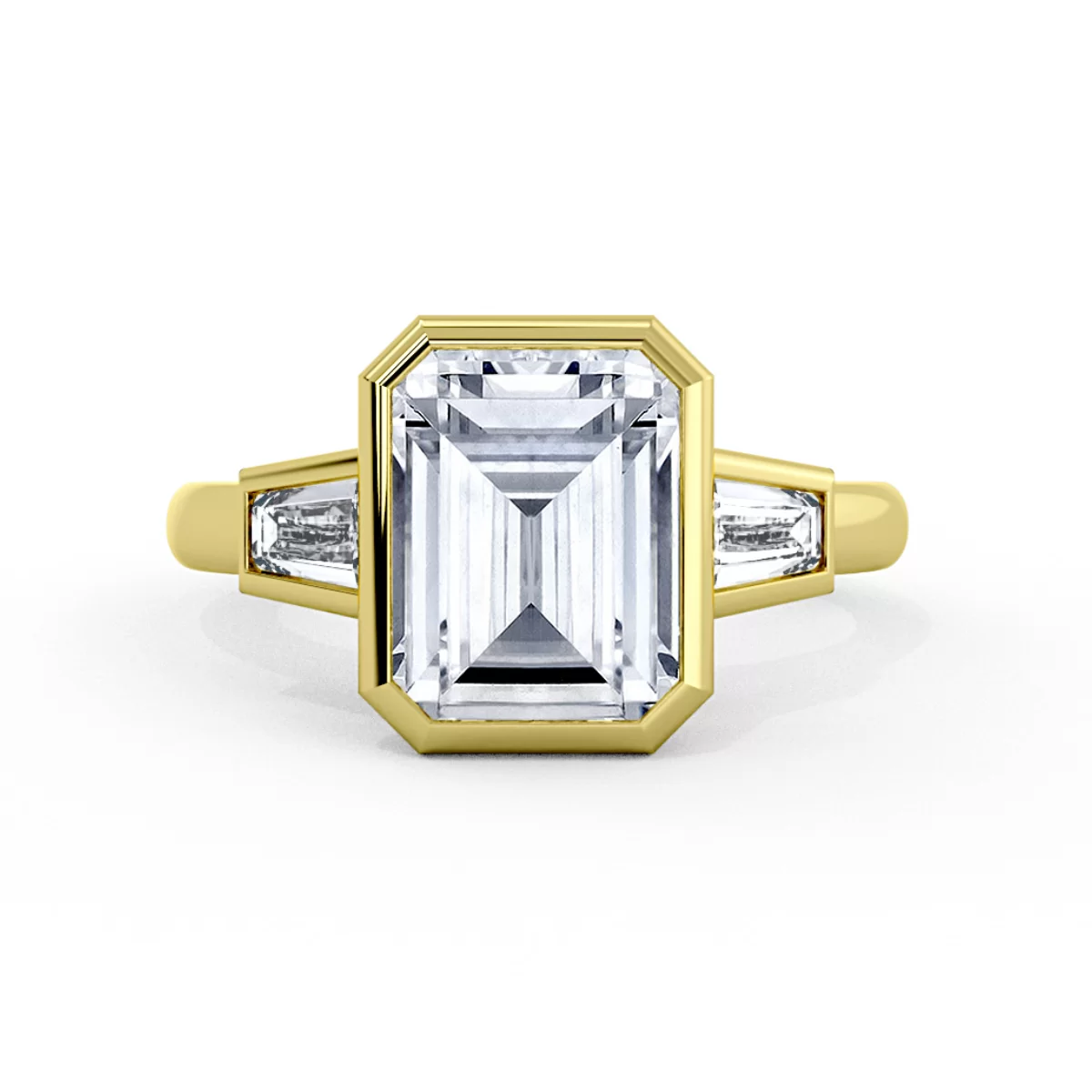
Which is exactly why I eventually left it behind. Three stones got me closer to what I wanted without quite arriving. Someone else had still decided that the number was three, that the arrangement was symmetrical, and that the meaning was past, present, and future. I kept explaining that symbolism to people, and at some point I heard myself doing it and understood I had fallen for a sentence rather than a ring. Sylvie’s Pear Shaped Unique Three Stone Engagement Ring – Alina is the one that held my attention the longest, and I still think the marquise side stones set in a split shank shape are among the most elegant proportions in bridal design. It was the nearest miss on this list.
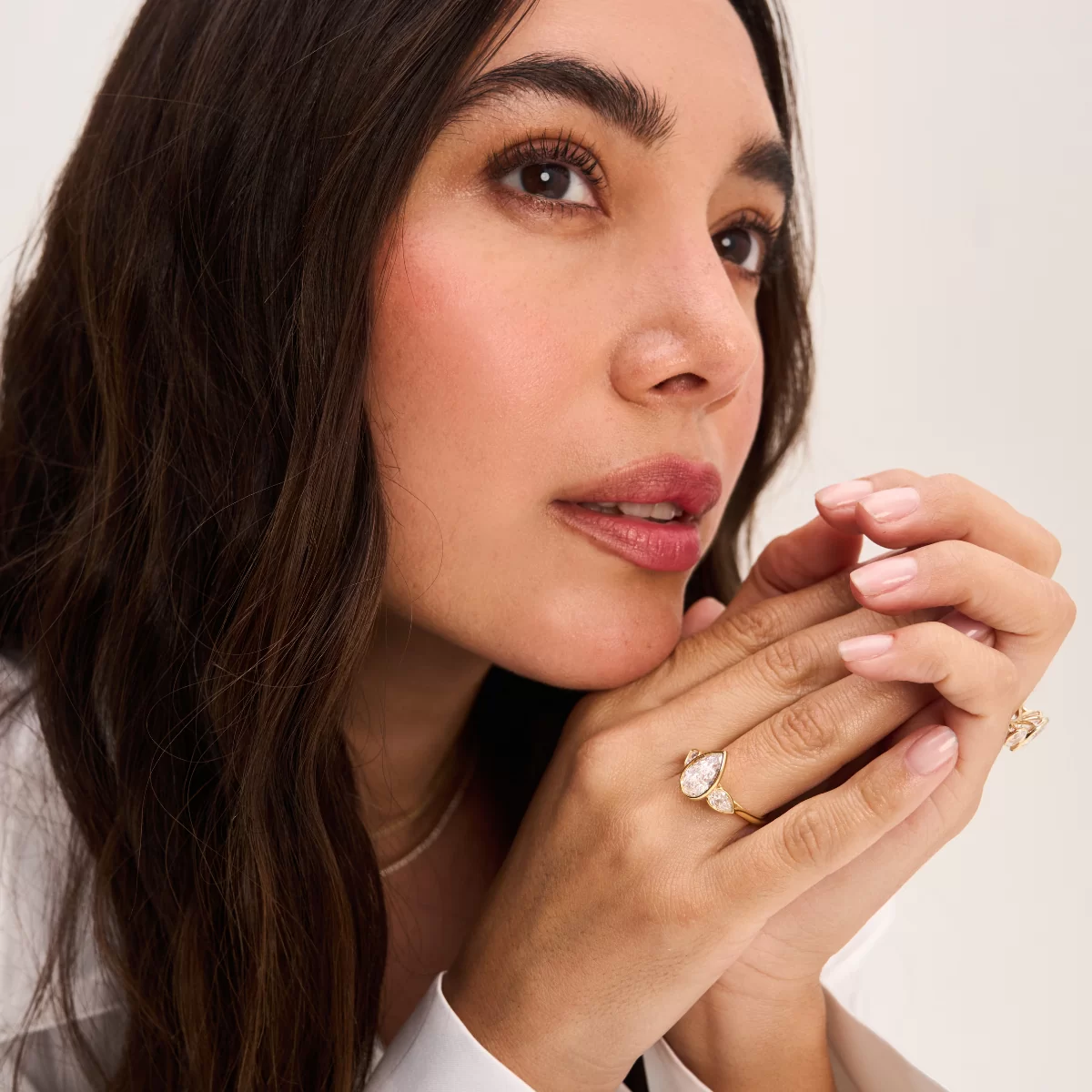
Chunky Yellow Gold, All of It at Once
The metal shift happened fast. One season everything was white gold and platinum, and the next, yellow gold engagement rings were the only thing anyone was posting. Warm, a little retro, softer against skin in photographs.
Then it got wider. Cigar bands arrived, along with thick, rounded bubbled bands with the stones sunk down into all that metal. The proportions were closer to a signet than to anything you would have seen in a bridal case five years earlier, on rings that looked inherited rather than chosen. Worn by the right person, the look read as the most alternative thing happening in bridal. It was loud in a category that had spent years being quiet.
I loved it because it looked like a refusal. After the era of the whisper-thin band, here was a ring taking up room on purpose. A toast to the modern bride.
I moved on once I looked at it properly. Strip away the gold and the width and what is left is still a solitaire. One stone, centered, held up for approval. The band got braver. The idea underneath it did not move an inch. I had mistaken volume for a point of view, which is an easy mistake to make when something arrives looking that different from what came before it.
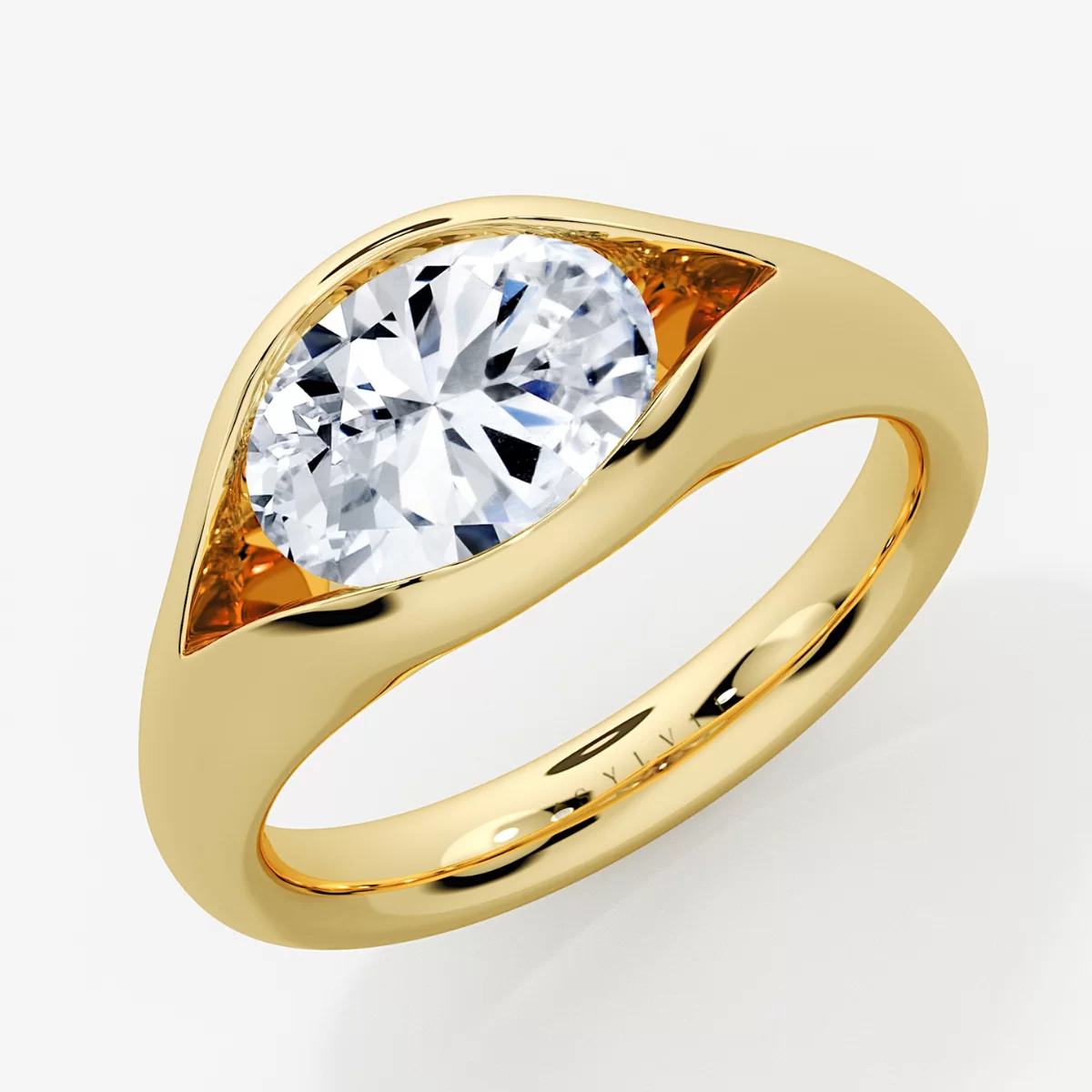
And then the wide band was everywhere too. That is the part worth sitting with. It was not simply that the style caught on. It was how fast the distance closed between something arriving and something being absorbed, a season or two at the outside. Long enough to order it. Not long enough for it to become yours.
Which is roughly when I stopped expecting the answer to arrive from somewhere else. If a look is only defining until the next one lands, then nothing I find on another woman’s hand is ever going to hold still long enough to be mine.
The Bezel, Which Brings Us to Right Now
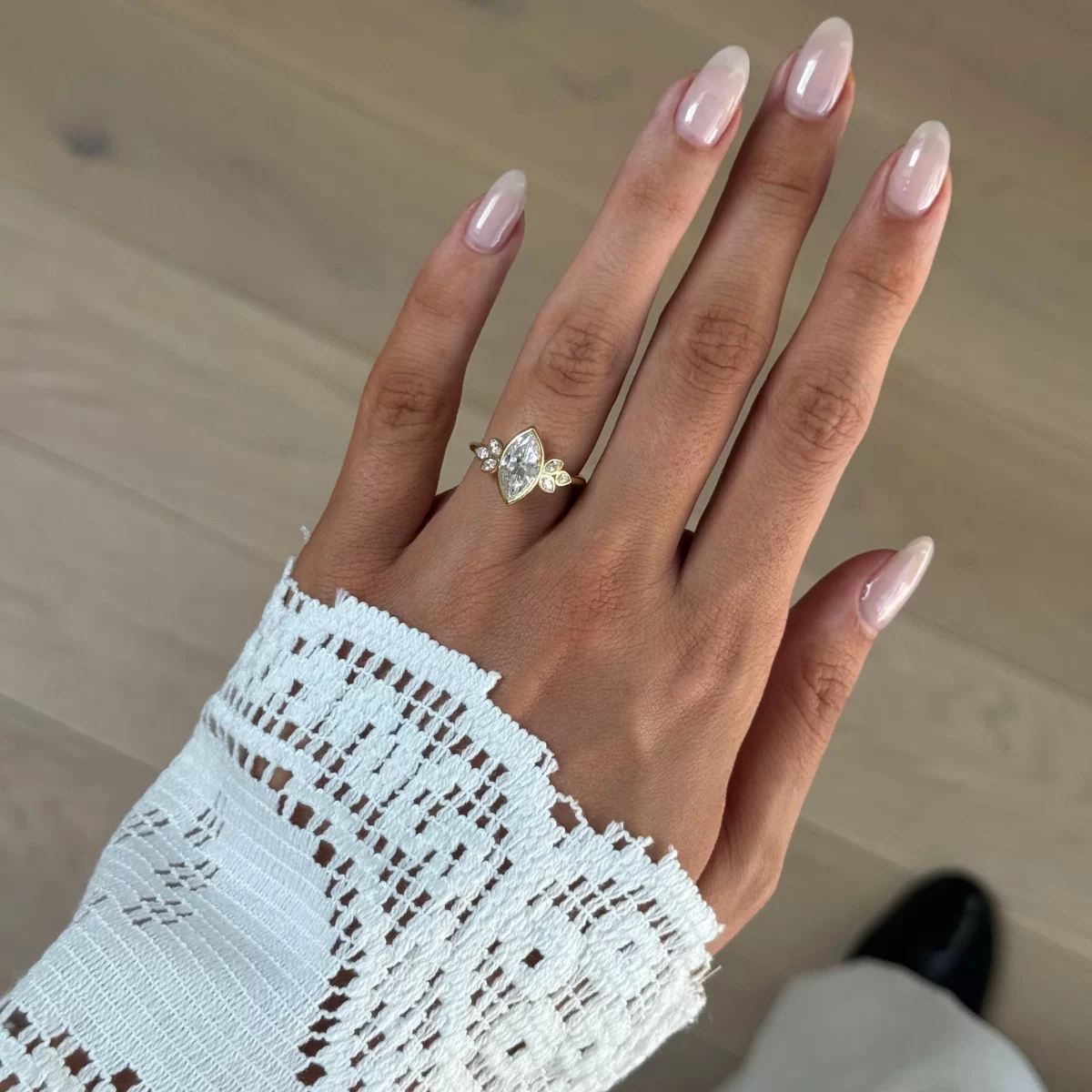
The bezel engagement ring is the setting of the moment and it is not especially close. It has moved from a quiet alternative to prongs into the thing designers are building entire collections around, and for once I understand exactly why.
What makes it interesting is how much range fits inside a single word. A bezel can be a hairline of metal that barely interrupts the stone, or a deliberately heavy rim that becomes the main event. It can wrap the stone completely, or hold it at two points and leave the rest open. It can sit low and flat against the finger, or lift the stone well above the band. Set an elongated shape inside one and turn it east to west, and you end up with a ring that shares almost nothing with the bezel sitting beside it in the case.
So this is a trend that refuses to look like one thing, which is the first time that has happened in two years of paying attention.
I loved it for that range. Sylvie’s Auravie Flat Edge Bezel Solitaire Engagement Ring – Pippa is the one I keep coming back to, an emerald bezel with enough weight in the rim to hold its own against the band.
Then I paid attention to what was actually in front of me, and the range turned out to be mostly theoretical. What gets made, photographed, and set in the case is a bezel solitaire. One stone and a band left clean. All that variation collapses back into the same ring I had already fallen for and walked away from twice.
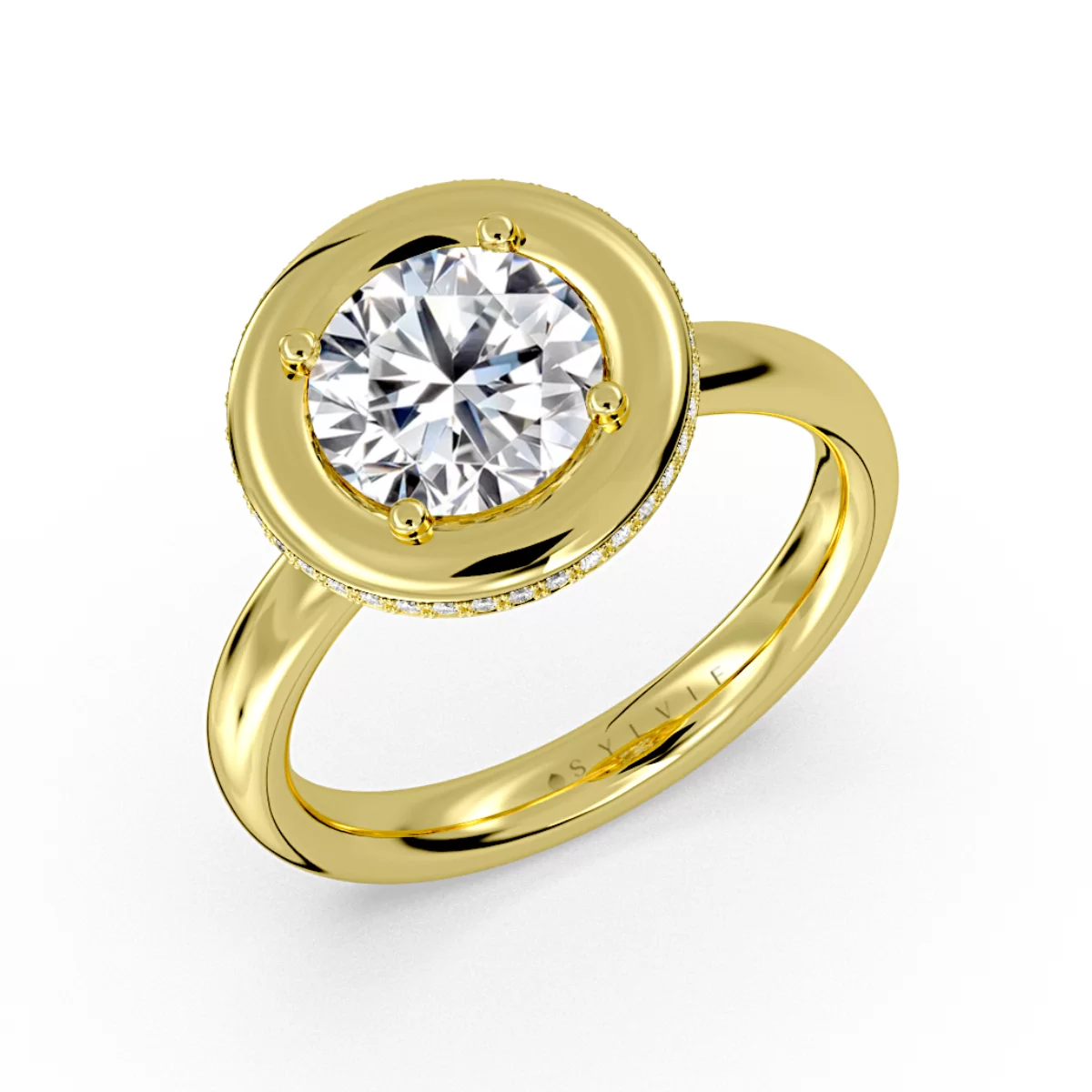
There is a second problem, and this one belongs to the setting itself. A bezel draws the same metal outline around whatever sits inside it. Put a round in one, then an oval, then a cushion, and from above they start to converge. The rim speaks louder than the stone. For a style that sells itself as the individual choice, it has a real talent for making rings resemble one another.
So the bezel gave me better questions than any trend before it. Thin or heavy. Full or partial. Warm metal or white. Sitting flush or raised well off the band. It just kept handing me somebody else’s answers.
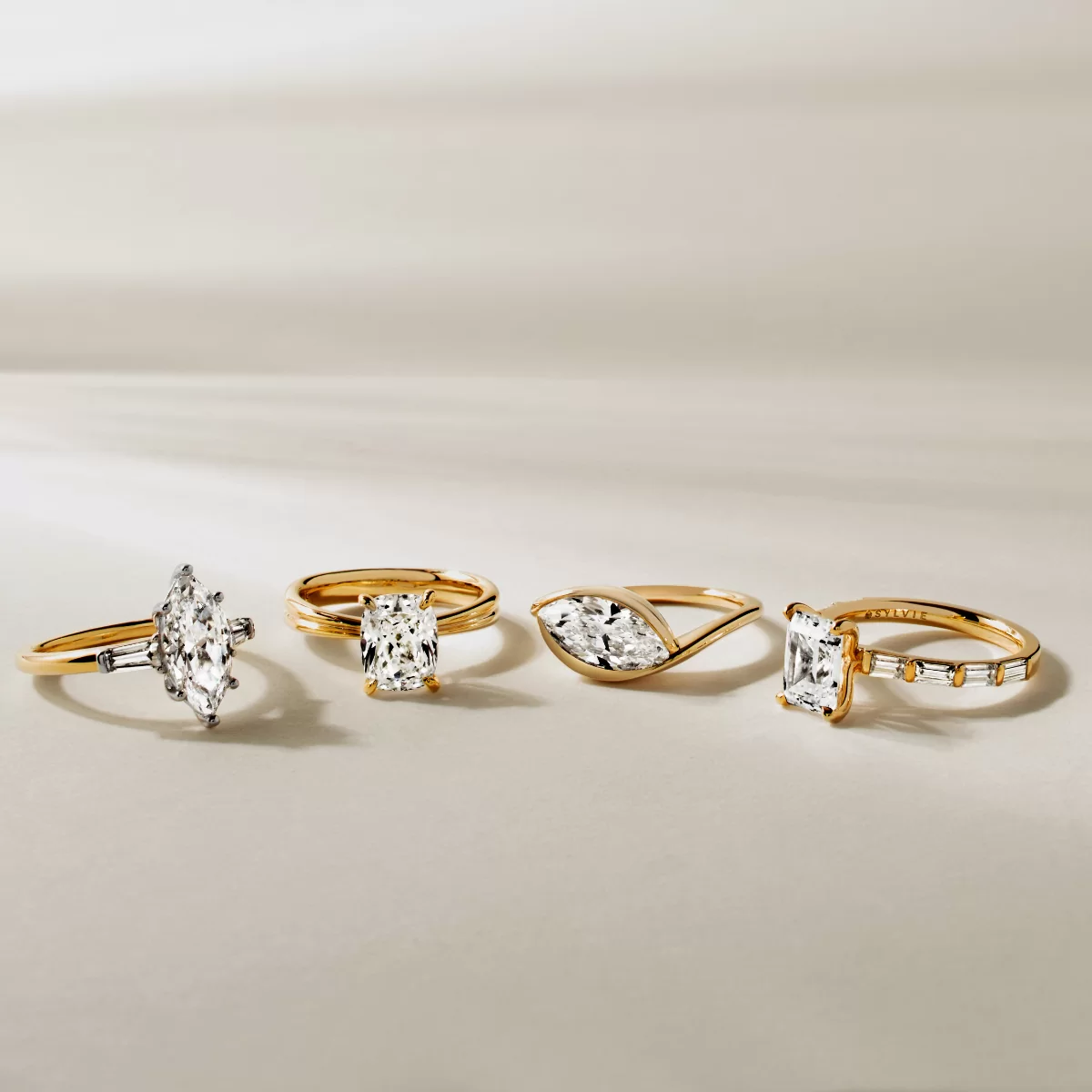
(from left to right) Marquise Cut Three Stone Engagement Ring with Baguettes – Nicolette, Radiant Cut Tapered Solitaire Engagement Ring with Hidden Halo – Maggie, Auravie East to West Marquise Cut Bypass Engagement Ring – Lyric, and Auravie Bezel Baguette Engagement Ring -Rayna
What All Five Had in Common
Here is the part that took me two years to see.
I did not find a single one of those rings on my own. I found them on other people. On a perfectly manicured hand in a post I only later realized was an endorsement. On a friend of a friend at a birthday dinner. On my feed, at eleven at night, five images deep into a hashtag.
What I was responding to, every time, was someone else’s decision looking beautiful on someone else. That is a real feeling and it is worth something. It is just not the same as taste. Admiration tells you what you find beautiful in the world. Taste tells you what you would choose in a room by yourself.
Trends are a language for describing what is being worn right now. They are very good at that. They are structurally incapable of telling you what you would have chosen if you had never seen it on anyone.
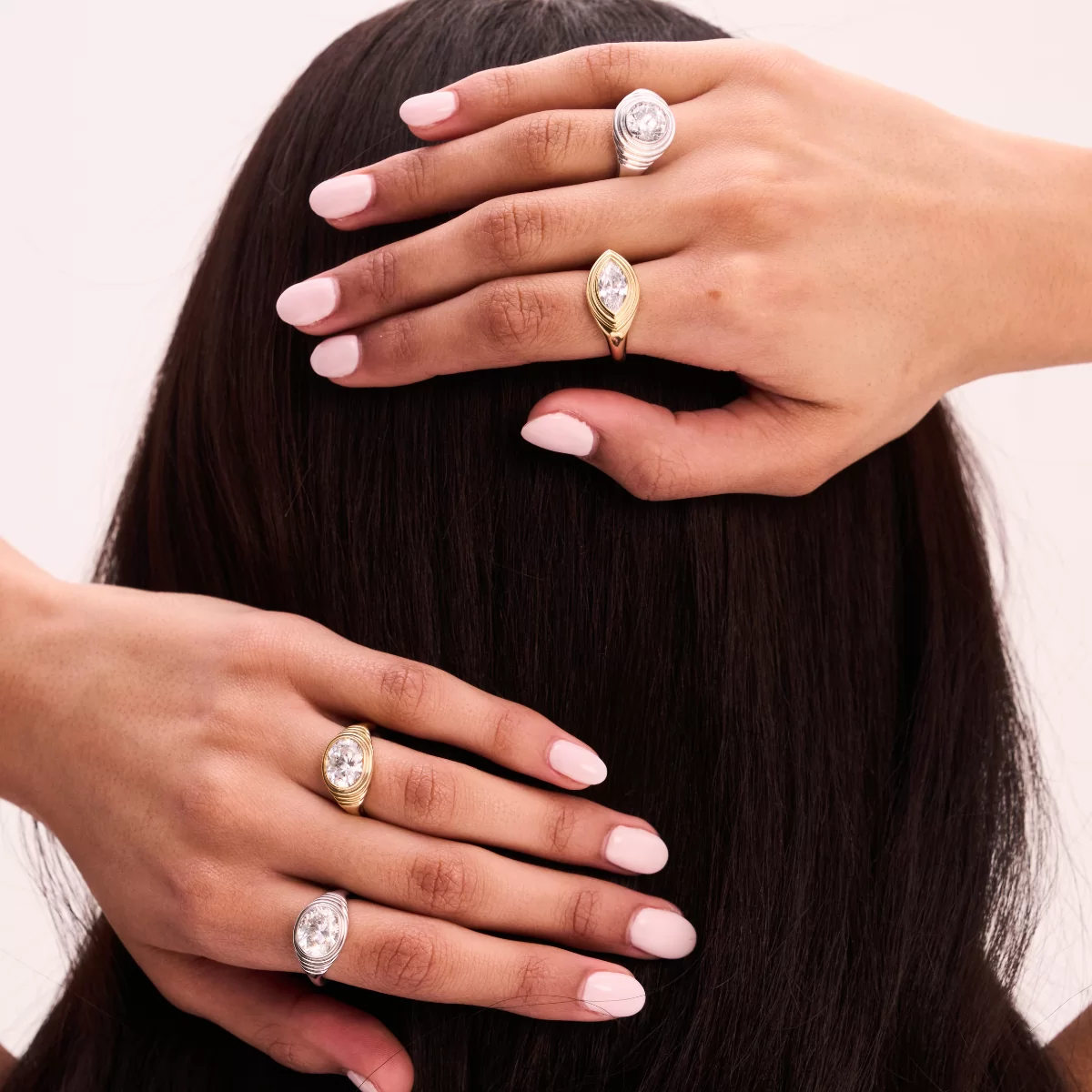
(from top to bottom) Auravie Round Ripple Bezel Solitaire Engagement Ring – Raven, Auravie East to West Marquise Ripple Bezel Solitaire Engagement Ring – Leighton, and Auravie Ripple Bezel Solitaire Engagement Ring – Stevie
The Part Where I Stopped Shopping and Started Designing
The shift happened when I stopped asking which ring do I want and started asking which parts do I want.
Because I could answer the second question immediately. I wanted the elongated shape of the oval solitaire, in the proportion that actually suits my hand. I wanted something private built into the design, though something carrying more of a story than a halo tucked under the stone. I wanted the freedom to add stones, and to place them where I wanted them rather than where the formula said they went. I wanted real presence, arrived at through something more inventive than widening the band. And I wanted the settled, retro feeling of a bezel. None of these things belonged to a single ring I had ever saved. They belonged to five different rings, which is exactly why no one of those five had ever felt right.
Once I had that list, the whole thing stopped being a search and became a design.
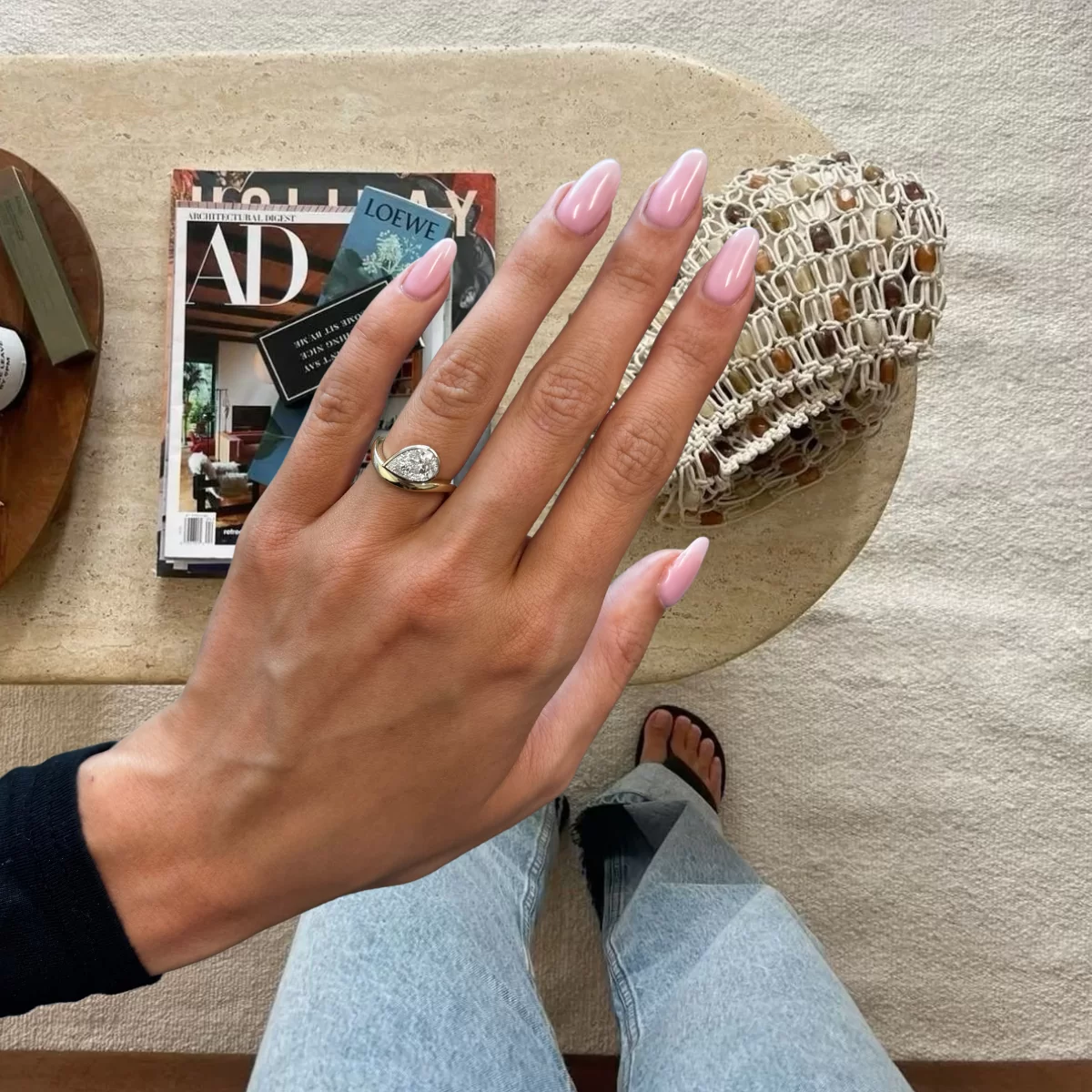
Custom Piece Designed by Sylvie
What Going Custom Actually Looks Like
For two years I assumed custom was the longer, harder version of shopping. It turns out to be closer to the opposite. Shopping means walking into a store hoping the thing you have been picturing happens to already exist, in your size, in your metal, at your number. Custom means describing what you have been picturing and finding out what is possible. I spent two years on the first approach and never arrived anywhere. The second one starts with a conversation.
It is also the only version of this where you and your partner design the ring together, rather than one of you choosing and the other finding out. A custom engagement ring can hold things that are specific to the two of you and completely illegible to everyone else: a birthstone set where only you would think to look for it, an engraving neither of you will ever have to explain, a detail carried over from a ring someone in your family already wears. None of that is available off a shelf, because none of it existed before the two of you did.
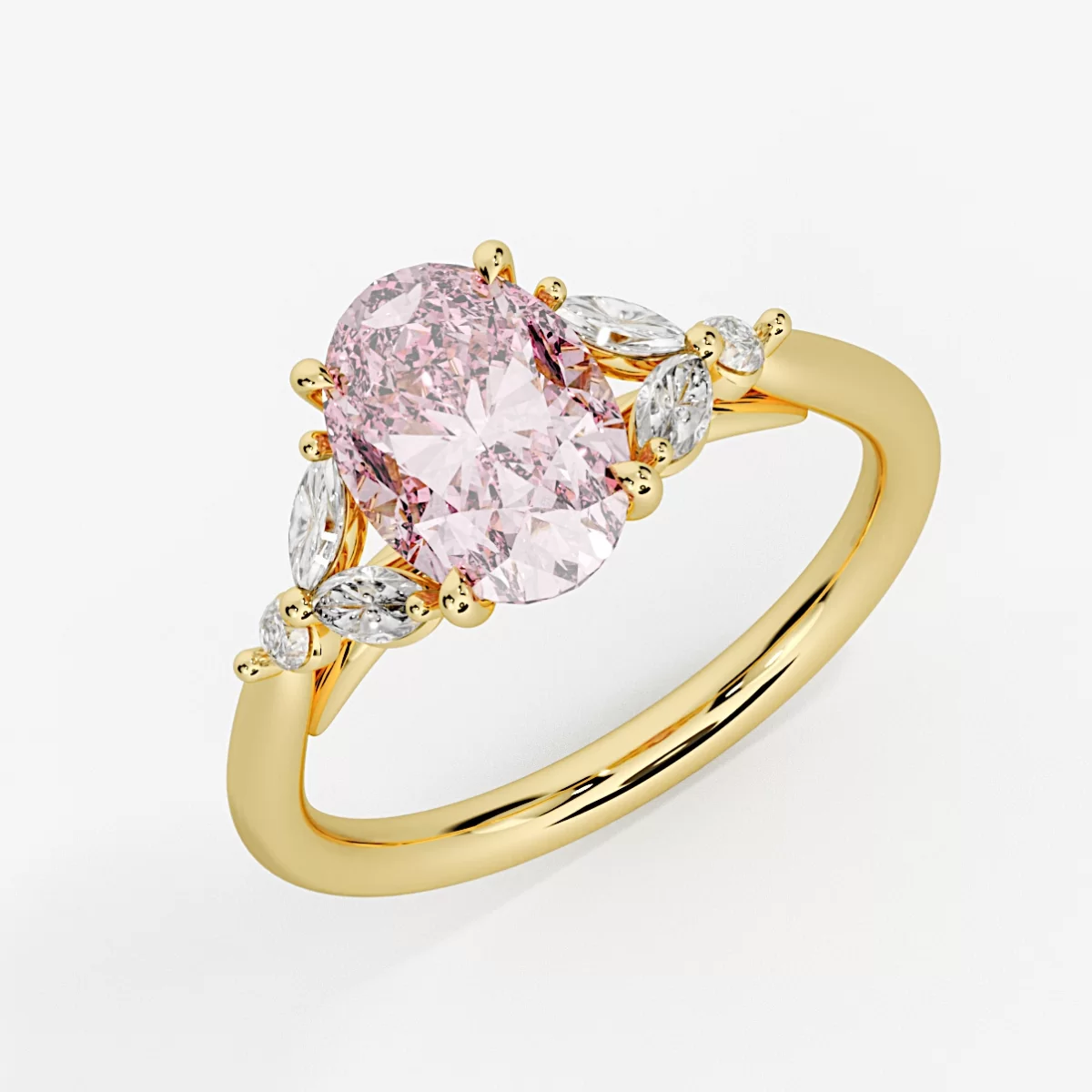
Custom Piece Designed by Sylvie
And you are not making these calls alone. An authorized Sylvie retailer has walked people through this hundreds of times, which means they will tell you when a proportion will not sit well on your hand, when a center stone will fight the setting around it, and when the idea you are describing would look better executed slightly differently. That advice is the difference between a design that works on a screen and a ring that works on your hand.
And the best news of all: there is about to be an easier place to begin. The Sylvie Custom Atelier gives you the power to start designing before you ever walk into a store. Adjust or add to an existing Sylvie design, or start from nothing at all. Upload the inspiration images you have been saving for months and finally put them to work. From there, you are connected to your nearest Sylvie retailer, who will already have your design on file, which puts you one step closer to saying yes.
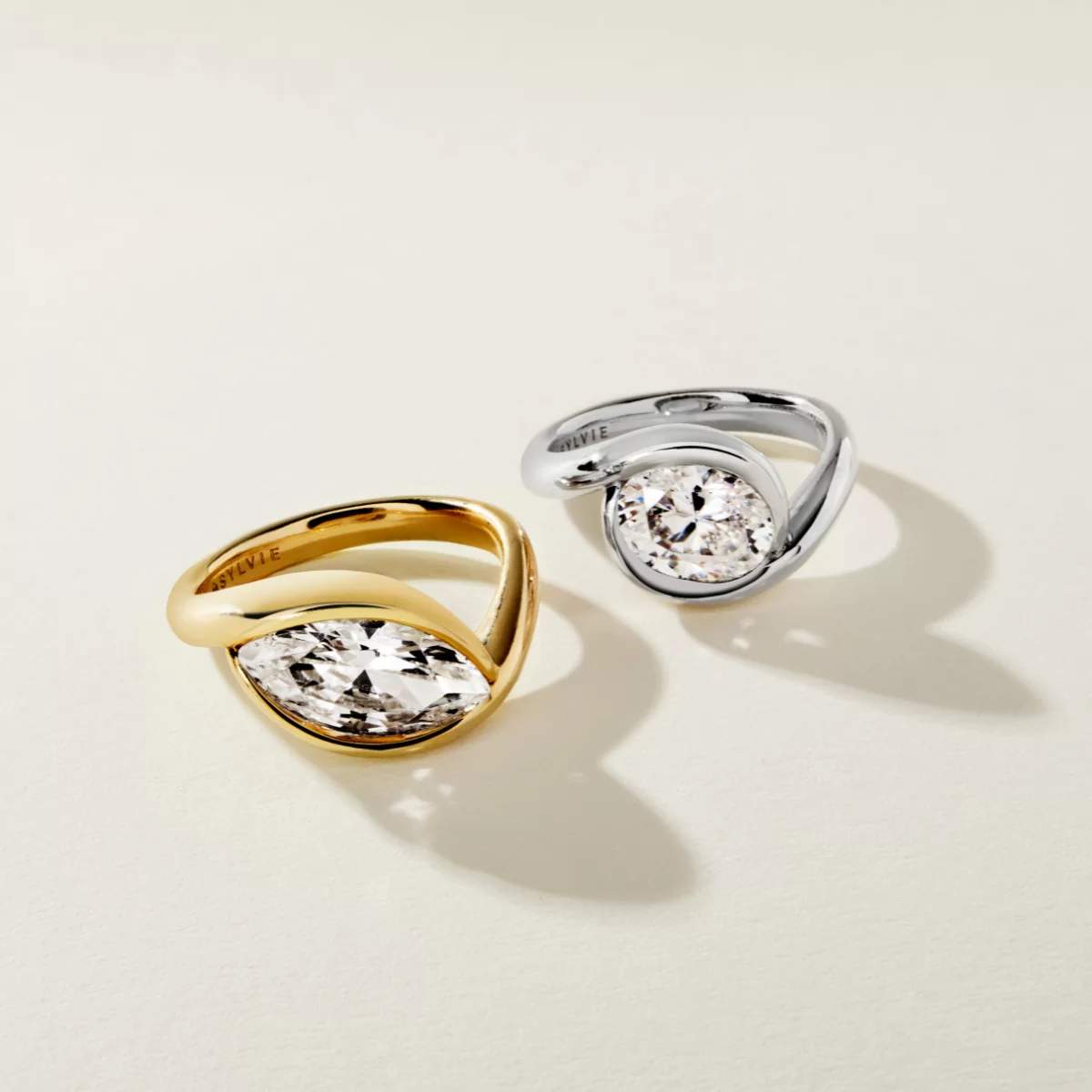
How to Tell a Trend You Love From a Ring You’ll Wear
If you are somewhere in the middle of your own version of this list, here are a few things that would have saved me time:
Look at what you saved twelve months ago. Not what you saved last week. The images that still hold up after a year are the ones telling you something true.
Separate the element from the ring. You may not want the oval solitaire. You may want the band. Naming the specific detail is the entire difference between following a trend and using one.
Consider your actual hand, your actual jewelry, and your actual life. Not the hand you saw it on. This is also worth thinking about early if you have strong feelings about wedding rings, because the two live together permanently.
And then the honest test. Would you still want it if no one else had it? Would you still want it if everyone did? A ring that survives both questions is a ring you chose. Everything else is a ring you noticed.
What’s Meant for You
I do not regret a single one of the rings on this list. Every one of them taught me something specific about what I respond to, and I would not have been able to name any of it in the abstract. You have to fall for a few things that are not yours before you can recognize the thing that is.
The best engagement ring trends are the ones you use as reference rather than instruction. Take the band from one and the shape from another. Keep the unique detail that no one else was looking at. Leave the rest, generously, to the people it was actually meant for.
Because that is the whole point. What is meant for you was never going to be meant for everyone, and that is exactly what makes it yours.