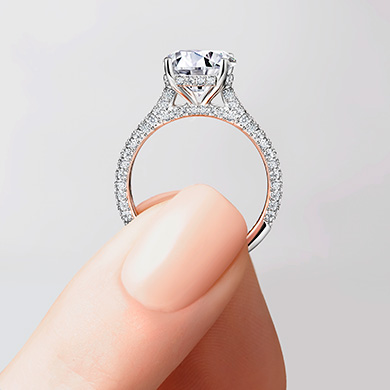
When selecting the perfect metal for your Sylvie Jewelry piece, white gold vs platinum is a decision that deserves careful consideration. These two metals are some of the most popular choices for engagement rings, wedding rings, men’s bands and fine jewelry, offering an elegance that appeals to a wide range of tastes.
At first glance, white gold and platinum may appear almost identical, but they differ significantly in their composition, durability, cost, and maintenance requirements. Understanding the unique qualities of white gold vs platinum is essential for selecting the metal that best compliments your lifestyle, budget, and preferences. In this article we explore and explain the differences between platinum and white gold to help you make an informed decision.
(from top to bottom) Shell Auranova Half Bezel Pavé Engagement Ring with Shell Tip Silhouettes – Mariselle, Shell Auranova Half Bezel Pavé Engagement Ring with Shell Tip Silhouettes – Gwyneth, and Shell Auranova Half Bezel Solitaire Engagement Ring – Delani
Understanding White Gold (in the White Gold vs Platinum Debate)
White gold has become a staple in white gold fine jewelry, particularly for white gold engagement rings, white gold wedding rings and white gold men’s bands, thanks to its timeless appeal, versatility, and modern elegance. While its name might suggest a pure white metal, white gold is a sophisticated alloy created to balance beauty, durability, and affordability.
Its ability to mimic the brilliance of platinum while offering a more accessible price point has made it a favorite choice for a variety of jewelry styles. This white appearance, however, comes from a rhodium plating layer that enhances its shine and strength, something unique to white gold.
Origins of White Gold: Is It the Same as Platinum?
White gold, despite its modern allure, has roots in both innovation and practicality. It emerged as a popular alternative to platinum during World War II when platinum was reserved for military use, leading jewelers to craft a durable yet visually similar substitute that quickly gained favor for its luxurious and accessible appeal.
While white gold is not naturally occurring; it is an alloy created by blending yellow gold, a naturally soft metal, with stronger, lighter-hued metals such as nickel, palladium, or silver. White gold is most commonly available in 14K and 18K options. The difference between 14K and 18K gold is most often attributed to their hue and durability. 14K offers enhanced durability for daily wear, while 18K provides a richer hue and higher gold content for those prioritizing purity.
This careful mix alters gold’s inherent yellow tone and enhances its strength, producing a pale, silvery alloy that serves as a neutral backdrop for diamonds and other gemstones. Its signature white appearance is achieved exclusively through a thin layer of rhodium plating, which imparts exceptional brilliance and hardness.
Rhodium’s reflective quality ensures that white gold maintains a bright finish during daily wear, yet the plating requires periodic reapplication to prevent the natural yellow undertones from emerging. This alloy composition and surface treatment balance defines white gold’s unique identity, marrying classic gold’s warmth with modern enhancements for a refined, contemporary aesthetic.
How to Tell the Difference Between White Gold vs Platinum
White gold is prized for its modern, luminous aesthetic. Its bright, reflective surface delivers a polished look that enhances the brilliance of diamonds and suits a variety of engagement ring designs. The signature silvery-white finish comes from a rhodium-plated layer that boosts shine and provides a cool, platinum-like appearance.
What sets white gold’s look apart:
- Cool-toned brilliance that pairs seamlessly with both modern and vintage-inspired settings.
- Sleek, mirror-like surface that flatters a wide range of gemstones.
Slight warmth beneath the surface, due to its gold-based alloy core, which may show subtly when compared side-by-side with platinum. - Brighter and more reflective than platinum, which has a softer, naturally matte finish.
For those comparing white gold vs platinum, white gold delivers a crisp, contemporary shine that offers similar elegance at a more accessible price point.
Durability: White Gold Compared to Platinum
White gold’s strength comes from its alloy composition. By blending gold with harder metals like nickel or palladium, it becomes more resistant to bending and wear, making it a reliable option for everyday jewelry. This durability makes white gold especially suited for engagement rings and wedding bands.
While not as dense or naturally scratch-resistant as platinum, white gold holds its shape well under daily stress. Its structural integrity remains intact over time, providing a secure setting for gemstones.
For individuals with sensitive skin, it’s worth noting that some white gold alloys contain nickel, which can cause irritation. In these cases, palladium-based white gold or platinum are preferable hypoallergenic alternatives.
Why White Gold Is Generally More Affordable Than Platinum
White gold offers an ideal balance between elegance and budget, making it a favored choice for those seeking luxurious style at a more accessible price. As an alloy with a lower percentage of pure gold, it is less expensive to produce than platinum, both in terms of materials and craftsmanship.
This affordability allows for flexibility in design, often enabling a greater focus on center stones or custom detailing. Its refined appearance makes it a budget-conscious alternative for couples who want timeless sophistication without the higher cost of platinum.
While white gold does require periodic rhodium re-plating, many consider the ongoing care a worthwhile tradeoff for the initial savings. This value and versatility make it a consistent favorite for stylish, high-impact jewelry.
Weight and Feel: White Gold Is Lighter and Less Dense Than Platinum
White gold’s lighter weight makes it an ideal choice for those who prefer jewelry that feels effortless, particularly when wearing rings with larger center stones, such as 3 carat diamond engagement rings or higher. Its lower density enhances comfort without compromising structure, offering a sleek yet sturdy option for daily wear.
This quality is especially beneficial for stackable wedding rings, stackable engagement rings, diamond bangles, or layered pieces, where a heavier metal might feel cumbersome. While not as substantial as platinum, white gold maintains the durability needed for frequent use, delivering comfort and beauty in equal measure.
By contrast, platinum is significantly heavier, providing a more substantial, luxurious feel that many associate with premium craftsmanship. This added weight adds to the perception of quality and permanence, which some wearers find meaningful.
Choosing between the two comes down to personal comfort and aesthetic preference, whether you value white gold’s lightness or platinum’s enduring presence.
Caring for White Gold vs Platinum: Maintenance Needs
Proper care and maintenance are essential for preserving the beauty of white gold jewelry. In addition to regular rhodium re-plating,which restores its bright, white luster, cleaning white gold pieces periodically helps remove oils, dirt, and residue that can dull the finish. Gentle cleaning with a soft cloth and mild soap is typically sufficient.
To minimize wear and tear, remove white gold rings and bracelets during activities that expose them to friction, harsh chemicals, or impact. This is especially important as rhodium plating can gradually wear away, revealing the underlying alloy. Re-plating every 1-3 years is common depending on wear patterns.
Storing white gold jewelry in a soft, lined box prevents scratches and protects it when not in use. In the white gold vs platinum conversation, white gold remains a favored choice for diamond engagement rings and wedding bands because it offers a refined balance of elegance, durability, and affordability. With mindful upkeep, its polished brilliance and versatility can endure beautifully for years.
Top White Gold Sylvie Pieces
Discover our exclusive collection of white gold pieces that epitomize modern elegance and refined craftsmanship. Each design is thoughtfully curated to showcase the brilliant luster and versatility of white gold, ensuring every piece complements your unique style.
White Gold Engagement Rings
White gold engagement rings offer a bright, modern foundation that enhances the brilliance of every diamond while maintaining a refined, versatile aesthetic.
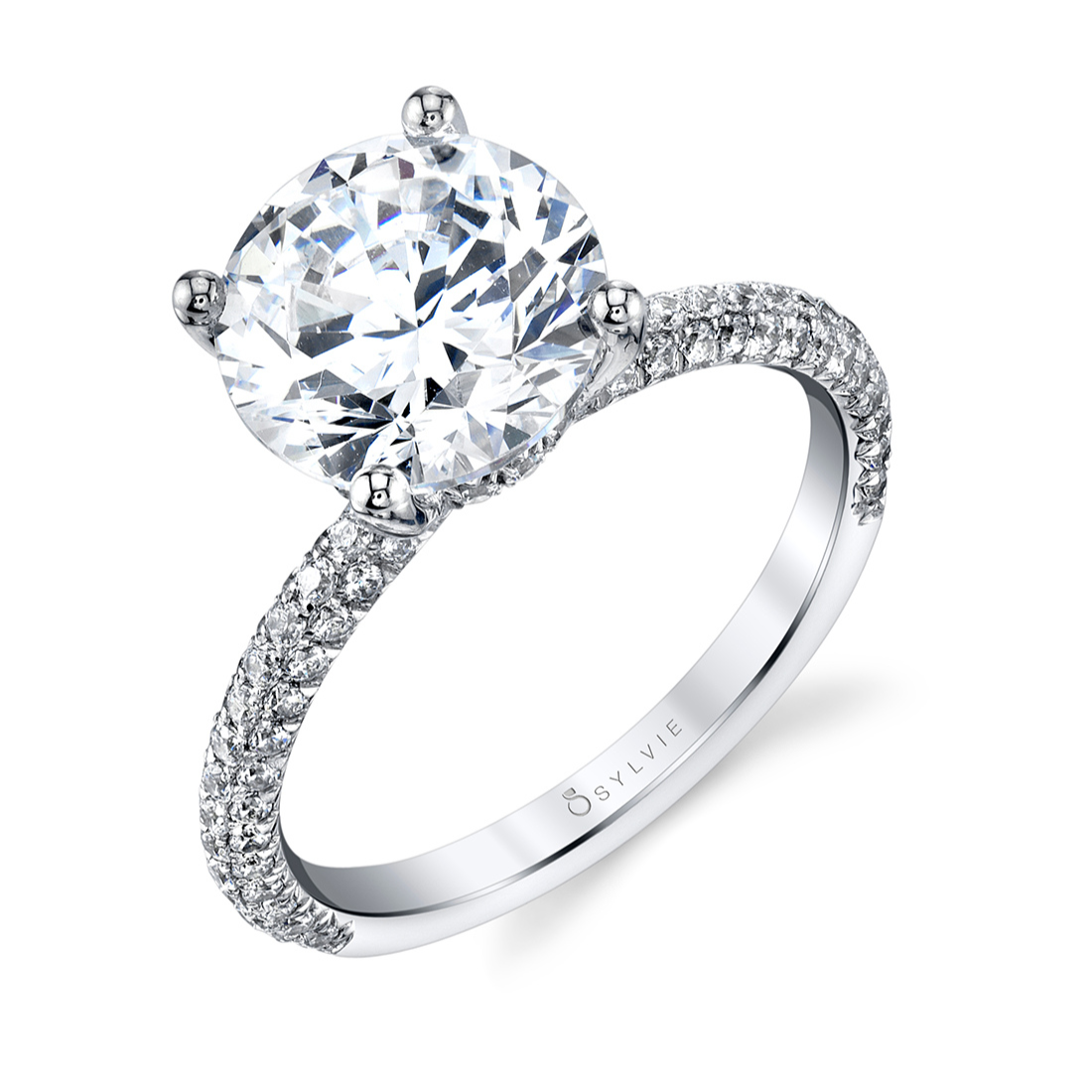
Round Cut 3 Carat Classic Pave Engagement Ring – Jayla
The Jayla engagement ring brings together your chosen center stone and a sleek white gold silhouette for a look that feels both modern and effortlessly timeless. Three rows of hand-set pavé diamonds, totaling 0.69 carats flow along the band, adding subtle dimension and a soft shimmer that complements, rather than competes with, the center stone.
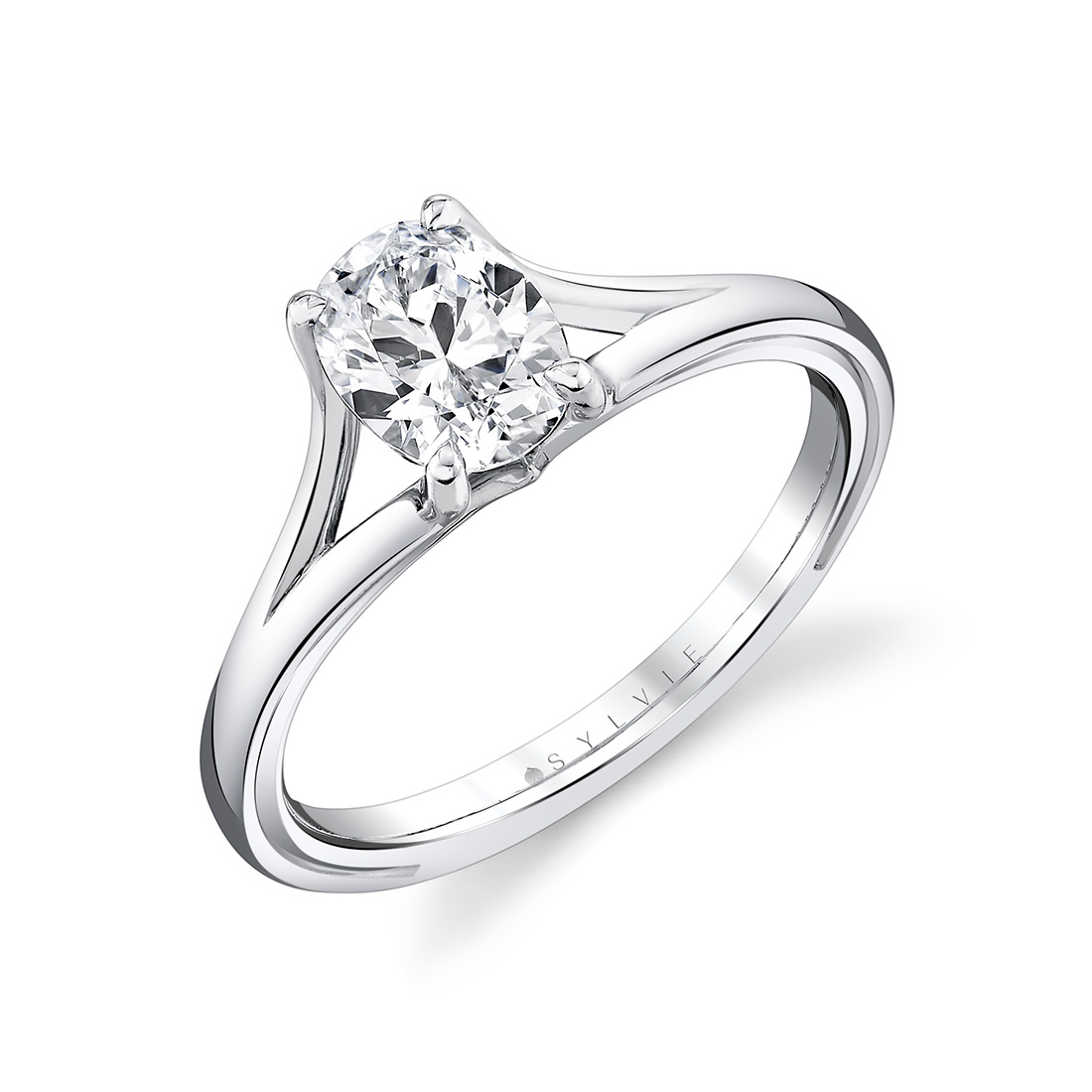
Iconelle Solitaire Shell Taper Engagement Ring – Vera
The Vera solitaire is defined by our signature Shell Iconelle inlay, carved into high-polish gold for a sculptural, architectural finish. Its tapered split shank band gently draws the eye toward the center setting, creating a clean, balanced profile in white gold. Elegant and understated, this design is ideal for those who appreciate thoughtful details and a modern interpretation of the classic solitaire.
White Gold Wedding Rings
White gold wedding bands offer a polished, luminous canvas that pairs seamlessly with engagement rings or stands beautifully on their own.
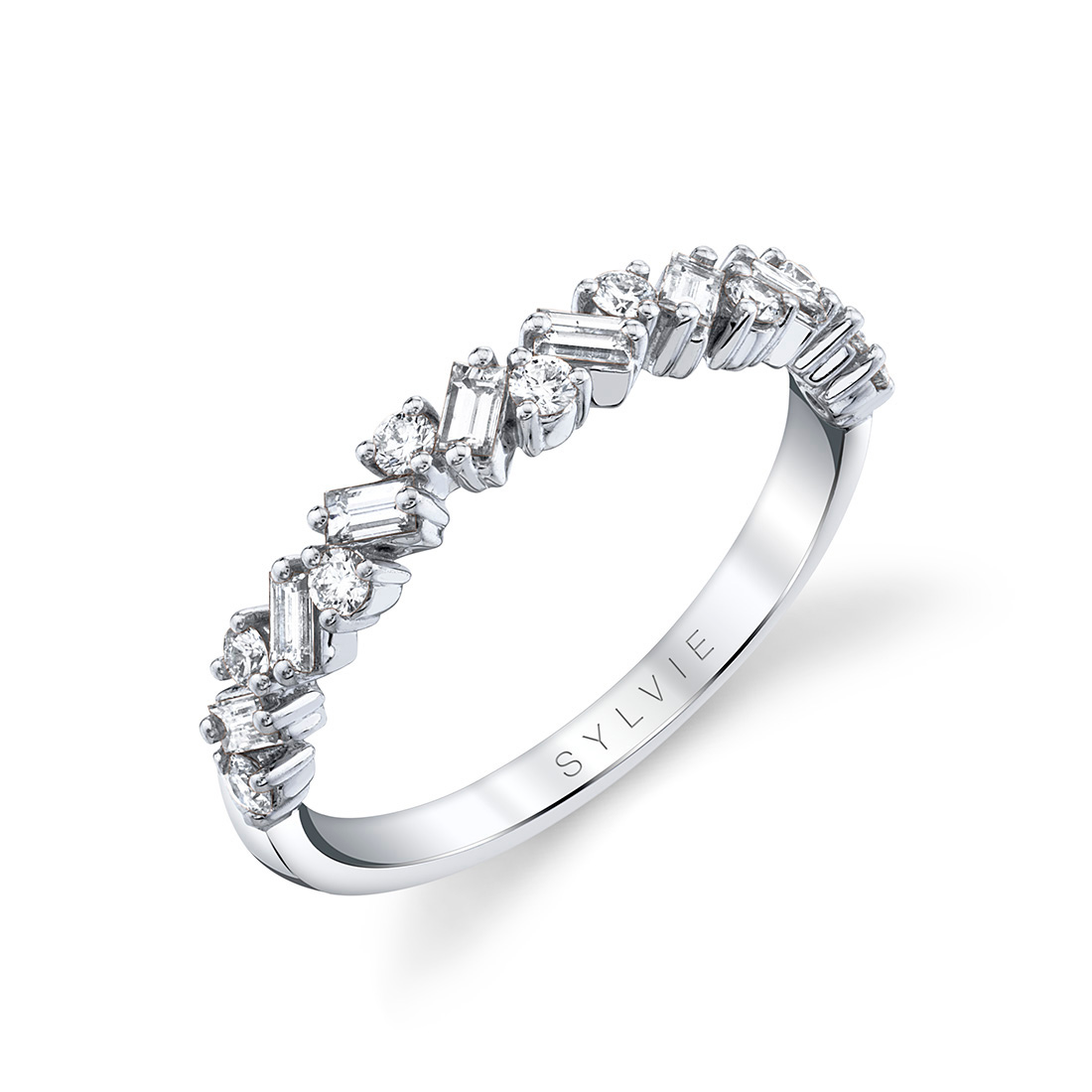
Slanted Baguette and Round Diamond Wedding Band – B129
This white gold wedding band (B129) blends slanted baguette diamonds with alternating round stones, totaling 0.47 carats, to create a soft, rhythmic pattern of light. The angled design adds movement and depth, giving the band a distinctive profile while maintaining a refined, wearable feel. Its mix of cuts brings a sense of sophistication that layers effortlessly with a variety of engagement ring styles.
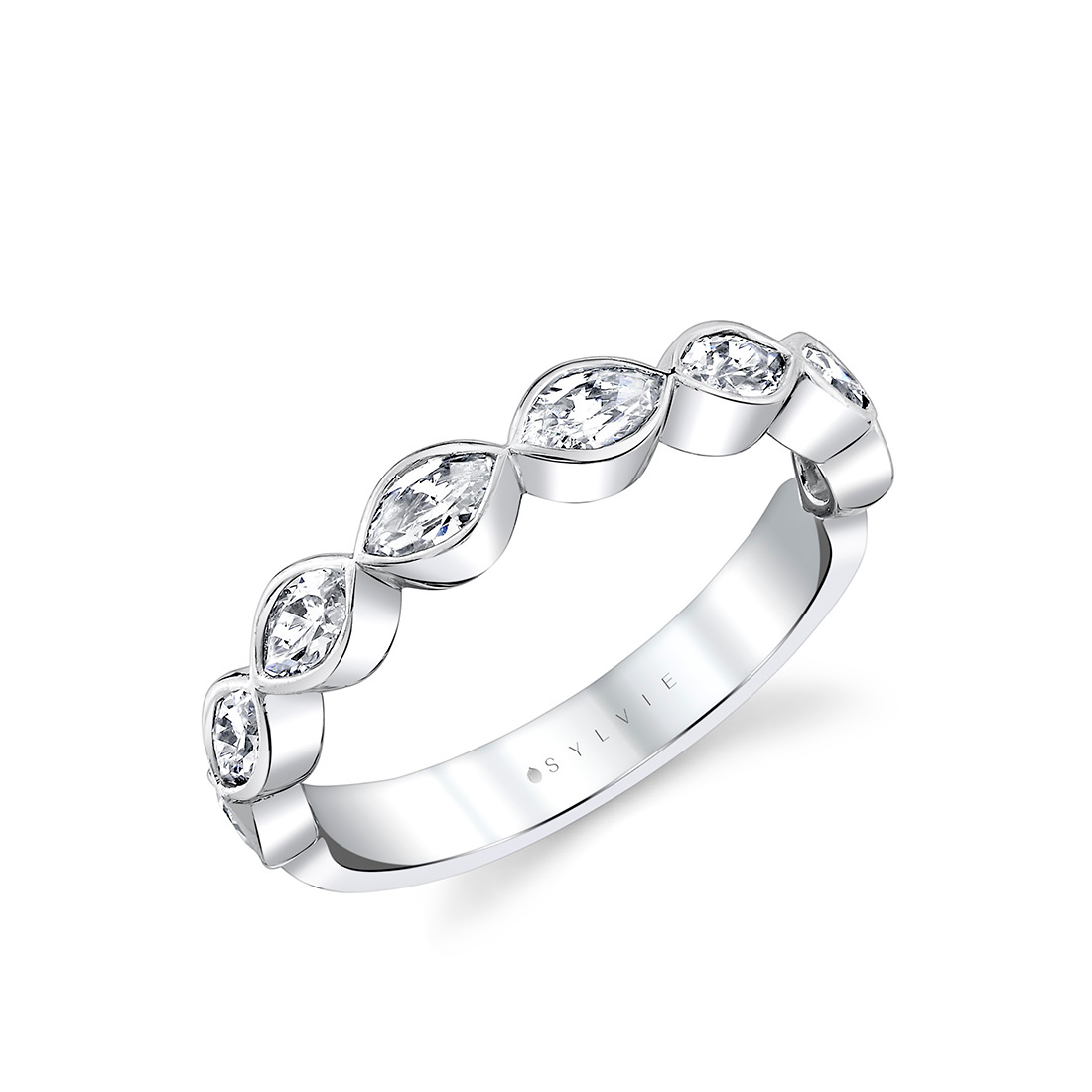
Marquise Cut Bezel Wedding Ring – B166
A row of marquise-shaped diamonds, bezel-set halfway around the band, creates a streamlined and sculptural look. Set in white gold, the elongated stones offer a graceful, petal-like effect that feels both feminine and contemporary. With 0.80 carats of natural diamonds, this band (B166) adds texture and dimension whether worn alone or stacked.
White Gold Men’s Bands
White gold men’s bands provide a sleek, modern aesthetic with the strength and versatility needed for everyday wear.
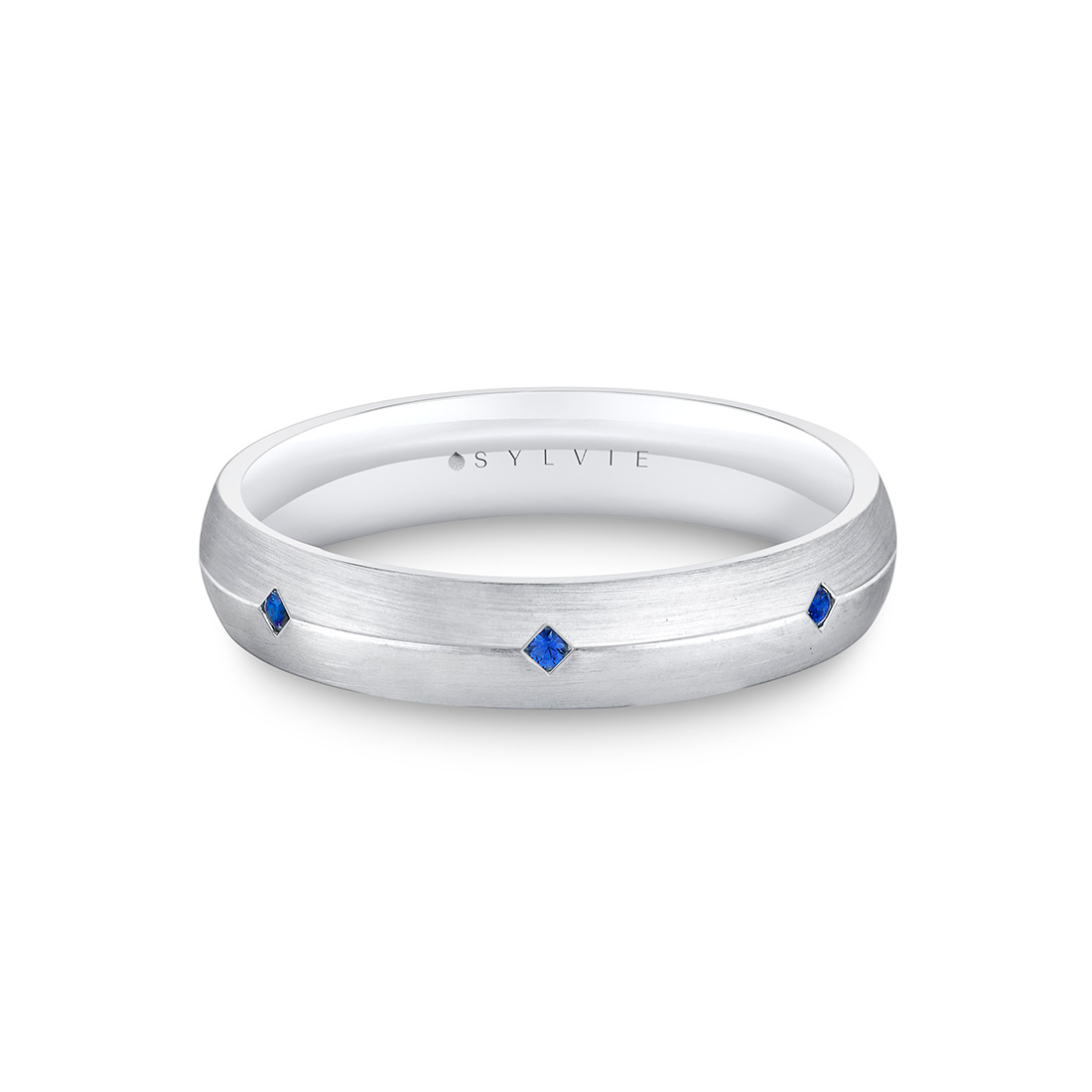
Heritage Brushed Sapphire Men’s Band – Omar
The Omar band pairs a refined brushed finish with a polished groove that circles the exterior, creating a subtle contrast in texture. Three princess-cut sapphires, totaling 0.21 carats, are spaced along the center for a clean, modern accent. Crafted in white gold, this 4.5mm design balances understated detail with everyday durability.
Legacy Shell Knurled Men’s Band – Jesse
The Jesse band features a contoured, knurled surface for a structured, contemporary look. Our Legacy Shell profile detailing adds a signature Sylvie touch visible from the side, creating depth without overwhelming the design. In white gold, this 6mm style offers a confident, modern take on a classic men’s band.
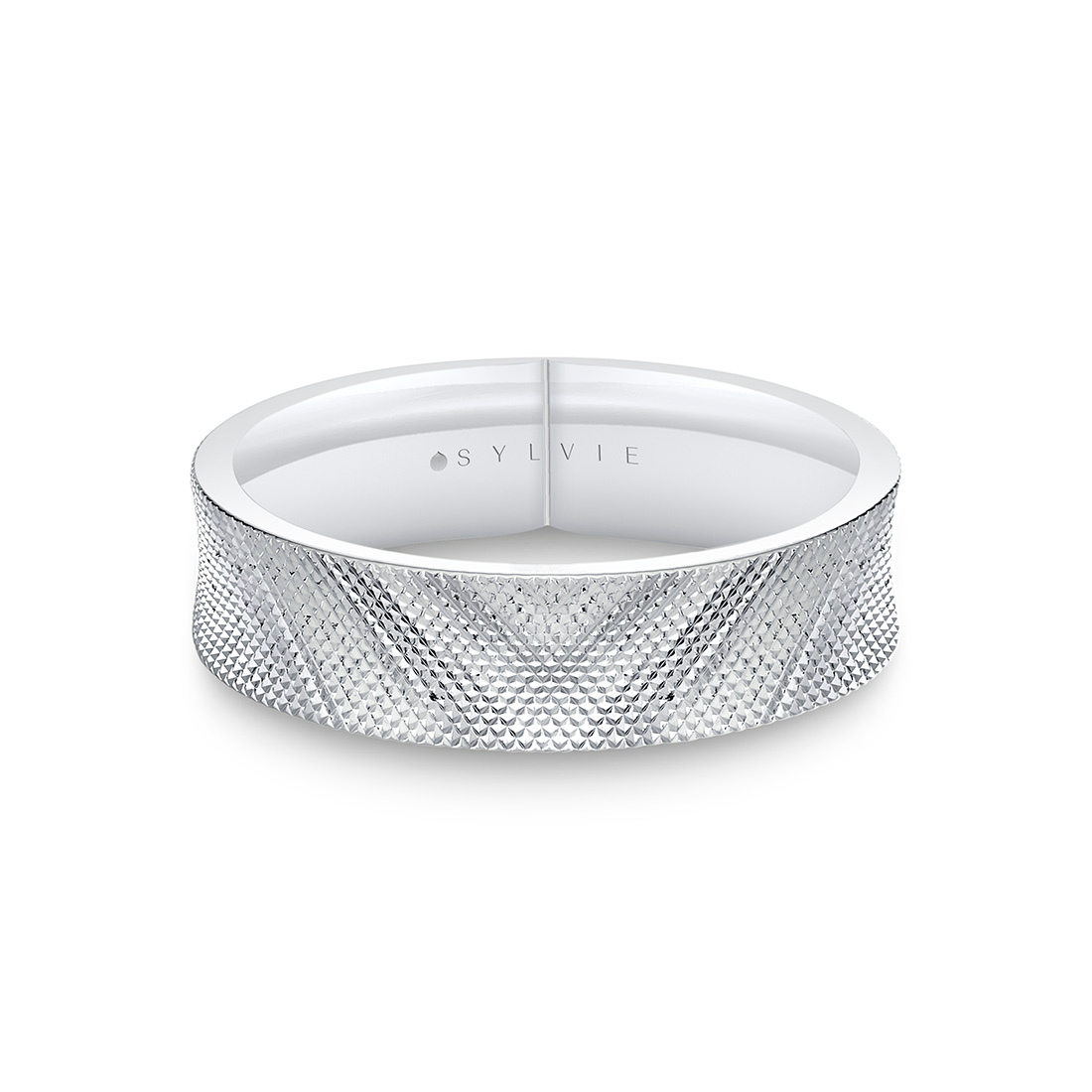
White Gold Jewelry
White gold fine jewelry offers a cool, radiant finish that complements both everyday styling and meaningful occasions.
Éternelle Bezel Round Diamond Bracelet – BRS1009
This bracelet (BRS1009) features round natural diamonds, totaling 1.30 carats, each set in a polished bezel for a soft, continuous line of brilliance. The flexible link design creates an elevated, wearable silhouette, perfect for stacking with diamond bangles or pairing with a minimalist watch. Its clean, modern profile feels especially striking in white gold.
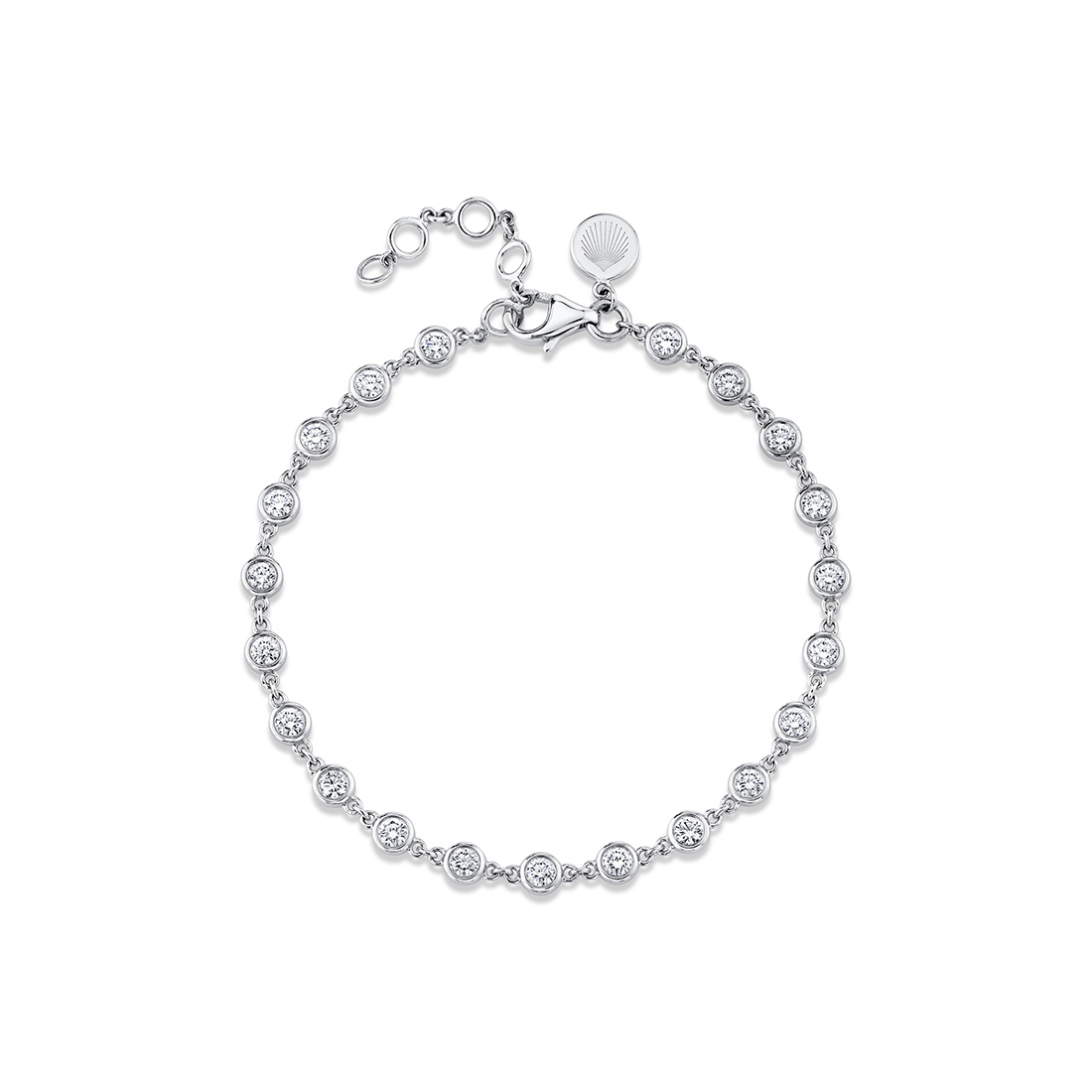
Solaz Sun Diamond Necklace – NS1000
Inspired by light and radiance, the Solaz necklace (NS1000) features a sculpted sun motif adorned with graduated natural diamonds totaling 0.35 carats. The symmetrical design delivers a delicate yet dimensional glow, making it an effortless white gold piece for everyday wear or special occasions.
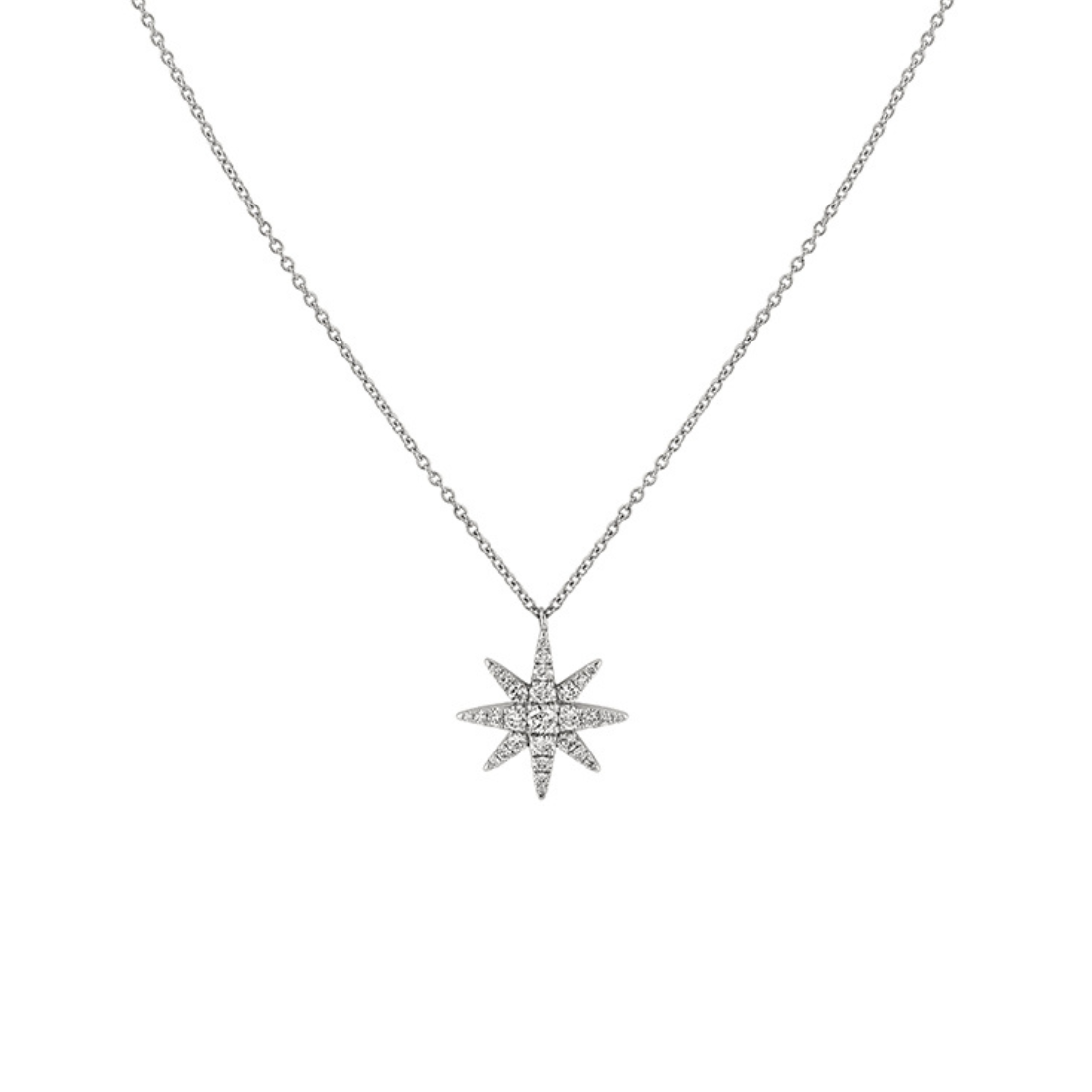
Each of these white gold pieces is crafted to perfection, embodying the blend of luxury, versatility, and enduring beauty that defines Sylvie Jewelry.
What Makes Platinum Different From White Gold?
Platinum is a highly prized precious metal known for its enduring beauty, strength, and exclusivity. It’s been favored for centuries in fine jewelry and remains one of the most sought-after metals for platinum engagement rings, platinum wedding bands, and platinum men’s bands.
Unlike other metals that require plating or substantial alloying, platinum’s natural silvery-white luster and density make it ideal for timeless and sophisticated designs. For those who seek durability and understated elegance in equal measure, platinum offers a metal that looks refined on day one, and remains that way for generations. It’s a top-tier choice for jewelry with lasting meaning and impact.
Platinum Purity: What Is the Difference Between Platinum and White Gold?
Platinum is a naturally white metal renowned for its exceptional purity and durability, making it one of the most prestigious materials in fine jewelry. Unlike white gold, which is created by mixing yellow gold with other metals, platinum is crafted with minimal alloying, resulting in jewelry that is typically 90–95% pure.
This high level of refinement not only enhances its natural, untarnished luster but also contributes to its hypoallergenic properties, making it ideal for individuals with sensitive skin or allergies to metals like nickel. The absence of significant additives ensures that platinum remains gentle and non-reactive against the skin, providing both comfort and peace of mind for the wearer.
Furthermore, platinum’s enduring purity adds symbolic value; as a metal that remains unaltered over time, it embodies permanence and authenticity, making it a meaningful choice for pieces that represent enduring love and commitment. This unparalleled combination of purity, strength, and natural beauty continues to set platinum apart as a standout choice in the world of fine jewelry. In the white gold vs platinum debate, platinum’s superior purity clearly distinguishes it as the more robust and timeless option.
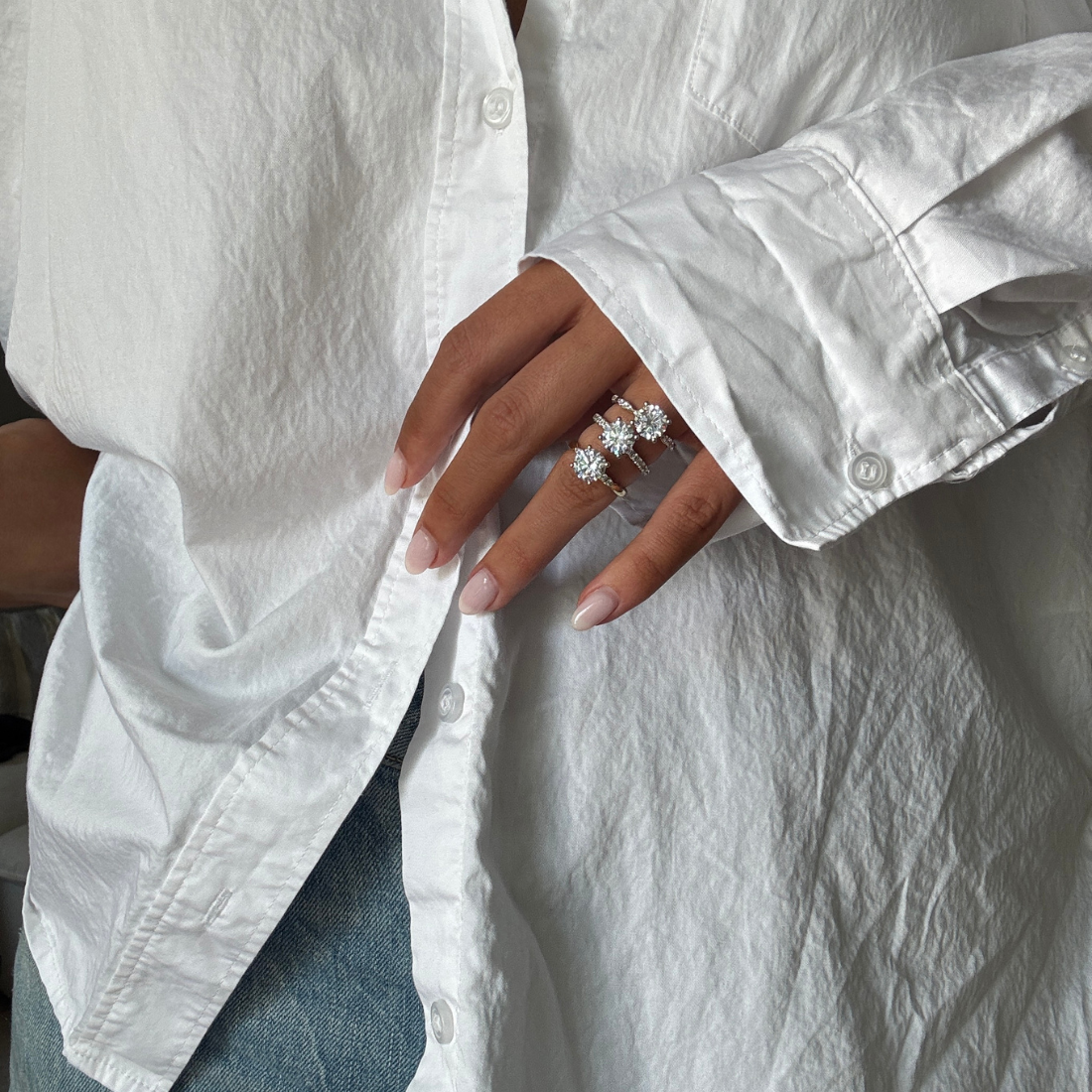
(from top to bottom) Iconelle Two Tone Pinched Engagement Ring – Josephine, Iconelle Halfway Pinch Two Tone Engagement Ring – Katya, and Iconelle Quarterway Pinch Two Tone Engagement Ring – Corinne
Natural Beauty of Platinum vs White Gold
Platinum’s natural color is a soft, silvery white that remains untarnished and vibrant even after decades of wear. Unlike white gold, which depends on rhodium plating to sustain its bright finish, platinum’s inherent hue requires no additional treatments to preserve its appearance. Its enduring luster is prized by those who value understated elegance and timeless sophistication.
Over time, platinum develops a unique patina, a soft, matte finish that many cherish for its vintage-like charm and as a mark of authenticity. This natural patina signifies its ability to withstand the passage of time, while a simple professional cleaning can restore its original brilliance for a more polished look. Whether maintained in its natural state or refreshed to a high shine, platinum’s beauty consistently enhances the jewelry it graces, making it a top choice for those who value timeless luxury.
Durability and Longevity: Platinum Is Less Malleable but More Resilient Than White Gold
Platinum’s durability is truly unmatched, making it one of the strongest and most reliable metals for fine jewelry. Its dense composition and natural resilience ensure that it can withstand the daily wear and tear often experienced by engagement rings, wedding bands, and other frequently worn pieces. Platinum’s strength makes it particularly effective at securing gemstones, providing peace of mind that your jewelry will remain intact and beautiful for decades.
However, platinum’s malleability, while contributing to its adaptability in intricate designs, means that it can scratch more easily than harder metals. Unlike white gold, where scratches may remove a tiny amount of metal, platinum scratches merely displace the metal, ensuring that its volume and integrity are preserved. This unique property adds to its longevity, as the metal remains strong despite surface imperfections.
For many, the patina that develops from these scratches enhances platinum’s character, offering a unique and cherished aesthetic that reflects the piece’s journey over time. Whether polished to restore its original shine or left with its natural patina, platinum’s durability ensures that it remains a timeless and enduring choice. In the white gold vs platinum debate, this resilience and evolving beauty make platinum the preferred option for those seeking lasting elegance.
The Weight of Platinum – A Denser, More Luxurious Feel Compared to White Gold
Platinum’s naturally dense composition gives it a substantial, weighty presence that many associate with luxury, permanence, and craftsmanship. This added heft can make a platinum ring feel more significant on the hand, offering a reassuring sense of durability and long-term wear.
White gold, by comparison, is lighter and less dense, creating a more effortless, barely-there feel that some prefer for daily comfort, especially in wider bands or intricate multi-stone designs. While both metals offer beauty and versatility, choosing between platinum’s grounded, substantial feel and white gold’s lighter touch comes down to personal preference and how you want your jewelry to fit into your everyday life.
Cost of Platinum Compared to White Gold
As one of the rarest and most sought-after precious metals, platinum commands a higher price than white gold, reflecting its exclusivity and exceptional qualities. Its rarity, combined with its density and high purity, contributes significantly to its cost, making it one of the most premium options in fine jewelry. Additionally, the craftsmanship required to work with platinum, due to its density, further adds to its expense.
While platinum represents a significant investment, its enduring quality, hypoallergenic properties, and natural beauty make it a worthwhile choice for those who value longevity and exclusivity. Unlike many other metals, platinum retains its integrity and weight over time, ensuring that each piece maintains its original value and appearance. For individuals seeking jewelry that is not only luxurious but also built to last a lifetime, platinum offers unmatched durability and timeless appeal, justifying its higher price point. In the ongoing white gold vs platinum debate, choosing platinum is widely seen as an investment in elegance and lasting value.
Maintenance and Upkeep: Caring for Platinum vs White Gold Over Time
Platinum is naturally low-maintenance, making it an appealing choice for those who want long-term beauty with minimal upkeep. Because platinum is a naturally white metal, it never requires rhodium plating to maintain its color. Its silvery sheen remains stable over time, even with frequent wear, which makes it especially well-suited for engagement rings and wedding bands worn every day.
While platinum can develop fine surface scratches, these marks simply displace the metal rather than remove it, allowing the ring to retain its weight and structural integrity. Over time, these micro-scratches form a soft patina, a matte finish that many wearers appreciate for its understated character. For those who prefer a high-polish look, a jeweler can easily buff and restore platinum’s original luster without compromising the metal.
Compared to white gold, which relies on periodic re-plating to maintain its brightness, platinum offers consistent, reliable performance with only occasional professional cleaning or polishing. Its enduring color, density, and stability make it one of the simplest and most dependable metals to care for over a lifetime.
Top Platinum Sylvie Pieces
Discover our exceptional collection of platinum jewelry, each design reflecting the unmatched luxury and enduring beauty of this noble metal.
Platinum Engagement Rings
Platinum engagement rings offer a naturally white, enduring foundation that highlights every detail of the design while providing long-lasting strength for everyday wear.
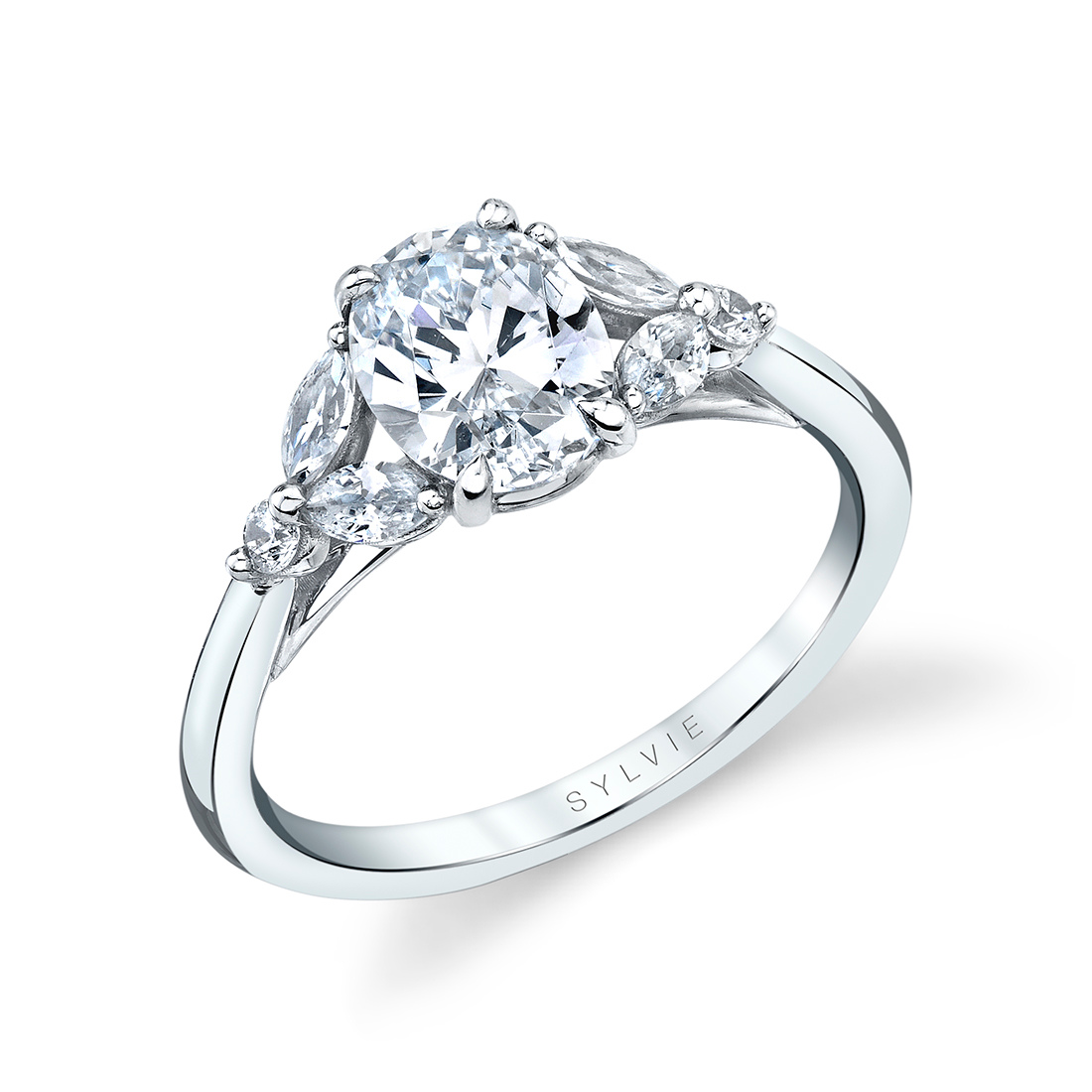
Oval Cut Unique Three Stone Engagement Ring – Alina
The Alina three-stone design pairs your chosen center diamond with six side stones for a balanced, elongated silhouette that feels modern and refined. Set in platinum, the arrangement of marquise and round diamonds brings depth and dimension to the profile, allowing each diamond to stand out without overwhelming the center. With 0.33 carats of natural side stones, this style offers a sophisticated interpretation of a classic three-stone engagement ring.
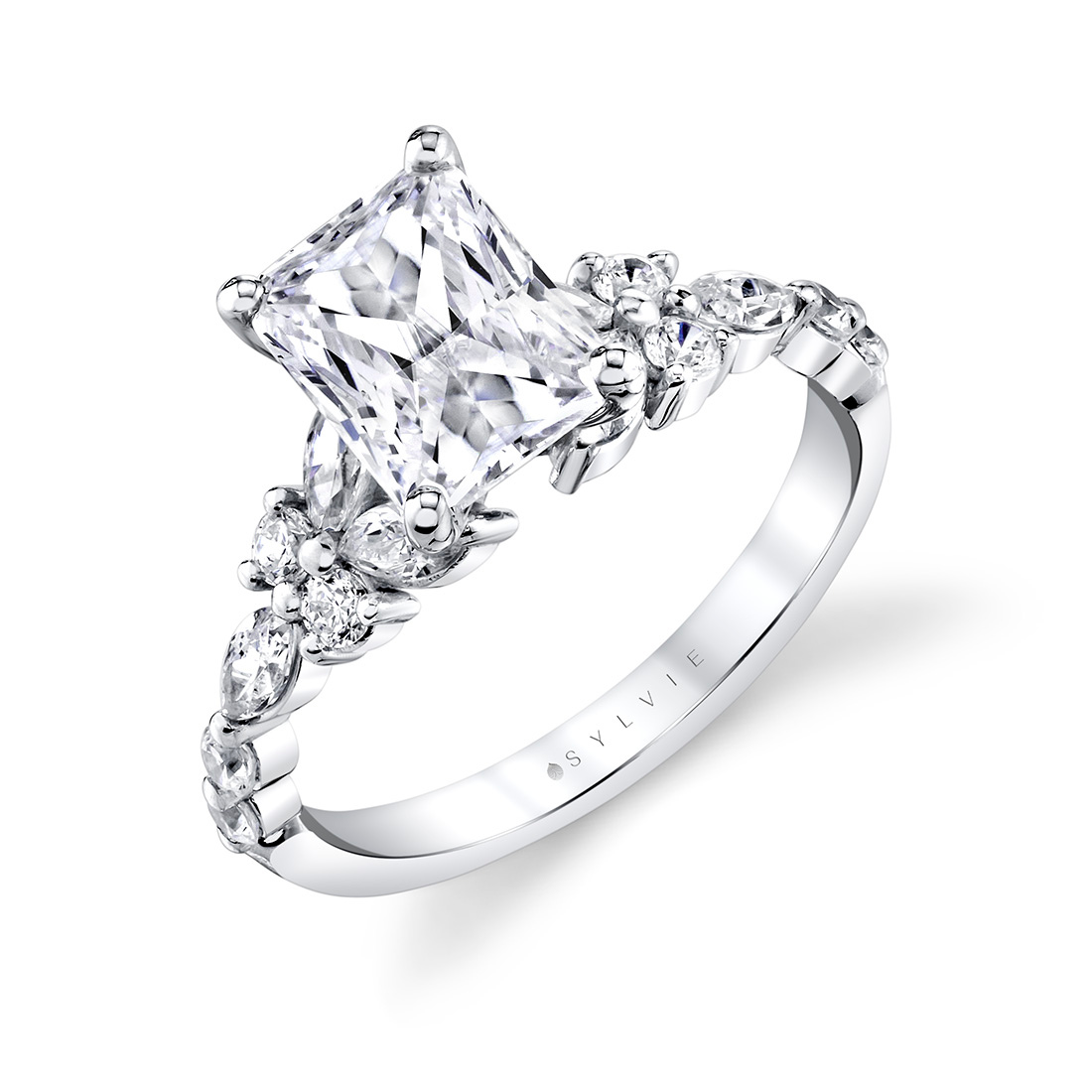
Tulira Diamond Butterfly Engagement Ring – Lilac
The Lilac engagement ring blends sculptural detail with soft movement, featuring a marquise-and-round diamond butterfly motif on either side of the center setting. Our signature Legacy Shell profile adds an intricate touch to the side view, revealing the craftsmanship that defines the Tulira collection. In platinum, the contrast between polished surfaces and delicate diamond accents feels especially graceful.
Platinum Wedding Rings
Platinum wedding rings offer a bright, naturally white finish that endures beautifully over time, creating a timeless complement to any engagement ring.
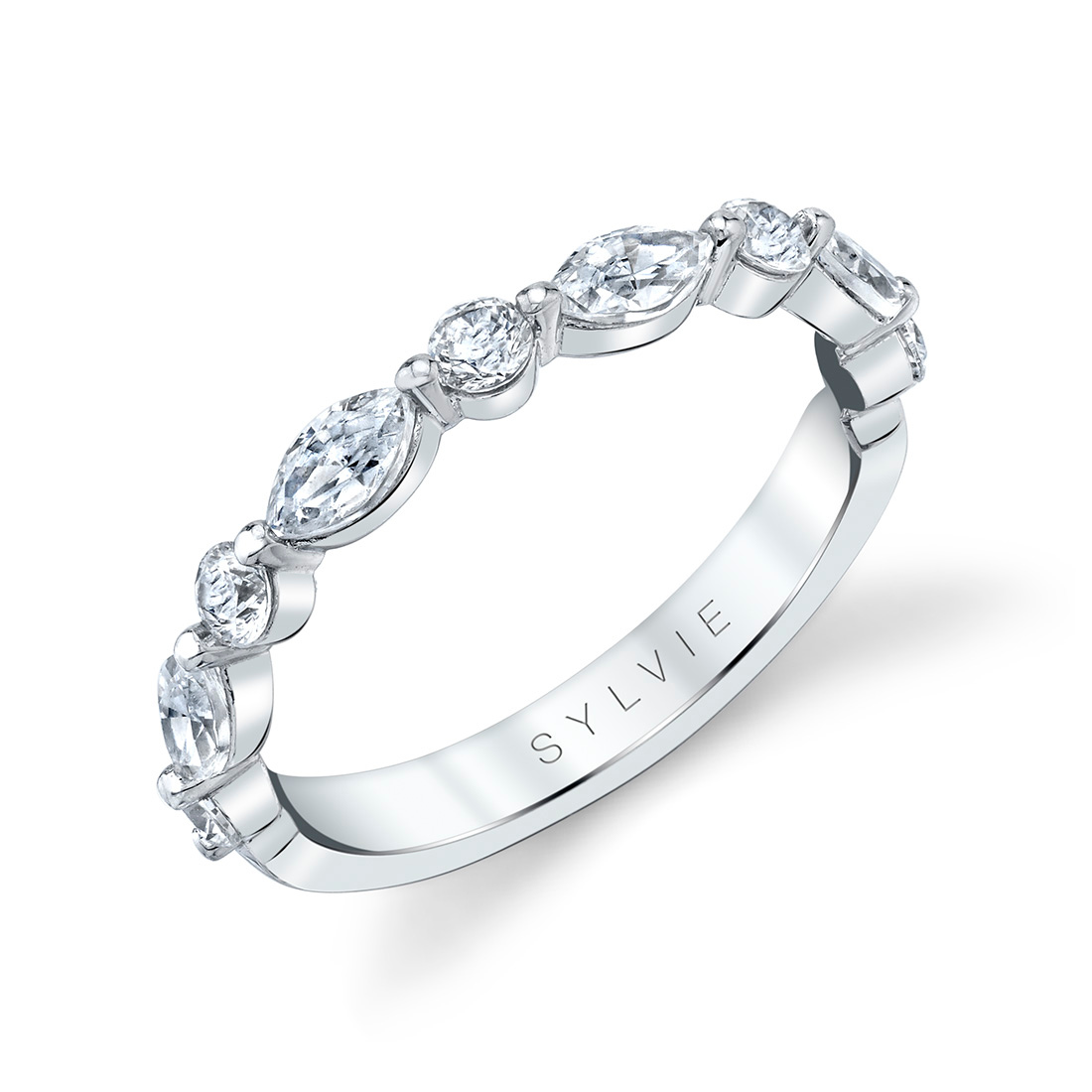
H5: Alternating Round and Marquise Diamond Wedding Band – B1P09
This platinum wedding band (B1P09) features alternating marquise and round diamonds in a shared-prong arrangement that creates a feminine, petal-like rhythm around the finger. With 0.78 carats of natural diamonds, the design balances delicacy and presence, making it an elegant pairing for solitaire, three-stone, or classic engagement ring styles.
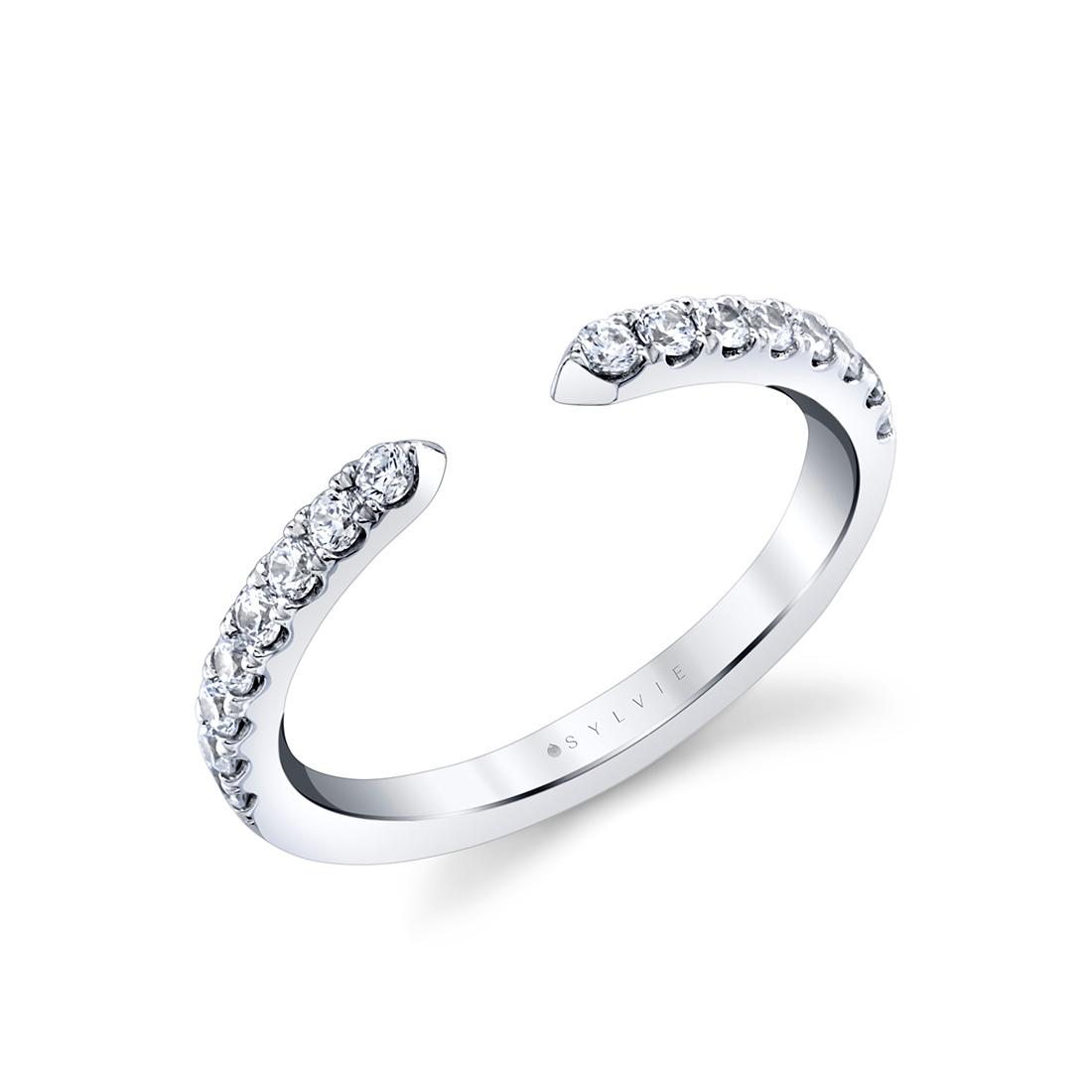
Classic Modern Open Wedding Band – B144
A modern interpretation of the open band silhouette, this platinum design (B144) is set with 0.33 carats of pavé diamonds that wrap gently along the curve of the ring. Its refined shape layers effortlessly with a variety of engagement rings and other bands, allowing for clean, contemporary styling or a more dimensional stacked look.
Platinum Men’s Bands
Platinum men’s bands deliver durability, a naturally white color, and a substantial feel that reflects the metal’s enduring character.
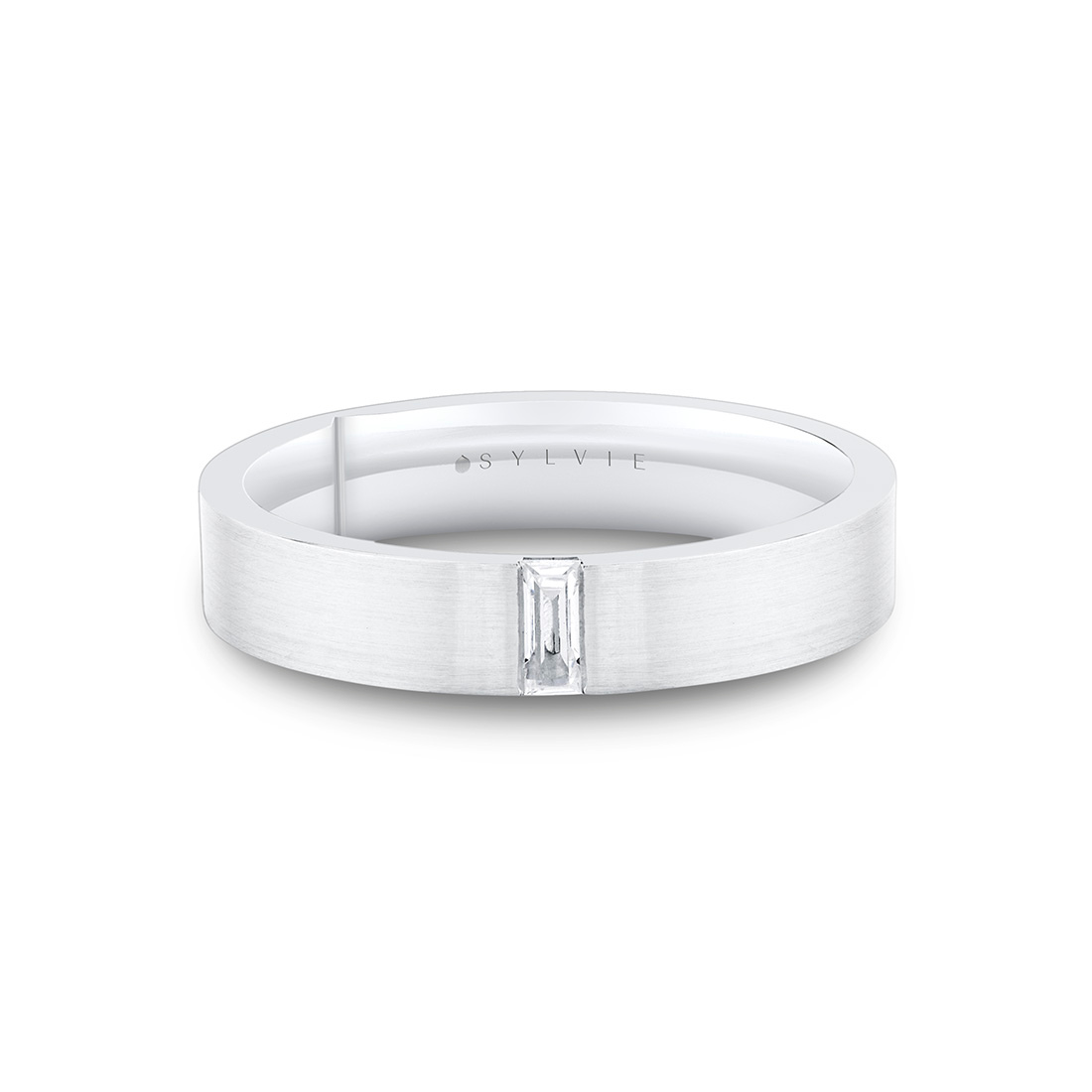
Legacy Shell Brushed Baguette Men’s Band – Beckham
The Beckham men’s band features a brushed platinum finish accented by a single baguette diamond for a subtle yet distinctive focal point. Sylvie’s Legacy Shell profile adds sculptural detail along the side, offering depth without compromising the ring’s clean, modern lines. With 0.10 carats of natural diamond, this style blends strength with understated refinement.
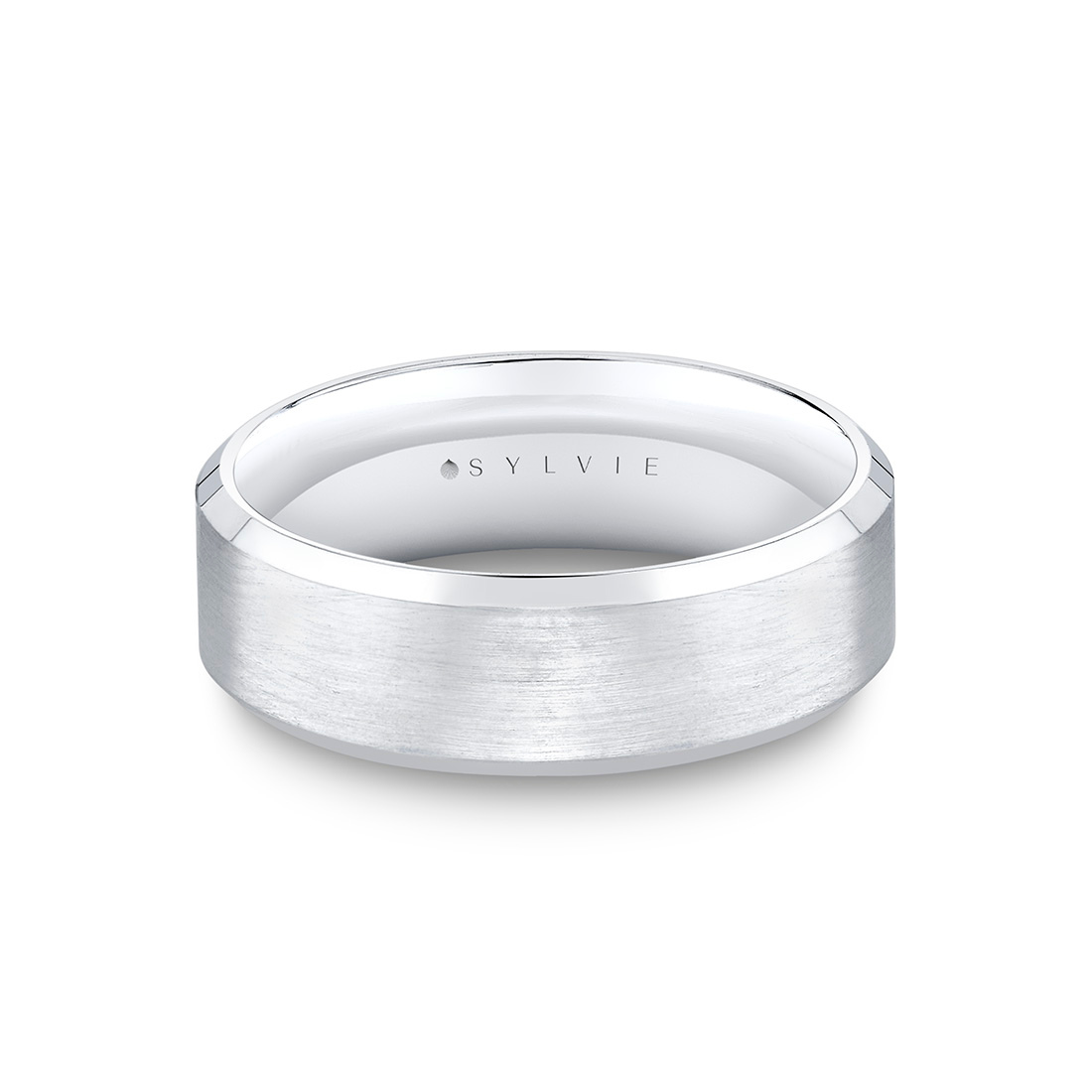
Heritage Classic Brushed Men’s Band – Atlas
The Atlas band showcases a structured 7mm silhouette with beveled high-polish edges framing a brushed center channel. Crafted in platinum, the contrast between finishes emphasizes the band’s crisp geometry and enduring feel. Its clean design makes it a versatile choice for grooms who prefer a classic look with a contemporary edge.
Each of these platinum pieces exemplifies Sylvie’s dedication to craftsmanship, comfort, and lasting sophistication, designed to celebrate love, individuality, and enduring luxury.
Choosing Between White Gold vs Platinum: Which Is Better For You?
The choice between white gold and platinum goes beyond aesthetics. While both metals offer timeless beauty and versatility, their distinct characteristics make them better suited to different lifestyles, budgets, and personal tastes. Each metal has its advantages, from platinum’s unparalleled durability to white gold’s brilliant shine and affordability.
To make an informed decision, it’s essential to weigh the practical and emotional factors that come into play. Consider how the metal will align with your daily activities, how much you’re willing to invest, and what kind of look you want. By closely examining your lifestyle, financial priorities, and aesthetic preferences, you can choose the metal that best reflects your personality and needs.
Lifestyle: White Gold vs Platinum for Daily Wear
Your lifestyle plays a key role in deciding between white gold and platinum. Platinum is often the more practical choice for those with active routines or hands-on professions. Its exceptional durability, hypoallergenic nature, and ability to securely hold diamonds make it ideal for daily wear. Unlike white gold, platinum retains its volume when scratched, preserving both structure and appearance over time.
White gold, while durable, is more dependent on how frequently it’s worn. Its rhodium plating can wear down faster with daily use, requiring more frequent re-plating for those who are very active. However, it remains a beautiful and lower-maintenance option for lighter wear or more occasional use. Its lighter weight also makes it comfortable for extended wear and well-suited to a wide range of styles.
By aligning your choice with your day-to-day habits, you can ensure your jewelry stays both practical and polished for years to come.
Budget and Priorities: What Is Better, Platinum or White Gold?
Budget is often a deciding factor when choosing between white gold and platinum. White gold is the more affordable option, offering a refined look similar to platinum but at a lower price point. This cost advantage allows greater flexibility, especially for couples investing more in a larger center stone or a more intricate design. It’s a popular choice for those seeking elegance and quality without exceeding their financial comfort zone.
Platinum, by contrast, is a long-term investment in durability and exclusivity. Its higher price reflects its rarity, density, and the craftsmanship required to shape it. However, its lasting strength and ability to maintain weight and structure over decades make it a meaningful and valuable choice.
Ultimately, your decision should align with your financial priorities. White gold delivers beauty and versatility for value-focused shoppers, while platinum is ideal for those seeking enduring luxury and legacy.
Aesthetic Preferences: Platinum and Gold in Jewelry Design
When considering white gold vs platinum, their aesthetic differences, while subtle, can greatly influence your decision. White gold’s rhodium plating provides a bright, reflective surface that enhances the brilliance of diamonds and gemstones, making it a popular choice for modern designs. This polished, mirror-like finish is ideal for those who prefer a sleek and contemporary look. Its adaptability ensures that it pairs beautifully with various jewelry styles, from minimalist to elaborate, making it a versatile choice for many tastes.
Platinum, in contrast, offers a natural, understated beauty that exudes timeless elegance. Its softer, silvery hue appeals to those who appreciate subtle sophistication and classic designs. Unlike white gold, which relies on rhodium plating for its brightness, platinum’s color is intrinsic and does not fade over time. As it ages, platinum develops a patina,a soft, matte finish that many cherish for its vintage charm and character. This patina adds a layer of uniqueness, symbolizing the passage of time and the metal’s enduring strength.
Whether you value the modern brilliance of white gold or the timeless allure of platinum, both metals offer distinct aesthetics that can elevate the beauty of your jewelry. Choosing between them comes down to how you want your jewelry to reflect your personal style and the story it tells.

Final Thoughts on White Gold vs Platinum
Choosing between white gold and platinum is ultimately about finding the metal that best reflects your style and how you wear your jewelry. Platinum offers exceptional purity, durability, and a naturally white color that stays true over time. Its weight and strength make it a lasting choice across all jewelry categories.
White gold provides bright brilliance and versatility at a more accessible price point, allowing for greater design flexibility while still offering a polished, modern look. With routine care, it remains a beautiful and practical option for everyday wear.
At Sylvie Jewelry, each piece is crafted with intention and detail, ensuring it complements your life and personal expression. Whether you prefer the enduring presence of platinum or the radiant charm of white gold, our collection offers timeless options for every style.
White Gold vs Platinum FAQs
Choosing between white gold and platinum often comes down to practical details that aren’t obvious at first glance. These FAQs address the most common questions about durability, maintenance, cost, and everyday wear, so you can feel confident selecting the metal that best fits your lifestyle and your Sylvie Jewelry design.
What is the main difference between white gold and platinum?
White gold is an alloy made by mixing yellow gold with white metals and finishing it with rhodium plating for a bright, cool tone. Platinum is a naturally white, denser, and purer metal that doesn’t require plating. Both look similar at a glance, but they differ in weight, maintenance, and long-term performance.
Which metal is more durable for everyday wear?
Platinum is generally more durable because of its density and ability to hold stones securely over time, even as it develops a soft patina. White gold is strong and reliable for daily wear but relies on rhodium plating, which will gradually wear and may need refreshing. Both can perform beautifully when cared for properly.
Does white gold require more maintenance than platinum?
Yes. White gold’s rhodium plating will wear with regular use, so it typically needs re-plating every 1–3 years to maintain its bright white finish. Platinum does not require plating and only needs occasional polishing and cleaning, making it lower-maintenance long term.
Which is more expensive, white gold or platinum?
Platinum is more expensive due to its rarity, higher purity, and density, as well as the added craftsmanship required to work with it. White gold offers a similar look at a more accessible price point, making it ideal if you want to prioritize budget or invest more in your center stone.
Which metal is better for sensitive skin?
Platinum is naturally hypoallergenic, making it an excellent choice for sensitive skin or nickel allergies. Some white gold alloys contain nickel, which can cause irritation, but nickel-free or palladium-based white gold options are available. If skin sensitivity is a concern, platinum is the safest and most reliable option.
Will white gold or platinum change color over time?
White gold may gradually reveal a warmer undertone as its rhodium plating wears, which is easily restored with re-plating. Platinum keeps its natural silvery-white color but develops a soft patina that can be polished out if you prefer a high shine. Neither metal will tarnish like silver.
Is platinum always the better choice for engagement rings?
Not always, it depends on your priorities. Platinum is ideal if you value maximum durability, hypoallergenic purity, and long-term low maintenance. White gold is a beautiful choice if you prefer a lighter feel, a bright mirrored finish, and a more budget-friendly option with professional upkeep over time.
Can I mix white gold and platinum in my bridal set?
Yes, you can mix the two, especially since their colors are visually similar when white gold is freshly plated. However, platinum’s greater density can cause more wear on a softer white gold band if they rub together over time. If you love a mixed-metal look, your jeweler can help design a set that balances aesthetics with longevity.