Earring stacking has evolved from a trend into an art form, a sophisticated way to express your personal style through carefully curated jewelry. What was once limited to a single pair of studs has transformed into a canvas for self-expression, where multiple earrings work together to create a signature look that’s uniquely yours. Learning how to stack earrings opens up endless possibilities for elevating your everyday style or making a statement at special occasions.
Here is the short version of how to stack earrings: start with one anchor earring, place your larger pieces in the lower piercings, and work up the ear with smaller diamond studs, huggies, or pierced ear cuffs. Repeat one element across the stack, whether a metal, a diamond shape, or a design motif, and leave enough negative space between pieces so each one stays visible on its own.
The beauty of stacked earrings lies in their versatility. Whether you prefer the understated elegance of two delicate pieces or the bold impact of five statement-making earrings, the right combination can transform your entire look. This guide will walk you through the fundamental techniques, expert styling tips, and curated inspiration you need to master the art of earring stacking.
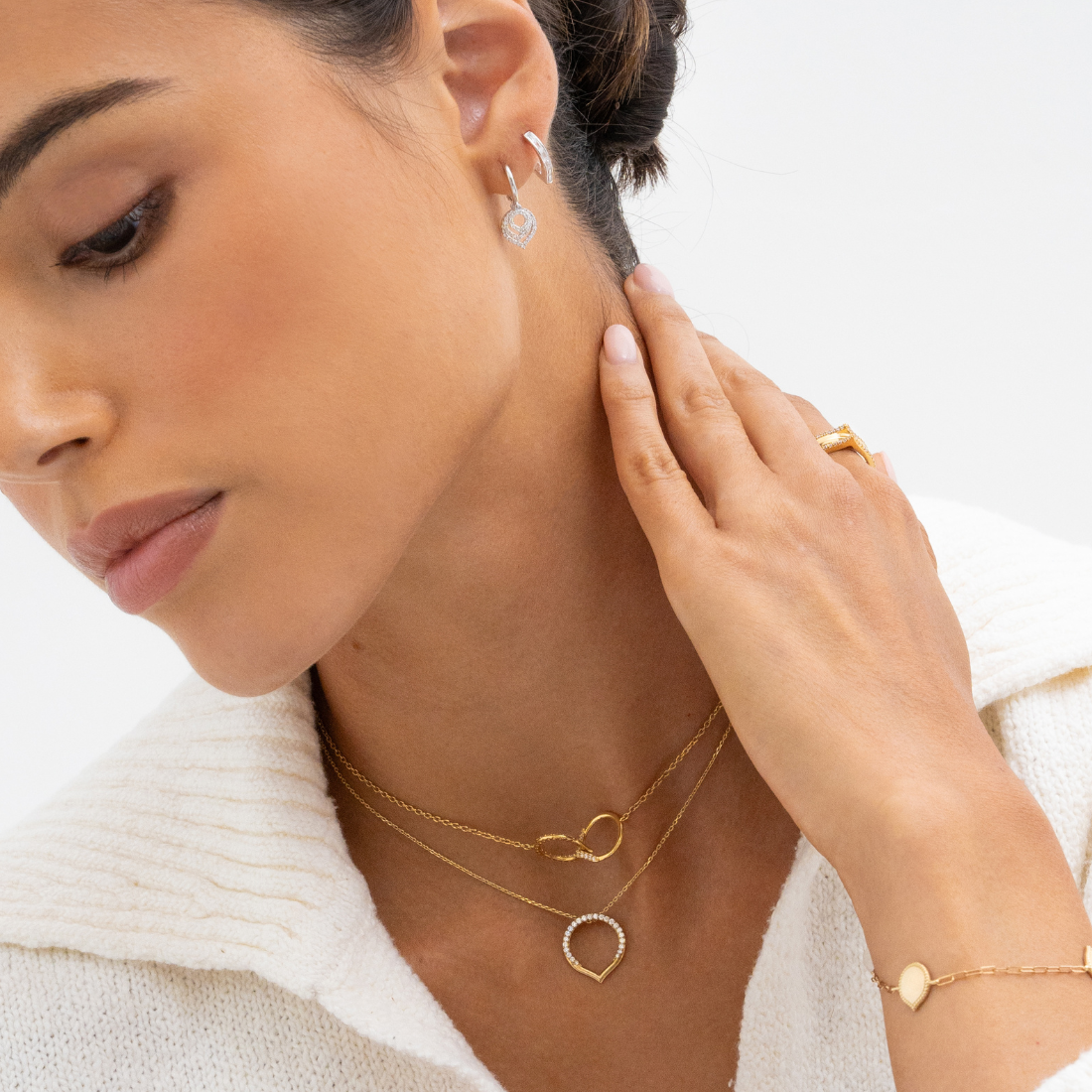
(from top to bottom) Shell Héritage Baguette Hoop Earrings – HPS1008, Shell Héritage Shell Trio Dangle Diamond Earrings – ERS1043, Shell Héritage Shell Tip Diamond Ring – RS1022, Shell Héritage Diamond Pendant – PS1028, and Shell Héritage Spaced Shell Paperclip Bracelet – BRS1027
Understanding the Fundamentals of Earring Stacking
Before diving into specific earring stacking techniques, it’s essential to understand what makes a truly well-composed stack. The foundation of beautiful earring stacking goes far beyond simply wearing multiple pieces. It’s about creating harmony, balance, and intentional design.
What is Earring Stacking?
Earring stacking is the practice of wearing multiple earrings on one or both ears to create a curated, layered look. Unlike the traditional approach of wearing a single pair of matching earrings, stacking involves thoughtfully combining different styles, sizes, and sometimes metals to achieve a personalized aesthetic. This approach to earrings layering has become the signature of sophisticated jewelry lovers who view their ear as a canvas for artistic expression.
What makes stacking particularly appealing is its accessibility. Whether you have two piercings or six, you can create stunning earring combinations that reflect your unique taste. The key is understanding the principles that guide successful stacking, which we’ll explore throughout this guide on how to wear stacked earrings.
The Anatomy of a Well-Stacked Ear
Your ear shape plays a meaningful role in stacking decisions. Those with larger lobes can accommodate bigger statement pieces, while smaller ears often look best with more delicate stacking earring styles.
Piercing spacing matters just as much. Closely set piercings limit how much scale you can introduce before the ear feels crowded, while wider gaps give each earring room to register on its own.
Essential Piercing Placements for Stacking
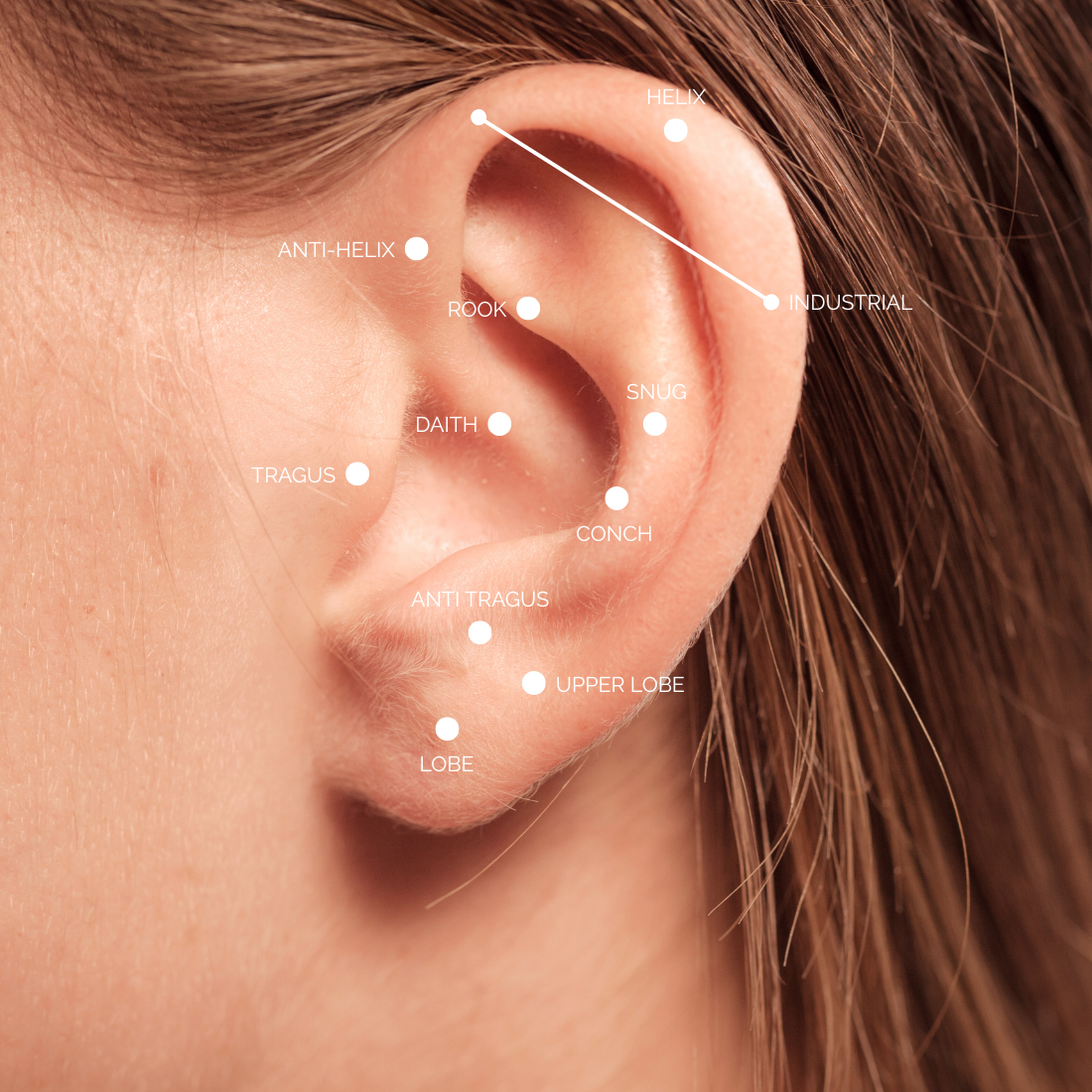
Understanding ear piercings is fundamental to successful stacking. The lobe offers the most versatile placement options, with first, second, and third lobe piercings providing ample opportunity for creative combinations. Diamond hoops and statement stud earrings sit comfortably in the lower lobe, where there is the most room to work.
Cartilage piercings expand your stacking possibilities. The helix is ideal for small hoops or studs that add dimension. The tragus can accommodate tiny details that catch light unexpectedly. The conch offers space for statement pieces that anchor your entire stack. Working with your existing ear piercings means understanding their placement and using them strategically.
The same principles build earring stacks at any number of piercings. Use this as a starting point:
| Piercings | How to Build the Stack |
|---|---|
| One | Choose one piece with reach: a statement earring, an earring climber, or a pierced ear cuff that curves up the ear. |
| Two | An anchor earring in the lower piercing and a smaller accent above it. |
| Three | An anchor, a transition piece in the middle, and a small finishing accent at the top. |
| Four or more | With multiple ear piercings, vary the scale across the ear while repeating one unifying element, whether a metal, a shape, or a motif. |
Expert Techniques: How to Stack Earrings with Intention
Proven techniques are what turn a random pairing into a composed earring stack. These methods build visual balance into the ear from the start rather than leaving it to chance. The process follows five steps:
- Choose an anchor earring. This focal earring is your largest or most detailed piece, and it sets the tone for everything above it.
- Add smaller supporting pieces. Diamond studs, huggies, earring climbers, and pierced ear cuffs all work here, as long as they complement rather than compete.
- Vary size and visual weight. A clear hierarchy reads as intentional; matched scale reads as flat.
- Repeat one metal, shape, or diamond detail. A single shared element ties the composition together.
- Check spacing, balance, and comfort. Each piece should be visible on its own and wearable all day.
The Rule of Three: Visual Balance in Three Pieces
One of the most reliable earring stacking tips is the Rule of Three, which uses odd numbers to create visual interest and natural balance. Three pieces per ear provides enough variety to hold attention without overwhelming the composition, and odd numbers read as more dynamic than even ones.
Applied to the five steps above, that might look like a medium hoop anchoring the first lobe piercing, a diamond stud in the second, and a delicate pierced ear cuff in the third, curving upward from there. The framework is flexible enough for countless interpretations when stacking multiple earrings.
Metal Mixing Mastery for Stacked Earrings
Knowing when to match metals and when to mix them is one of the most refined earring stacking techniques. Staying in one tone, whether all yellow gold, all rose gold, or all white gold jewelry, creates a cohesive look that suits professional settings and everyday wear.
Mixing metals reads as more contemporary, and the key is intentionality. Combine warm tones like yellow and rose gold, or set white gold against either one for contrast. When you cross between warm and cool, let the repeated element from step four do the work, whether that is consistent sizing or matching diamond accents.
Size Gradation Techniques for Earring Stacking
Size gradation is one of the most effective ways to stack earrings while maintaining visual balance. The classic pyramid approach places your largest piece at the bottom and graduates to progressively smaller pieces as you move up the ear, which creates a natural progression the eye follows easily.
For a less expected result, try reverse stacking with your largest piece at the top, graduating down. Either direction works as long as the scale shifts noticeably between pieces. When you are combining hoop earrings and stud earrings, that contrast in size is what keeps the stack from looking uniform.
The Layering Method: How to Layer Earrings for Depth
Layering earrings effectively means considering both the front-facing and profile views. From the front, you see how pieces stack vertically. From the side, you see the depth created by pieces sitting at different distances from your head.
Each type contributes something different to that depth. A statement hoop or dangle earring projects away from the ear, which is why it works as the anchor at the bottom of a stack. Diamond studs sit flush and read as points of light between the pieces around them. Our ear cuffs enter through the piercing and then curve up along the ear’s outer edge, so a single placement travels further than a stud can. Choose one from each depth, leave negative space between them, and the stack builds itself.
How to Stack Hoop Earrings
Hoops are the easiest place to start a stack because they graduate so cleanly. Graduated hoops work in clear size increments rather than small ones: your largest hoop in the first piercing, a noticeably smaller one in the second, and a huggie sitting close to the lobe at the top. Three hoops of similar diameter read as unplanned, while a visible step between each one reads as deliberate. Anchoring the largest hoop low keeps the visual weight where it belongs.
Diameter is not the only variable worth considering. The width of the hoop and the way its diamonds are set both change how much presence a piece carries, which means a slim hoop with spaced diamonds and a wider one with continuous pavé can sit near each other comfortably even at similar sizes. If two of your hoops end up close in diameter, let that difference in profile carry the contrast instead.
Alternating hoop earrings with diamond studs gives the eye a place to rest between curves, and an earring climber or pierced ear cuff introduces contrast through a different silhouette entirely. Keep decorative or oversized hoops to one per ear. Several at once compete for attention and flatten the hierarchy you built in the first place.
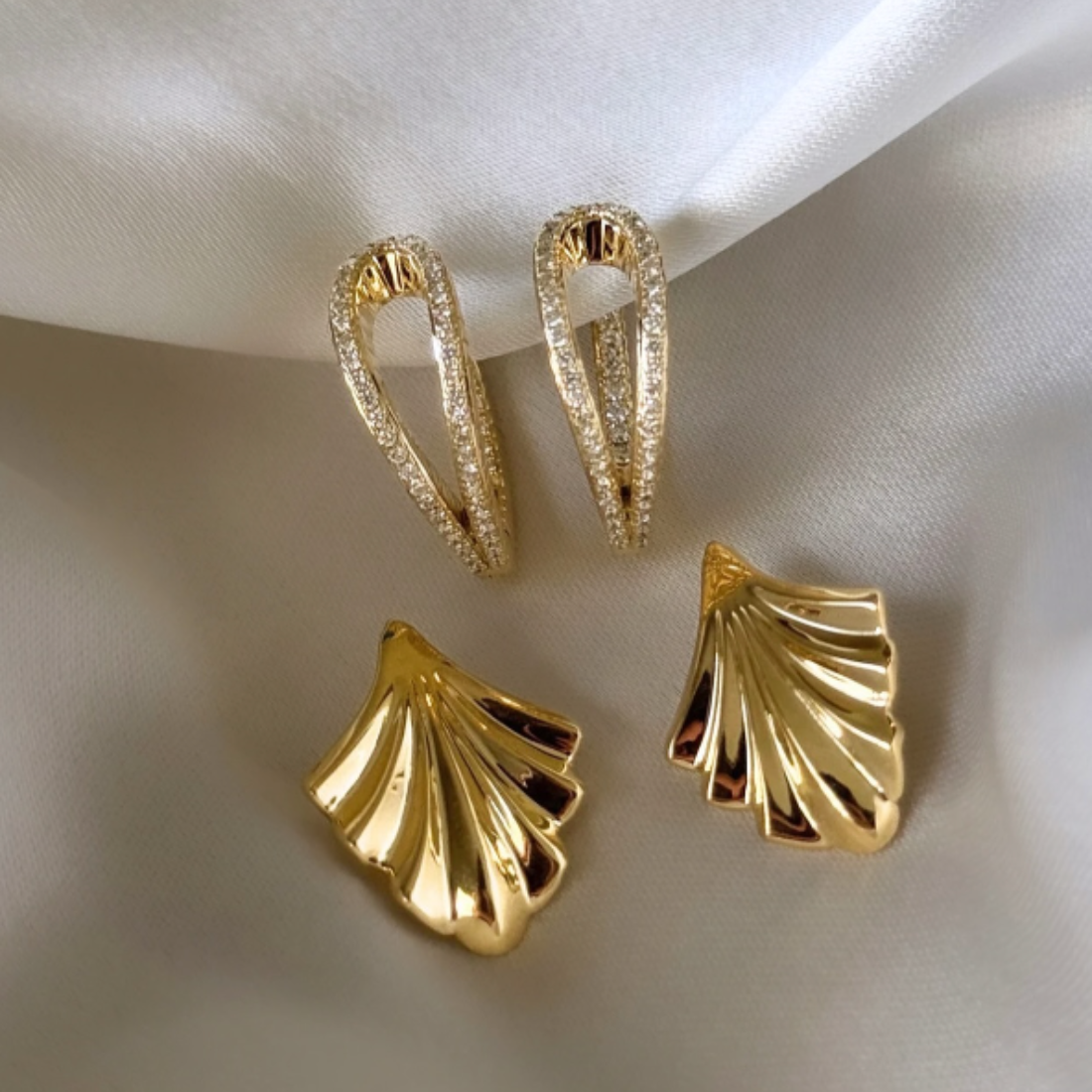
(from top to bottom) Linéaire Fine Line Shell Shape Diamond Hoop Earrings – HPS1005 and Auravie Shell Sculpted Earrings – ERS1019
Curated Earring Stacking Styles for Every Occasion
Understanding different stacking approaches helps you adapt your earring combinations to suit any setting. From professional environments to special celebrations, the right stack elevates your entire look.
The Minimalist Stack: Understated Luxury
The minimalist approach to stack earrings embraces the philosophy that less is more. Limiting yourself to two or three pieces maximum allows each earring to make a statement without competing for attention. Focus on exceptional quality, brilliant-cut diamond studs paired with a delicate hoop creates understated luxury.
This style translates easily across settings, from professional environments to daily wear to the wedding day itself.
The Maximalist Stack: Bold Self-Expression
For those who view jewelry as artistic expression, the maximalist approach to stacked earrings offers creative possibilities. Five or more pieces create a bold statement, and the variation is easier to control through silhouette than through color. A natural diamond stud beside a wide hoop, a climber tracing the lobe, a dangle with real length, and a pierced cuff curving above give you five distinct shapes without a single competing tone. If you do want color in the mix, an authorized Sylvie retailer can walk you through customizing a design with an alternate gemstone.
Even at this scale, the unifying element still applies. A color story or a consistent metal tone is what keeps five pieces reading as curated rather than accumulated.
The Asymmetrical Approach
Modern earring stacking has embraced asymmetry, wearing different combinations on each ear. You might wear three pieces on your right and two on your left, or build entirely different style stories on each side.
The difference between an asymmetrical earring stack and an unbalanced one is intention. Both ears need to feel composed on their own terms, which means giving the second ear as much thought as the first rather than treating it as whatever is left over.
Stacking for Special Occasions
Special occasions call for elevated stacking that complements your overall jewelry without competing. Bridal earring stacks require attention. You want pieces that photograph beautifully and complement your dress and any diamond necklaces without overwhelming your face on your wedding day.
Evening elegance benefits from statement pieces that catch light. Natural diamonds do the most work under low, warm lighting, which is worth considering when you choose which piece anchors the stack, and it is worth thinking about how the stack will read in photographs. Gifting stacked sets has also become popular. When giving jewelry, consider what the recipient already owns and build on it, whether that means adding to a stack they have started or pairing earrings with diamond bracelets they wear often.
Sylvie’s Signature Stacks: Three Combinations to Try
Ready to build your own? These three Sylvie combinations show the anchor, transition, and accent structure in practice, along with the repeated element that holds each one together.
The Mixed Metal Stack
Aesthetic: Warm and cool tones, everyday wear
The anchor is our Auravie Interlocking Drop Earrings in the first lobe piercing, where the golden ovals and diamond-set white gold links carry enough weight to hold the base. Our Shell Héritage Diamond Hoop Earrings take the transition role in the second piercing, smaller in diameter but detailed enough to bridge the gap. The Éternelle Diamond Heart Stud finishes the stack higher on the ear.
Why this combination works: The metals deliberately do not match, so the diamonds do the unifying work instead. Every piece carries them, which is what keeps yellow and white gold reading as a choice rather than an accident.
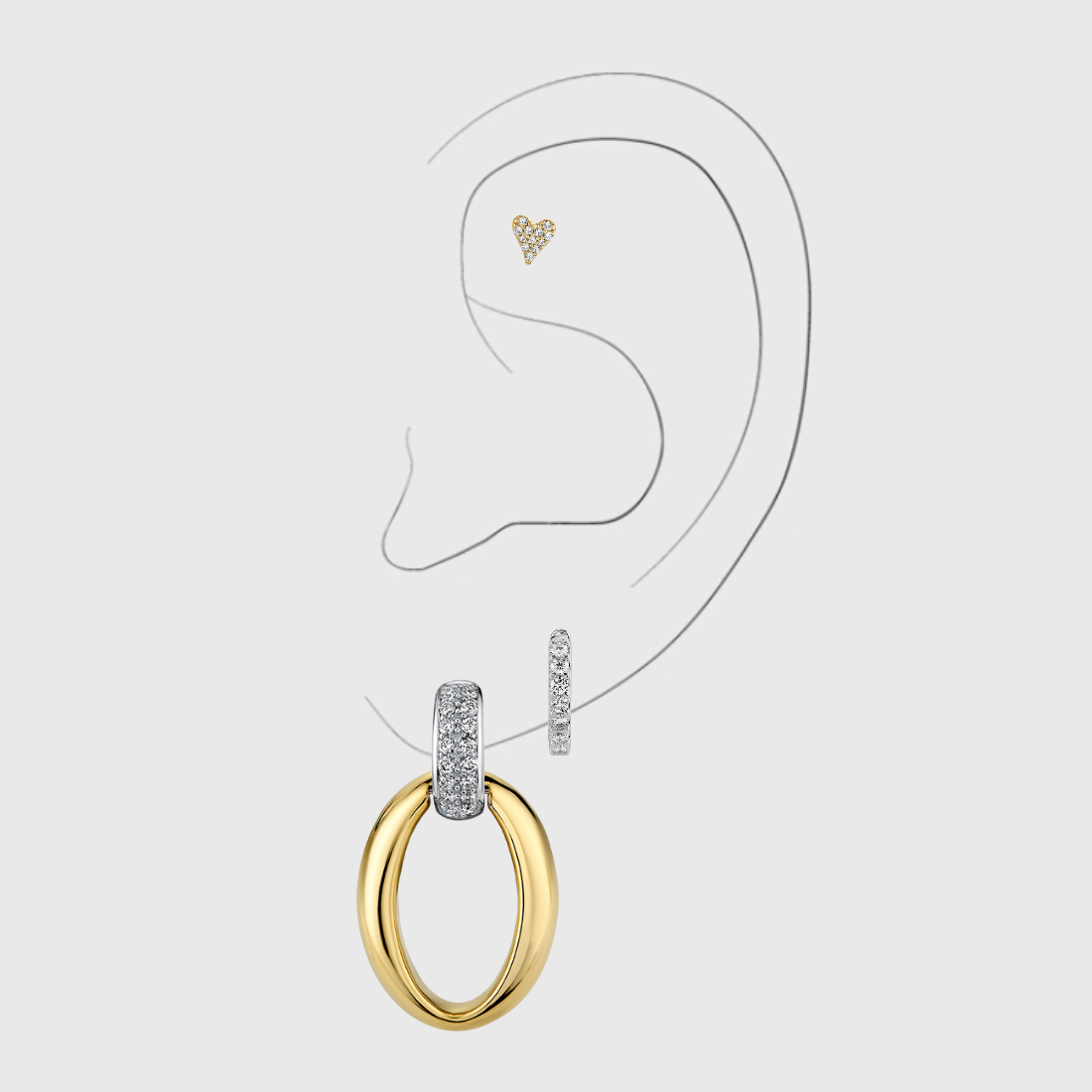
(from top to bottom) Éternelle Diamond Heart Stud Earrings – ERS1029, Shell Héritage Diamond Hoop Earrings – HPS1006-020, Auravie Interlocking Drop Earrings – ERS1071
The Classics Stack
Aesthetic: Sleek, directional, all gold
The Pear Diamond Chain Earrings anchor the first lobe, where the pear-cut diamond and the drop of round diamonds below it give the stack real vertical length. Our Éternelle Diamond Ear Cuffs handle the transition. This is a single piece that enters at the piercing and curves along the ear’s edge, and its three rows read as stacked bands. The Solaz Diamond Sun Stud sits above the anchor as the accent.
Why this combination works: One long vertical line against a run of curves, with gold as the element repeated across all three. The cuff is doing the most work here, covering the stretch of ear that would otherwise take two or three separate pieces.
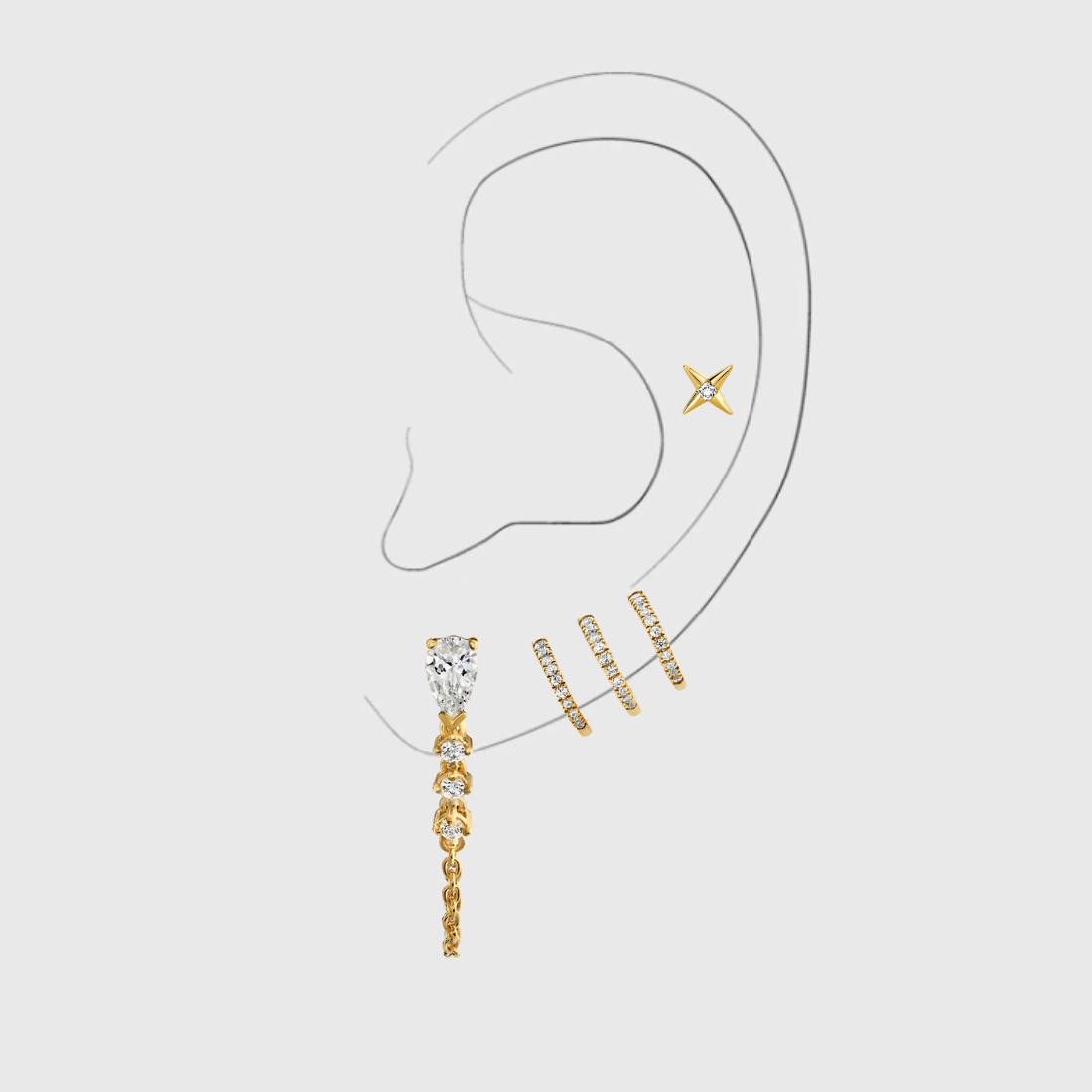
(from top to bottom) Solaz Diamond Sun Stud Earrings – ERS1004, Éternelle Diamond Ear Cuffs – ERS1013, and Pear Diamond Chain Earrings – ERS1060
The Modern Minimalist Stack
Aesthetic: Sculptural, restrained, two pieces only
Two pieces, both drawn from the Sylvie Shell. Our Auravie Shell Sculpted Earrings anchor the first lobe piercing with flowing curves and a high-polish finish. The Shell Bezel Pear Diamond Stud Earrings sit directly above in the second lobe, their pear diamonds set in a golden bezel that reads as light against the solid gold below.
Why this combination works: The repeated element here is the Shell itself, expressed two ways: once in sculpted gold, once in bezel outline. That shared motif is why two pieces are enough. A stack this short needs a strong connection between them, and the design language supplies it.
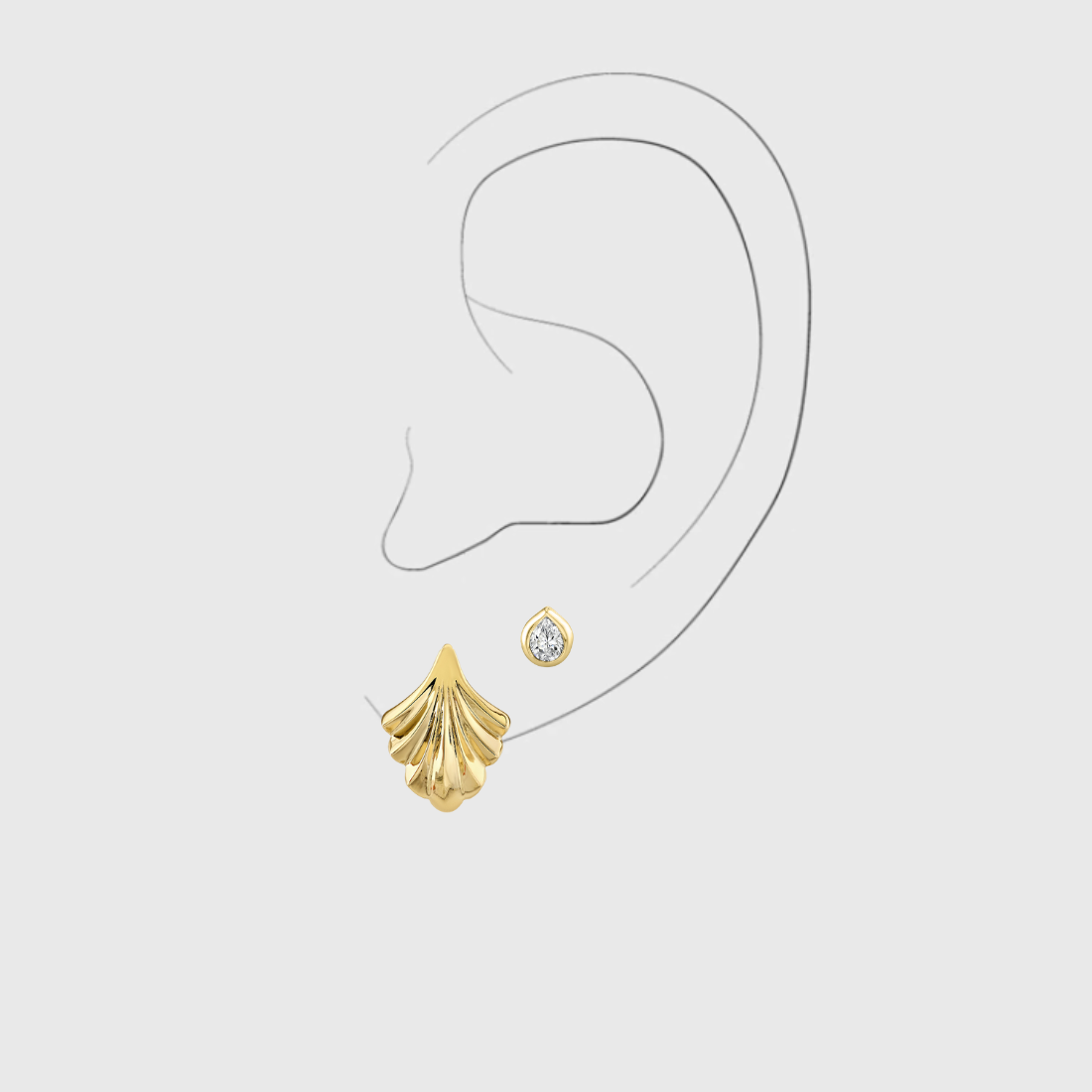
(from left to right) Auravie Shell Sculpted Earrings – ERS1019 and Shell Bezel Pear Diamond Stud Earrings – ERS1068
A stack is easier to judge in person than on a screen. Try any of these combinations on at an authorized Sylvie retailer near you, where you can see how the pieces sit together on your own ear.
Selecting the Perfect Pieces: A Buyer’s Guide to Stack Earrings
Building a versatile stacking collection requires understanding which pieces offer the most styling flexibility. Smart shopping means investing in quality earrings that work beautifully alone and in combination.
Essential Stacking Styles to Own
A versatile collection covers three roles rather than three categories. Your anchors are the pieces with the most presence: a statement hoop, a dangle, or a chain earring with real length. These sit in the first lobe piercing and set the scale for everything above them.
Your transition pieces are the middle of the stack, usually a hoop sized between your anchor and your smallest piece, or a huggie that sits close to the lobe. This is the role most collections are short on, and it is the one that keeps an anchor and a small stud from looking disconnected.
Your accents finish the ear. A small diamond stud adds light between larger pieces, an earring climber introduces height along the lobe, and a pierced ear cuff sits in a lobe piercing and curves upward, giving you upper-ear presence without a cartilage piercing. Owning one or two in each role gives you more combinations than owning six pieces that all do the same job.
Quality Considerations for Stacked Jewelry
Precious metals matter especially in stacking. You’re wearing multiple pieces simultaneously in constant contact with skin. Gold offers durability that won’t irritate during all-day wear. Quality gold jewelry maintains beauty for generations across 14K or 18K yellow, rose, and white gold options.
Diamond cut quality significantly impacts visual effect. Brilliant-cut diamonds maximize sparkle, catching light to create fire and brilliance. Even small diamonds, when cut to ideal proportions, provide substantial impact. In stacking with diamond accents across multiple pieces, this quality becomes crucial.
Closures matter more in a stack than they do on a single pair, because you are fastening several pieces rather than one. Screw backs tend to feel more secure than push backs and suit pieces you would rather not think about during the day, while push backs are quicker to change when you restyle often. Hoops generally close with a hinge or latch instead of a separate back. Closure styles vary by design, so check the product details for the specific pieces you are considering.
Building Your Stacking Collection Over Time
Start with core pieces to prevent overwhelm. Begin with one exceptional pair of diamond studs and one versatile hoop in your preferred metal. These already provide multiple styling options. As you wear them, you’ll discover what’s missing.
Expand thoughtfully rather than impulsively. Before adding new pieces to your collection, consider how they’ll work with what you own. Does this ear cuff complement your existing studs? Thoughtful expansion means each addition multiplies possibilities rather than creating isolated pieces.
Investment pieces worth the splurge are typically foundation studs and one statement piece representing your style. These should be the highest quality including exceptional diamonds, superior craftsmanship, and timeless design. Consider coordinating with diamond rings and bracelets for a cohesive aesthetic.
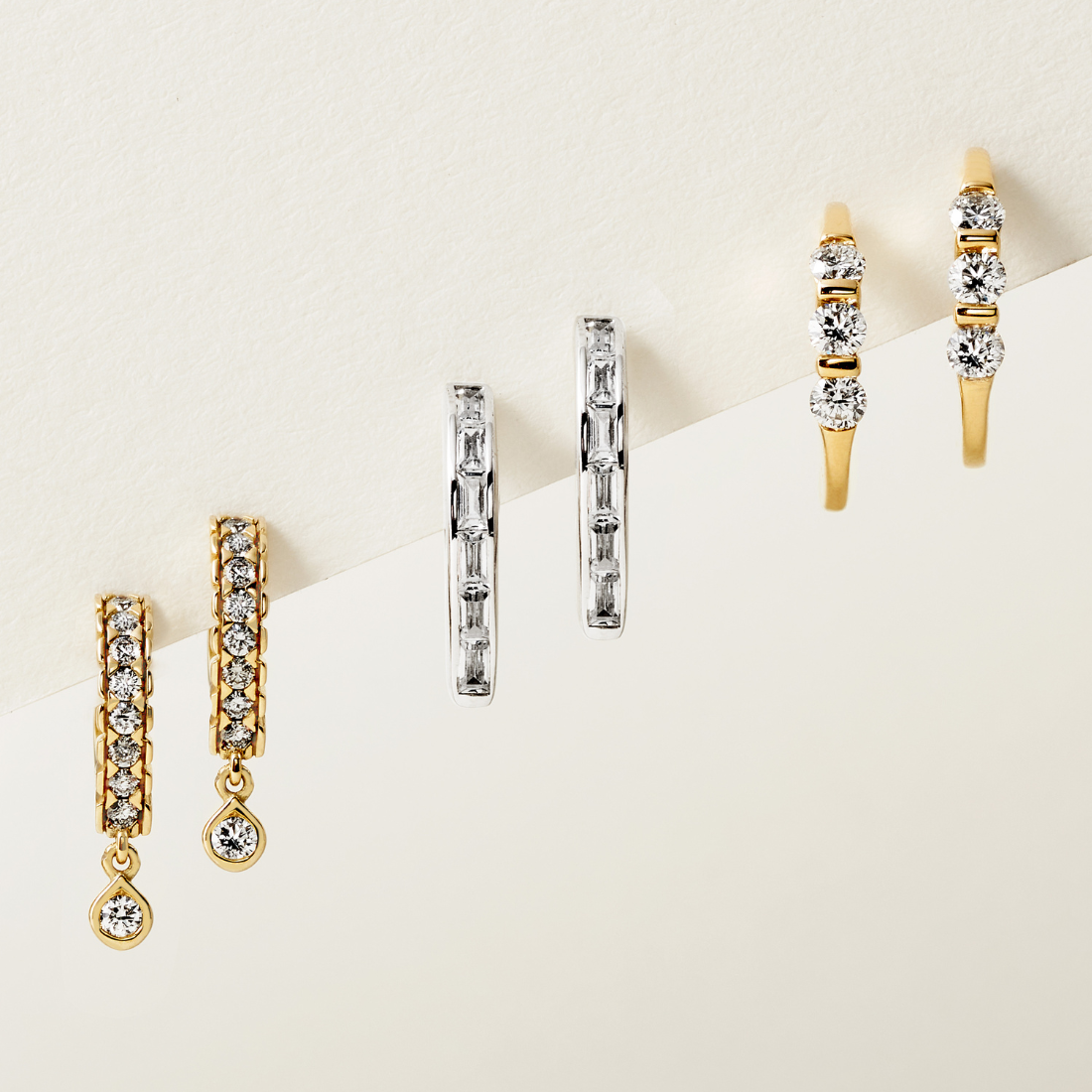
(from left to right) Shell Héritage Bezel Shell Diamond Drop Earrings – ERS1039, Shell Héritage Baguette Hoop Earrings – HPS1008, and Shell Héritage Spaced Diamond Hoop Earrings – HPS1007
Earring Stacking Styling Tips and Common Mistakes to Avoid
Understanding how to integrate your stack into your complete look and avoid common pitfalls ensures your stacks always look polished and intentional.
How to Balance an Earring Stack With Your Other Jewelry
Balancing earrings with other jewelry requires considering your entire presentation. When wearing statement necklaces, opt for minimal earring stacks. If your ears are your focal point with dramatic stacking, keep necklaces delicate. The same applies to bracelets and rings. Distribute visual weight across your jewelry presentation.
Hair styling significantly impacts how your stack appears. Wearing hair up showcases your entire composition. Hair worn down creates a peek-a-boo effect. Consider your hairstyle when planning, fuller combinations work best when visible.
Face shape and earring stack proportions work together for flattering
balance. Round faces might emphasize vertical stacking for length, while angular faces can soften with rounded hoops. Understanding these principles helps select pieces that enhance natural beauty while expressing personal style.
Maintenance and Care for Stacked Earrings
Wearing several pieces at once means more contact with skin, hair products, and daily residue. Wipe the earrings you wear most with a soft cloth, and use a jewelry cleaning solution only where the design and materials allow for it. Having a jeweler check settings and closures periodically is worth the trip, particularly for pieces with diamonds, since it catches a loose stone before it becomes a lost one.
Storage solutions can also help maintain organization and protect your investment. Store your favorite earring stacks together for quick access. Individual compartments prevent tangling or scratching. For earrings, lined boxes offer protection and organization while securely holding each earring pair in place.
Know when to take pieces out. Removing earrings before exercise limits contact with sweat and reduces the chance of catching a piece mid-movement. Whether to sleep in them depends on the earring and the piercing: flat, close-fitting styles are more comfortable overnight than hoops or drops. Anything in a healing piercing should be left in place and cared for as your piercer directs.
Common Stacking Pitfalls to Avoid
Here are some common mistakes that people make when learning how to stack earrings:
- Over-crowding is the most common mistake, filling every piercing without considering composition. If your ear feels heavy or looks cluttered, remove pieces until it settles.
- Ignoring color temperature across metals creates unintentional discord. While intentional metal mixing is sophisticated, accidentally combining pieces without considering undertones feels random. If mixing metals, ensure you’re doing so purposefully.
- Neglecting comfort for aesthetics means you won’t wear your stack. If pieces are too heavy or posts too long, adjust your stack. Beautiful earring combinations only serve their purpose if you enjoy wearing them.
- Mismatched style languages, mixing too many aesthetics, makes even quality pieces look disconnected. Combining ultra-modern with vintage-inspired with nature-themed creates confusion. Choose a style lane and stay relatively within it, allowing variety while maintaining cohesion.
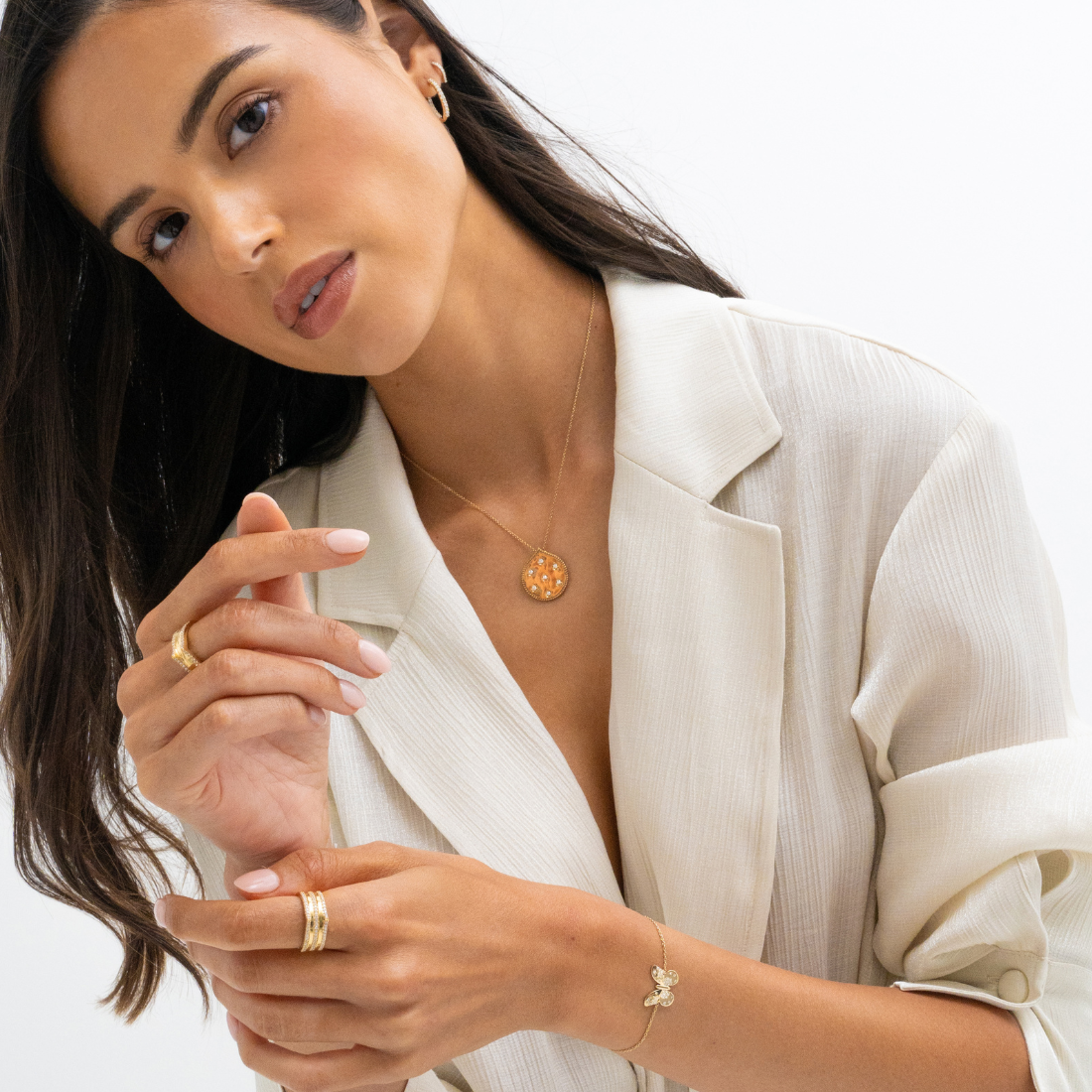
(from top to bottom) Shell Héritage Diamond Hoop Earrings – HPS1009-018, Shell Héritage Diamond Hoop Earrings – HPS1006-080, Shell Héritage Shell Spaced Diamond Pendant – PS1023, Shell Héritage Shell Tip Diamond Ring – RS1022, Shell Héritage Shell Tip Diamond Ring – RS1023, and Shell Héritage Diamond Butterfly Chain Bracelet – BRS1035
Your Signature Earring Stack Awaits
Learning how to stack earrings comes down to a few deliberate choices: an anchor piece you love, a repeated detail that ties the composition together, and enough space for each earring to be seen.
At Sylvie Jewelry, our earrings are designed to work as beautifully in combination as they do on their own. Build your stack one considered piece at a time, and visit an authorized Sylvie retailer to see how the pieces come together in person.
Frequently Asked Questions About Earring Stacking
How many earrings should you stack?
There’s no set rule, but two to five earrings per ear tends to read as balanced. Start with two or three while you’re finding your style and build from there. Comfort is the practical limit worth respecting.
Can you mix gold and silver when stacking earrings?
Yes, and it is one of the easiest ways to make a stack feel personal. Sylvie earrings are made in 14K and 18K white, yellow, and rose gold, which gives you warm and cool tones to work with in the same collection. Repeat one thing across the pieces, whether that is diamond accents or a consistent scale, and the mix reads as a decision rather than an accident.
What earrings are best for stacking?
Natural diamond studs work as the foundation, hoops and huggies in varying sizes handle the middle of the stack, and climbers, dangles, or pierced ear cuffs finish it. Sylvie earrings are made in 14K and 18K white, yellow, and rose gold, so pieces from different collections sit together without a metal clash. Secure closures matter more than usual when you are wearing several pieces at once. Many people approach earring combinations the same way they explore how to layer necklaces, building from core pieces and adding dimension with thoughtful accents.
How do you stack hoop earrings?
Place your largest hoop in the first lobe piercing and step down noticeably from there, finishing with a huggie sitting close to the lobe. Two hoops and one diamond stud is a reliable starting point, since the stud breaks the run of curves before the ear starts to read as repetitive. If your piercings sit close together, choose slimmer hoops so they do not overlap as they move.
Do you need multiple piercings to stack earrings?
Fewer than you’d think. A pierced ear cuff is the most efficient piece in a stack: it sits in a single lobe piercing and curves upward along the ear, creating the look of several placements from one. Pair one with a diamond stud in a second piercing and you have an earring stack that reads as far more. Note that traditional clip-on cuffs, which wrap the ear without a piercing, are a different style; every Sylvie cuff is made for pierced ears.
How do you stack earrings for beginners?
Keep it simple: three pieces, one metal, and clear size differences between them. Sticking to a single metal removes the hardest decision while you’re still learning what you like. The same logic applies when you’re working out how to keep wedding rings together, where intentional placement is what makes a pairing look considered.
Should stacked earrings match on both ears?
Either works. Matching stacks read as classic and polished, while different combinations on each ear read as more modern. The one thing worth knowing is that asymmetry takes more planning to look intentional rather than unfinished.
How do you stack earrings without damaging your ear?
Choose lightweight earrings in precious metals that won’t irritate sensitive skin or strain your piercings. Ensure proper piercing placement with adequate space between holes, consult a professional piercer if adding new piercings to your stack. Remove earrings before sleep and exercise to prevent pressure and potential damage. Rotate your stack regularly to avoid constant pressure on the same piercing points. If you experience any discomfort, reduce the number of pieces or consult a professional piercer for guidance.